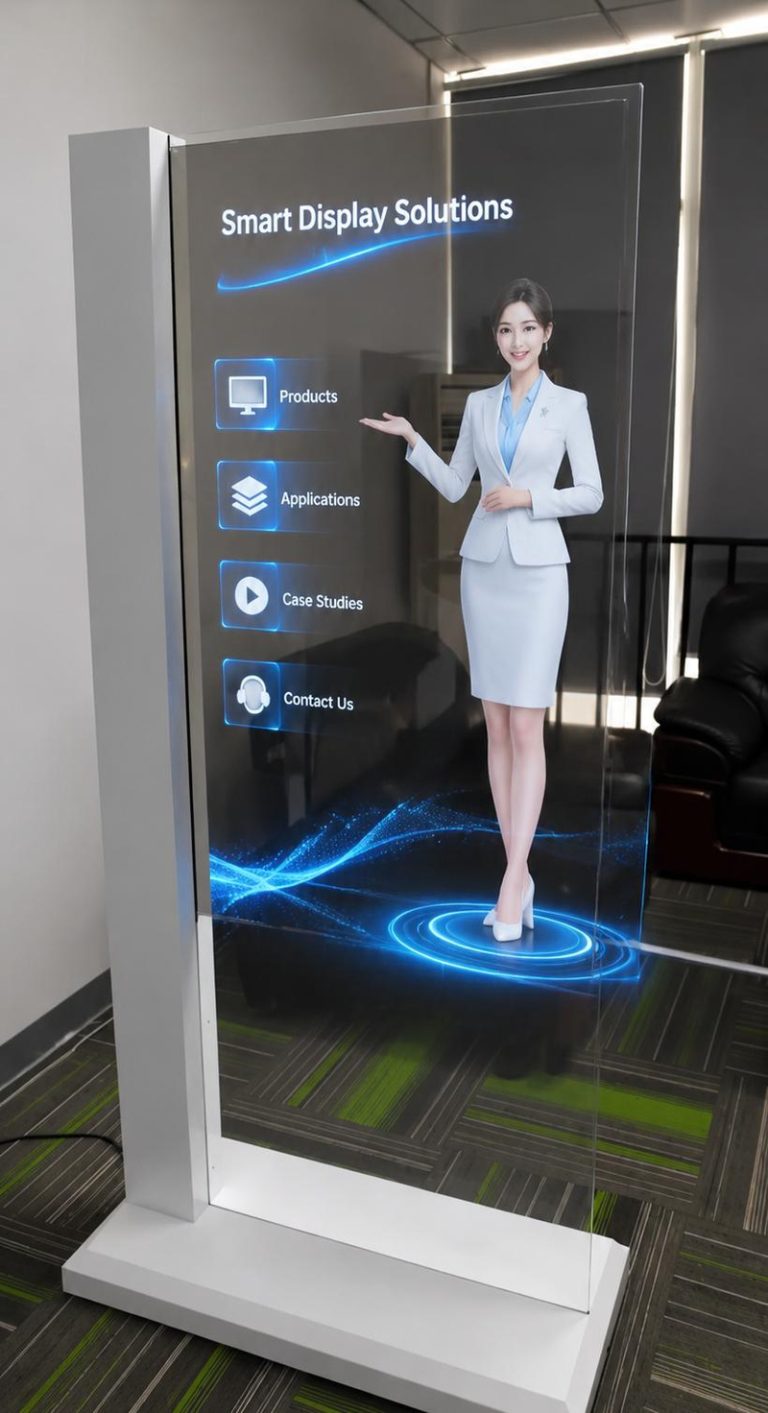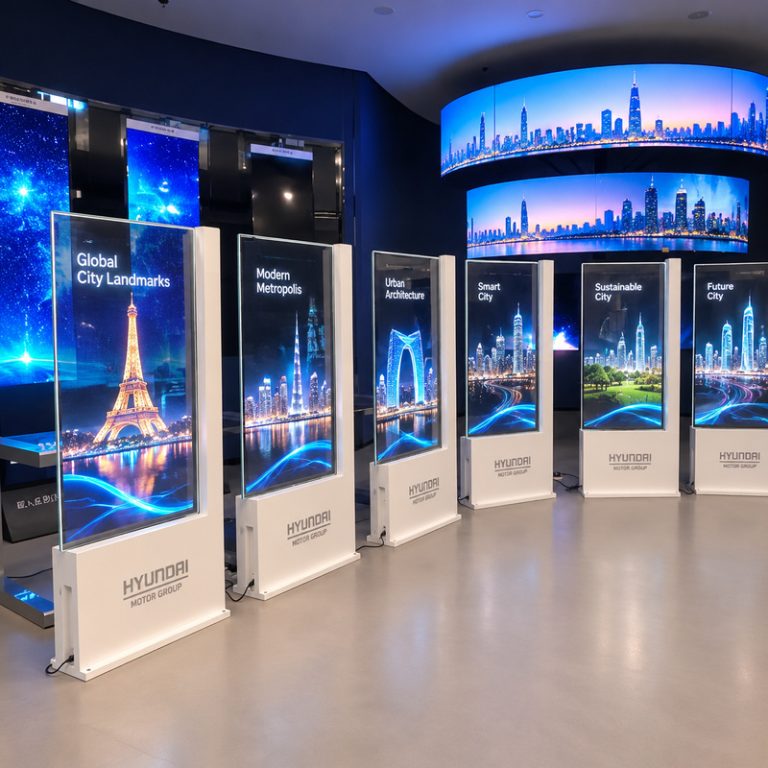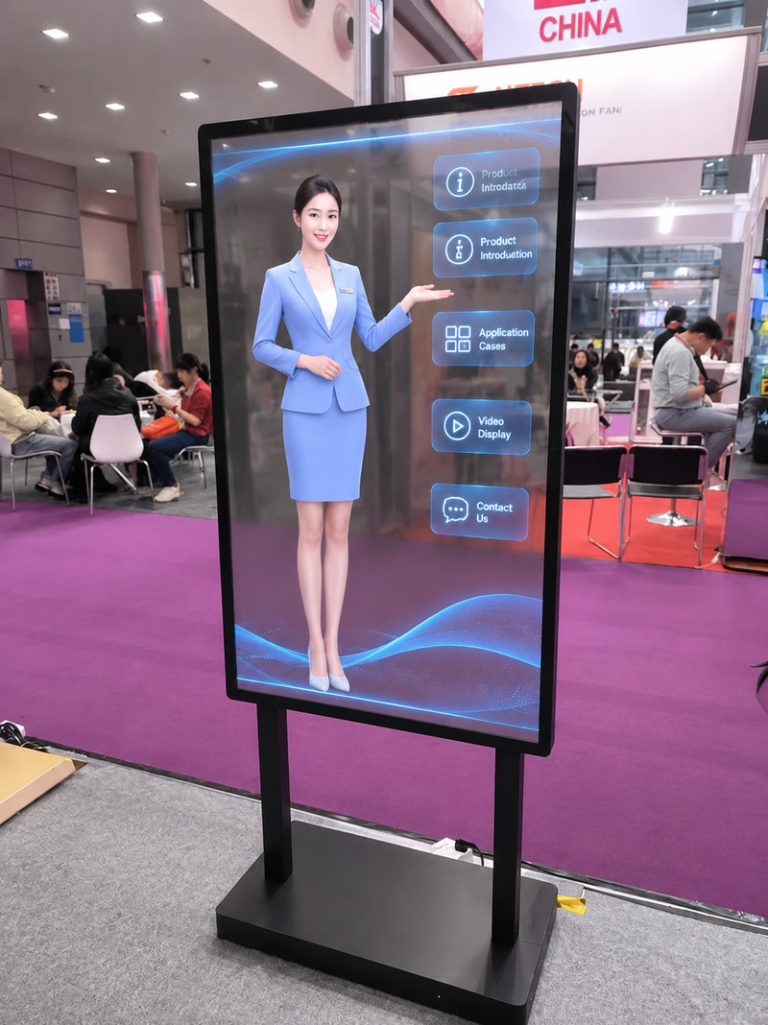

Inquiring about transparent display pricing almost invariably produces a confusing response: ‘it depends on configuration.’ For the exact same 55-inch display diagonal, one supplier quotes a modest figure while another quotes several multiples higher; comparing the two quote sheets side-by-side often leaves procurement teams uncertain about where the actual difference lies.
First, establish an important commercial reality: there is no single universal ‘market price.’ Online pricing guides vary widely in scope, definition, and timeliness. Rather than memorizing unverified numbers, understand the concrete cost drivers that comprise transparent display pricing.
Item 1: Bare Panel Glass vs. Turnkey Integrated Kiosk
This represents the single largest source of pricing divergence.
A bare panel is purely the raw display module; it cannot light up without an external timing controller (T-Con), driver motherboard, media player, power supply, and structural metal housing. A turnkey integrated kiosk, by contrast, includes structural bezels, driver boards, media players, power supplies, and mounting brackets, ready to operate out of the box.
Some low quotations reflect only bare panel glass, looking attractive initially but requiring thousands in supplementary hardware before functioning. The first question to ask any supplier is: What components does this quotation include, and what additional hardware must be purchased separately?
Item 2: Screen Diagonal and Native Resolution
As panel diagonal expands, manufacturing costs escalate non-linearly due to motherglass cutting yields. Higher resolutions (e.g., 4K UHD vs. 1080p FHD) feature denser subpixel arrays, commanding higher pricing but delivering noticeable optical sharpness across close-up showcase installations.
Transparent displays center around specific standard sizing tiers; large-format options are limited and carry substantial premiums. If mounting into fixed millwork apertures, measure site clearances accurately and check off-the-shelf availability, as custom sizing involves longer lead times and tooling costs.
Item 3: Display Technology — OLED, LED, or Transparent LCD
Three distinct ‘transparent’ technologies exist, each carrying fundamentally different manufacturing costs:
Transparent OLED: Self-emissive subpixels deliver razor-sharp detail, rich colors, and deep transparent blacks, ideal for close-up indoor luxury showcases. Carries premium unit costs, limited sizing tiers, and requires dynamic content to prevent retention.
Transparent LED (Ice Screens): Composed of modular light-strip lattices, easily scaling to massive building facades with high daylight brightness. Close-up viewing reveals visible pixel pitch, making image fidelity lower than OLED, but overall square-meter costs are more manageable for large walls.
Transparent LCD: Mature liquid crystal technology with lower panel costs, common in retail showcases, though optical contrast depends heavily on internal showcase lighting.
Selection depends on viewer distance, ambient lighting, screen scale, and budget; avoid comparing quotes across different display technologies directly.
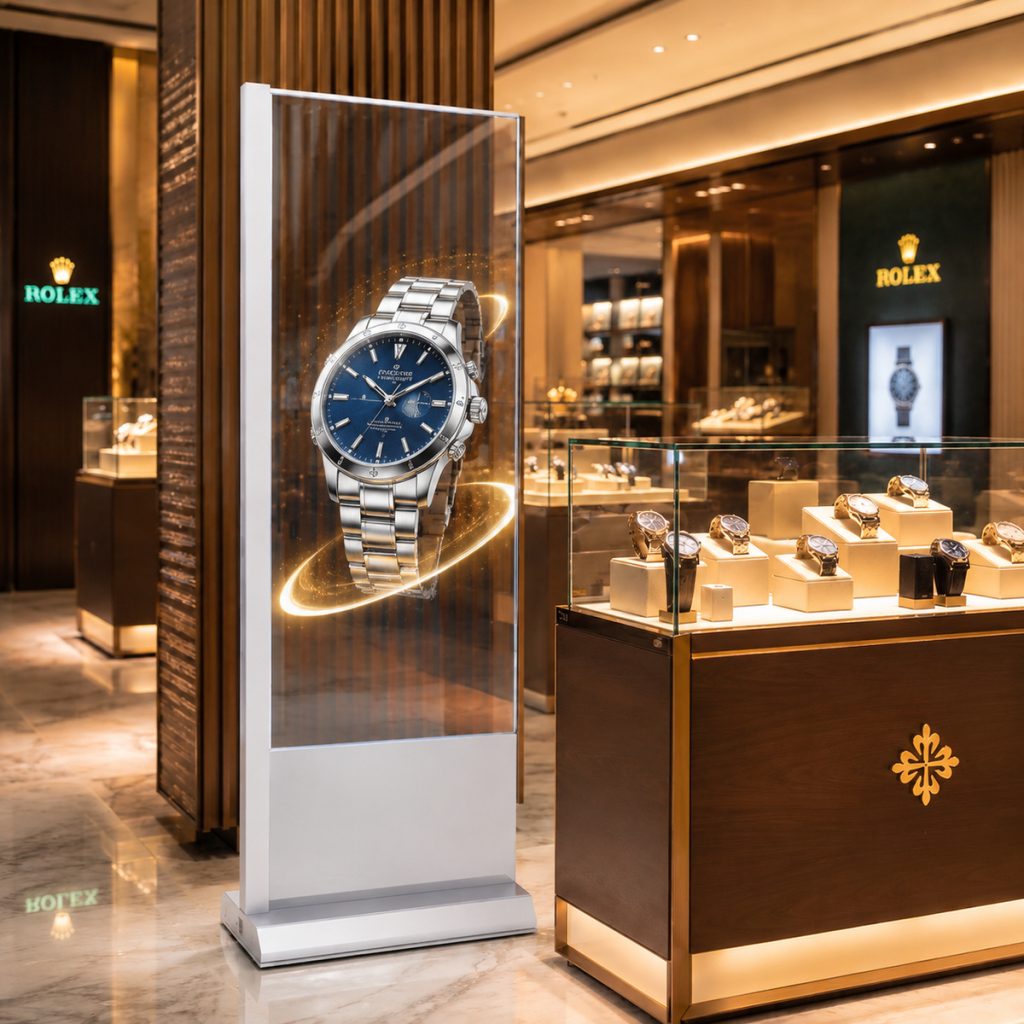
Item 4: Interactive Touch Overlays and Value-Added Features
Incorporating interactive touch overlays (capacitive P-Cap or infrared IR) significantly impacts pricing. Touch hardware must be evaluated for optical clarity to ensure it does not cloud see-through transparency. Value-added capabilities—such as cloud CMS networking, multi-screen video wall synchronization, and custom metal framing—add incremental hardware costs.
For passive advertising displays, omitting touch overlays saves capital; for interactive customer-facing kiosks, test touch responsiveness on physical sample units.
Item 5: Panel Sourcing, Grading, and Quality Assurance
Commercial transparent panels originate from diverse manufacturing channels, resulting in substantial quality and pricing gaps. Industrial A-grade commercial panels sourced from tier-one foundries carry higher costs, but provide verified color uniformity, long operating lifespans, and reliable encapsulation. Low-cost modified or grey-market panels carry cheaper price tags, but often suffer batch color shifts, premature backlight decay, and poor moisture resistance.
Inquire about panel manufacturer origin, quality grading certifications, and factory burn-in testing. In commercial deployments, post-installation repair costs quickly wipe out initial hardware savings.
Item 6: Order Quantities, Delivery Lead Times, and Market Supply
Transparent displays represent specialized commercial hardware with constrained global production capacity. Single-unit purchases incur higher unit costs, whereas volume orders negotiate tiered discounts. During panel allocation pinches, spot prices and lead times fluctuate.
For custom engineering projects, establish minimum order quantities (MOQs), prototype sampling timelines, and production delivery milestones in advance.
Item 7: Installation, Content Creation, and After-Sales Support
Total project expenditure extends far beyond the screen itself: video signal processors, custom structural mounting framing, on-site installation and cabling, creative media production, and contractual warranty coverage.
After-sales support terms vary across vendors: warranty duration, covered components (panel glass, power supplies, controller boards), and technician response SLAs are reflected in the quote. Require suppliers to itemize these services in formal quotations to avoid surprise post-contract change orders.
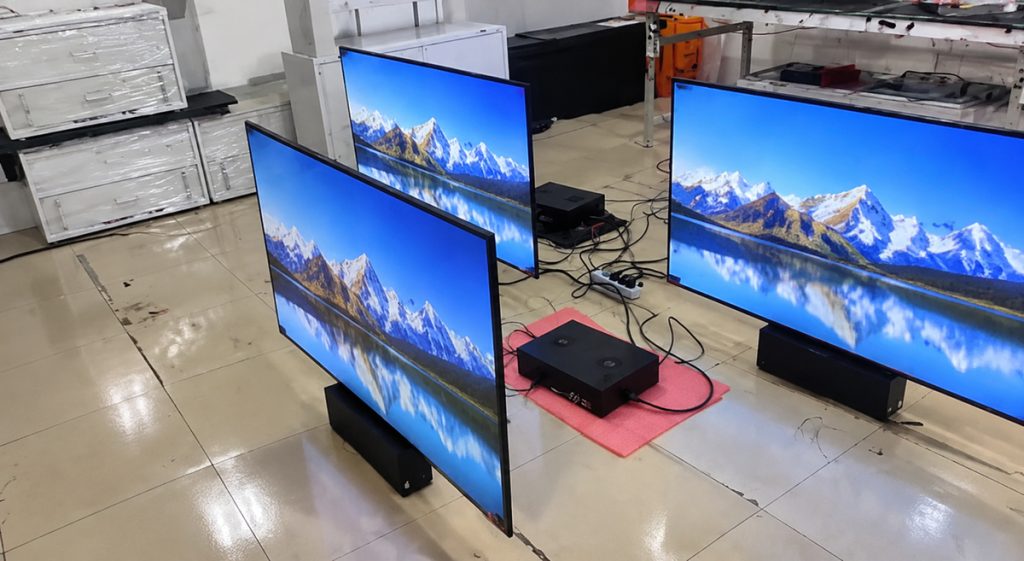
A Practical Quotation Comparison Framework
When comparing multiple supplier bids, audit specifications across an itemized matrix: Display Technology (OLED, LED, or Transparent LCD); Active Diagonal and Native Resolution; Bare Panel vs. Turnkey Integrated Terminal; Included Components (drivers, media players, metal enclosures, stands); Interactive Touch Inclusion; Panel Origin and Quality Tier; Shipping, On-Site Installation, and Commissioning Scope; Creative Media Production Responsibilities; Warranty Duration and Service Response SLAs; and Guaranteed Delivery Lead Times.
Never compare bottom-line prices across quotes with mismatched scopes; normalize all bids to identical deliverables before evaluating financial value.
Key Procurement Best Practices
Evaluate Physical Sample Units: Optical transmittance, luminance, and contrast cannot be verified on paper; evaluate sample units under your real-world site lighting. Transparent displays are sensitive to ambient lighting, and what looks vibrant in a dark showroom may appear flat in your retail space.
Manage Image Retention Risks: For OLED displays, continuous static graphics accelerate subpixel wear; design rotating media playlists and configure automated overnight power timers.
Scrutinize Abnormally Cheap Quotes: Bids priced significantly below market rates typically mask stripped components, consumer-grade glass, omitted burn-in testing, or excluded warranty support.
Avoid Relying on Informal Online Estimates: Vague online forum pricing carries unclear scopes and out-of-date data; rely strictly on formal, written quotation sheets from verified manufacturers.
Frequently Asked Questions (FAQ)
Are transparent displays universally expensive?They carry higher costs than standard monitors, but pricing varies across technologies; Transparent LED and Transparent LCD offer economical options for specific large-scale or showcase scenarios.
Can buyers use bare panel prices as final equipment budgets?No. Bare panels require external drivers, media players, power supplies, structural framing, and cabling, adding substantial integration costs.
Can transparent displays be deployed outdoors?Most transparent displays are engineered for indoor commercial spaces. Deploying displays in storefront windows or semi-outdoor spaces requires evaluating high luminance, ambient glare, and weatherproofing; standard indoor models cannot be exposed directly to rain and sunlight.
How can buyers prevent post-sale change order expenses?Formalize a comprehensive bill of materials, mounting scopes, software licenses, and warranty SLAs in binding purchase agreements prior to signing.
Conclusion
Transparent display pricing is shaped by technology architecture, screen diagonal, turnkey configuration, panel grading, order volume, and after-sales support. Rather than seeking a generic ‘market price,’ deconstruct supplier quotation sheets line by line, normalize deliverables to identical terms, and evaluate Total Cost of Ownership to ensure a dependable, high-return investment.