
With the rapid acceleration of automotive intelligence, in-vehicle display technology is evolving from traditional analog instrument clusters and basic center consoles toward digitized, intelligent, and context-aware interactive ecosystems. In-cabin displays are no longer merely utilitarian instruments showing vehicle speed, GPS navigation, and infotainment; they are transforming into primary interactive interfaces connecting drivers, passengers, and the surrounding exterior environment. In this transformative landscape, transparent OLED displays offer visionary design possibilities for automotive cockpits.
Transparent Display: Seamlessly Merging Screens with Cabin Architecture
Conventional automotive screens occupy dedicated, opaque physical envelopes—such as the center dashboard stack, front passenger fascia, or instrument binnacle. As display diagonals expand, automotive interior designers face increasing challenges in balancing expansive digital screen real estate with cabin spatial openness and minimalist aesthetic elegance.
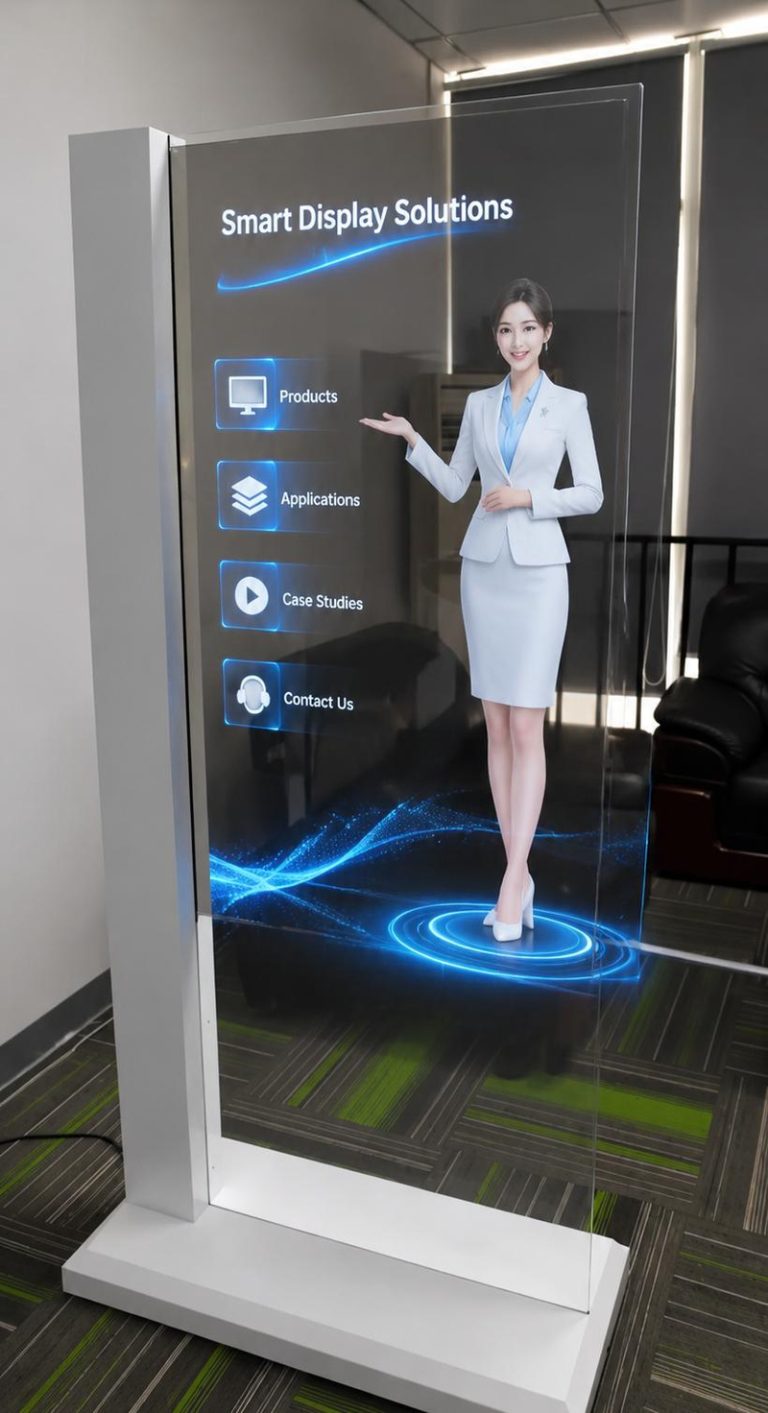
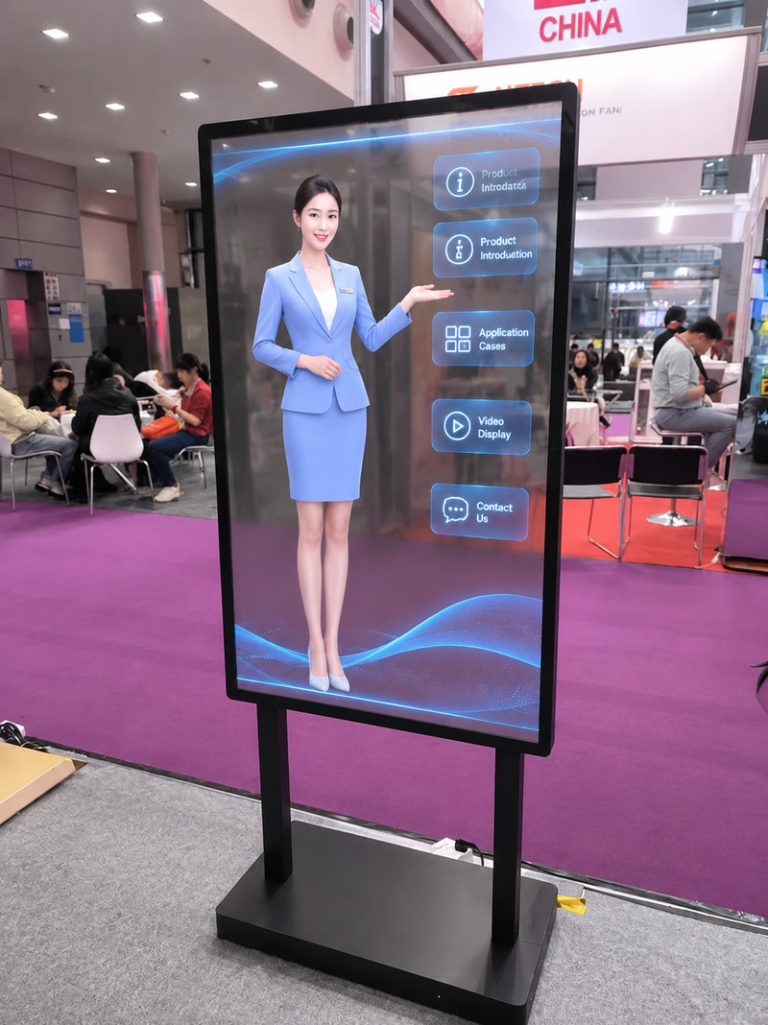
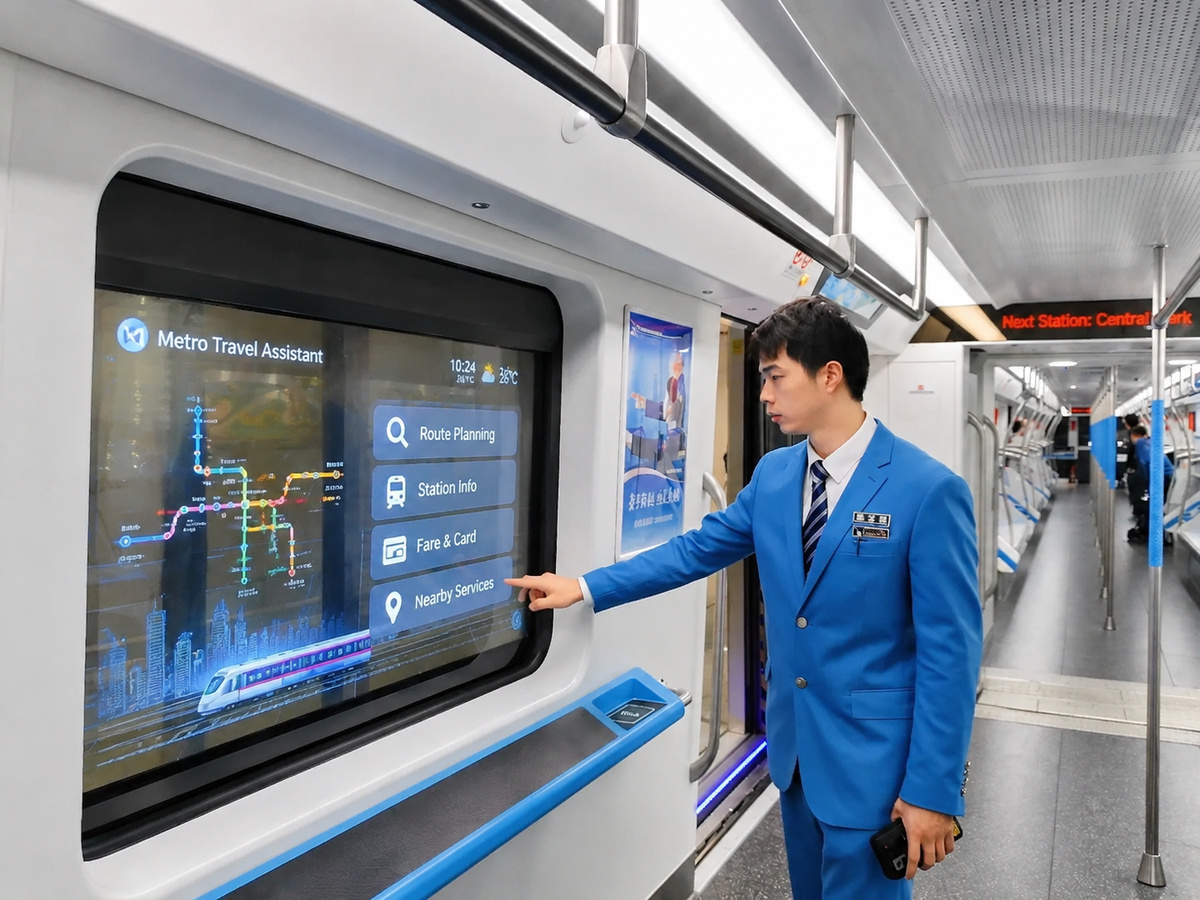
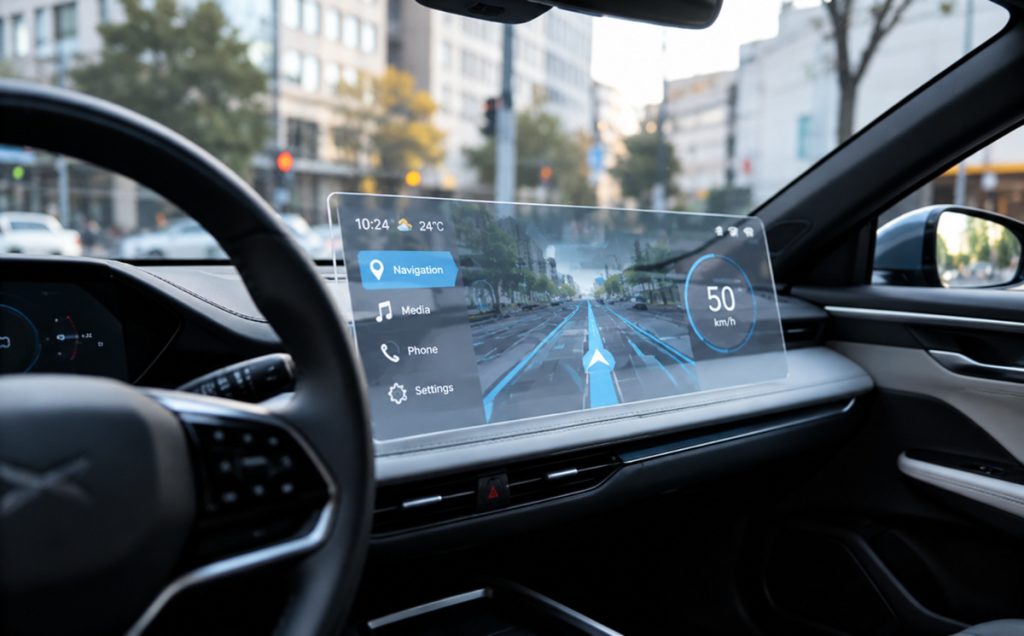
The defining characteristic of transparent OLED technology is its ability to render vibrant, high-definition digital imagery while preserving optical see-through transparency. When powered off, the panel functions as clear glass, allowing unhindered visibility of the cabin and exterior scenery behind it; when energized, it renders navigation prompts, vehicle diagnostics, infotainment media, and augmented driving data. This capability frees displays from traditional opaque housings, enabling direct integration into side windows, cabin partition glass, and interior trims.
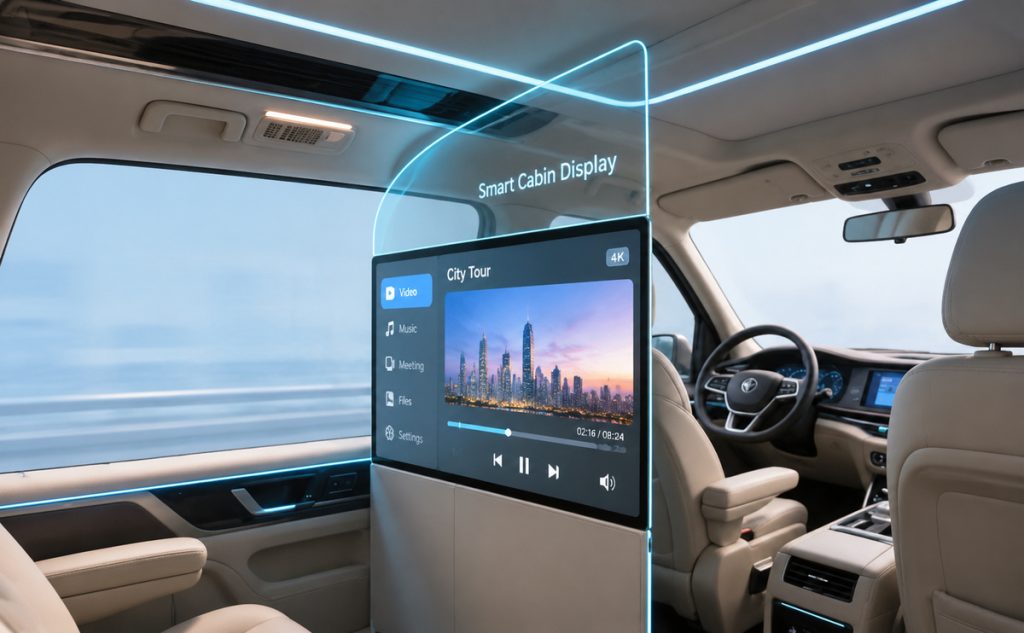
For example, in smart cockpits, transparent OLEDs can function as passenger entertainment screens, augmented head-up displays, or ambient interactive partitions. Integrated with on-board sensor suites, GPS telematics, and augmented reality (AR) engines, transparent screens can overlay dynamic route arrows, safety hazard warnings, and local points of interest directly onto the real-world road view, delivering an intuitive, contextual visual journey for travelers.
Flexible and Transparent Technologies Expanding Automotive Spatial Design
OLED technology is inherently self-emissive, eliminating the bulky LED backlight modules, light guides, and optical diffusers required by conventional LCDs. This architectural simplicity provides exceptional structural thinness and packaging flexibility. Combining transparent OLED with flexible substrate engineering unlocks curved, contoured, and organic screen silhouettes that conform seamlessly to sculptural automotive interiors.
Furthermore, transparent OLED radically expands the potential placement of in-cabin digital interfaces. Beyond standard dashboard consoles, transparent screens can be explored across passenger side windows, sunroof glass, front-to-rear cabin partitions in executive limousines, and transparent digital instrument clusters. By harmonizing diverse display zones into a unified digital canvas, automotive cockpits achieve unprecedented spatial versatility.
Important Technical Distinction: Transparent OLED displays differ fundamentally from conventional opaque OLEDs. Transparent visual performance requires a delicate balance between active light-emitting luminance and ambient optical transmittance. Transparency percentage, peak luminance, ambient contrast ratio, and external daylight intensity all dictate real-world legibility. In sunlit vehicular environments, displayed content can wash out against bright exterior backgrounds, requiring tailored optical coatings, smart dimming layers, and cabin environmental optimization.
Key Engineering Challenges for Automotive Deployment
While transparent OLED holds tremendous commercial promise, transitioning into mass automotive production requires resolving several rigorous engineering challenges.
First, Optical Readability Across Extreme Lighting: Vehicles operate across shifting ambient lighting conditions—from direct noon solar glare to dark tunnels and midnight driving. Displays must maintain sharp legibility without obstructing driver sightlines or causing nocturnal windshield reflections. Second, Driving Safety and Cognitive Ergonomics: Displays must prioritize driver focus, structuring visual hierarchies and intuitive touch/voice interactions to prevent driver distraction.
Additionally, automotive environmental standards are among the most stringent in commercial electronics: wide operating temperature tolerances (typically -40°C to +85°C), continuous road vibration resilience, extended multi-year operating lifecycles without image retention, automotive DC electrical voltage stability, and long-term durability. Transparent OLED panels also face panel fabrication yields, mechanical integration tolerances, and automotive-grade mass production scaling, making them currently best suited for luxury vehicle trims and visionary concept cockpits.
Conclusion
From analog dials to widescreen touch consoles, and onward to flexible and transparent display architectures, automotive digital interfaces are advancing toward holistic cabin integration. The authentic value of transparent OLED lies not merely in see-through novelty, but in providing interior architects and software engineers with a versatile medium that merges digital data with physical space.
As display panel chemistry, driver semiconductors, and intelligent cockpit platforms mature, transparent displays will unlock transformative applications across in-cabin entertainment, augmented navigation, and contextual human-machine interaction. ZXTLCD specializes in commercial-grade smart commercial display terminals and specialized visual hardware, monitoring emerging display technologies to deliver display terminals and custom hardware engineering for commercial and embedded automotive integration.