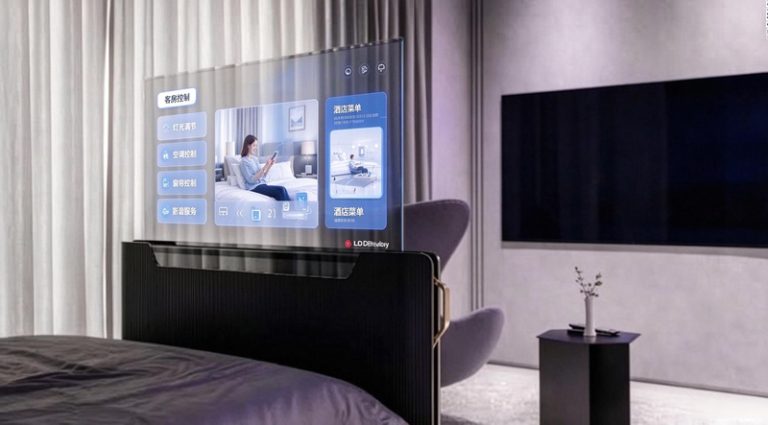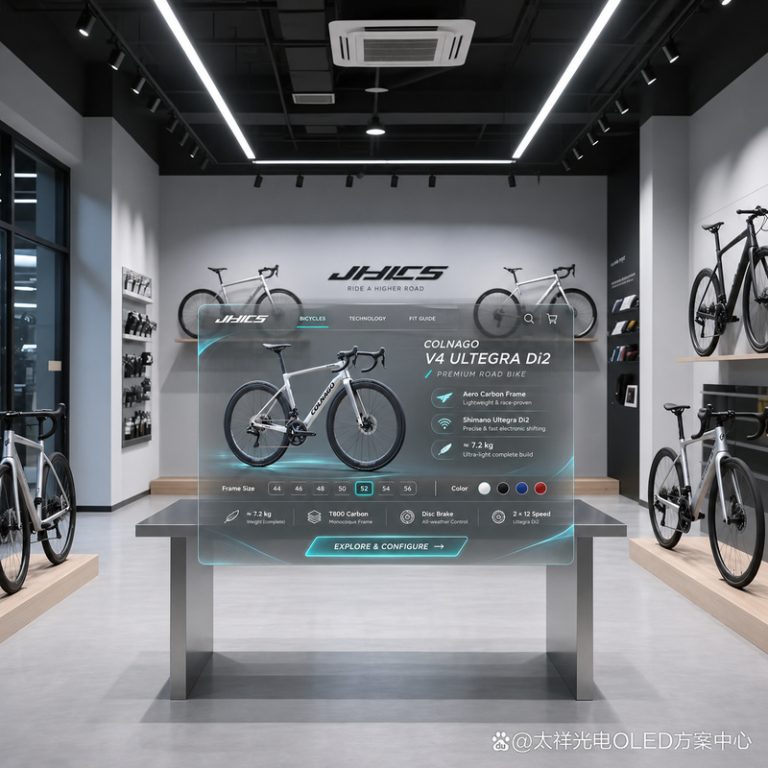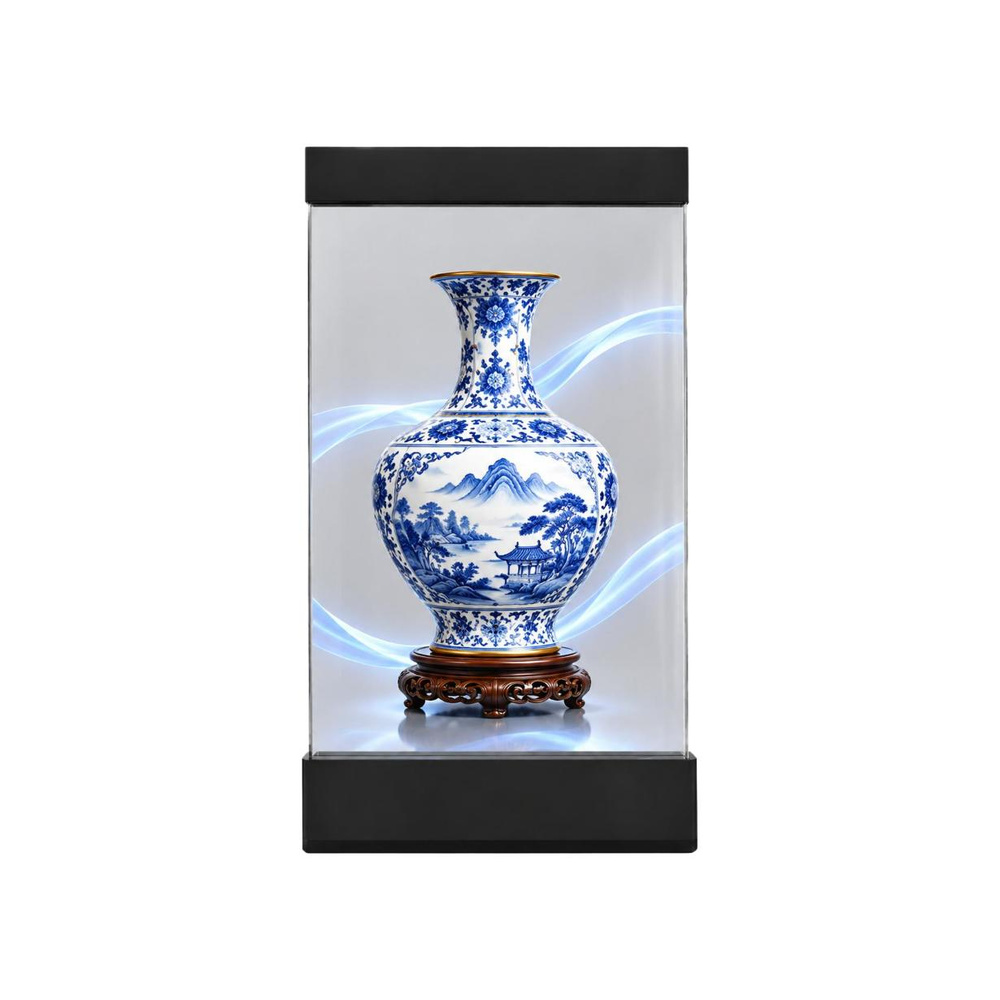

As architectural designers, museum curators, and luxury retail visual merchandisers seek more immersive ways to engage audiences, transparent display technology has rapidly evolved from novelty concept to mainstream experiential medium. However, project decision-makers often face a critical engineering dilemma: Should you specify Transparent OLED (T-OLED) or Transparent MicroLED?
1. Fundamental Display Principles & Optical Structure
Both technologies belong to the self-emissive family, meaning every pixel produces its own light without requiring a bulky backlight unit. However, their pixel composition and substrate physics differ dramatically:
- Transparent OLED (T-OLED): Utilizes organic electroluminescent molecules deposited onto ultra-clear glass. Each pixel is paired with a transparent sub-pixel aperture, delivering a consistent 43% optical transparency and infinite contrast ratios.
- Transparent MicroLED: Employs microscopic inorganic semiconductor LEDs (typically P0.42 to P0.78 pitch) surface-mounted onto structural glass or transparent substrates. Because MicroLED emitters are microscopic, the open area between pixels is significantly wider, achieving up to 60% optical transparency.
2. Luminance & Ambient Lighting Tolerance
Luminance is typically the primary deciding factor in commercial deployments:
- Indoor Controlled Lighting (Transparent OLED): Standard commercial T-OLED panels operate at 400 to 600 nits peak brightness. This is ideal for ambient lux environments under 1,000 lux—such as museum exhibit galleries, indoor VIP counters, corporate showrooms, and climate-controlled luxury boutiques.
- High-Ambient & Daylight Conditions (Transparent MicroLED): Transparent MicroLED achieves peak brightness levels between 1,200 and 1,500 nits. This massive optical output allows content to remain crisp, vibrant, and fully visible even when placed directly against sunlit storefront windows, atrium facades, or brightly lit airport concourses.
3. Comparison Summary Table
| Metric | Transparent OLED (T-OLED) | Transparent MicroLED |
|---|---|---|
| Transparency | 43% | Up to 60% |
| Peak Brightness | 600 nits | 1,200 – 1,500 nits |
| Contrast Ratio | Infinite (True Black) | 1,000,000 : 1 |
| Standard Formats | 30″, 55″, 77″ | 9″, 16.1″, 20″, 30″, 42″, 54″, 83″ |
| Best Applications | Museums, Showcases, Digital Humans | Bright Storefront Windows, Jewelry Display |
4. Engineering & Custom Integration Support
At Shenzhen ZXTLCD Technology (SeeThruOLED), we manufacture and assemble both Transparent OLED and Transparent MicroLED display terminals. Our engineering team provides custom structural CAD drawings, optical bonding, thermal simulation, and PCAP touch foil integration within 24 to 48 hours. Contact our team to review your project blueprints and receive itemized factory pricing.