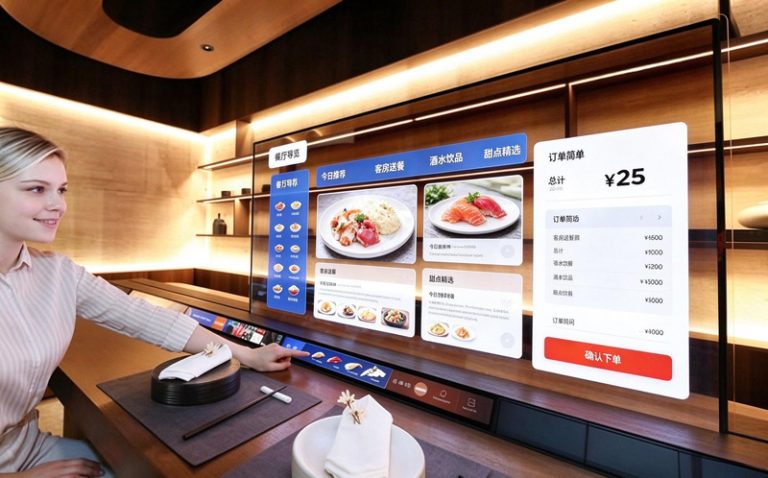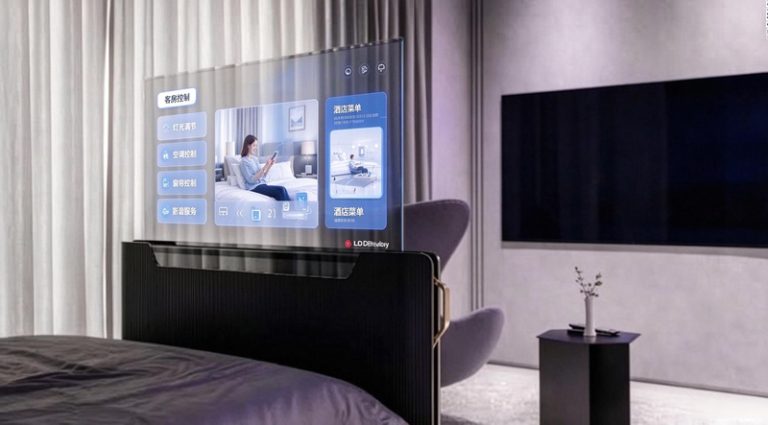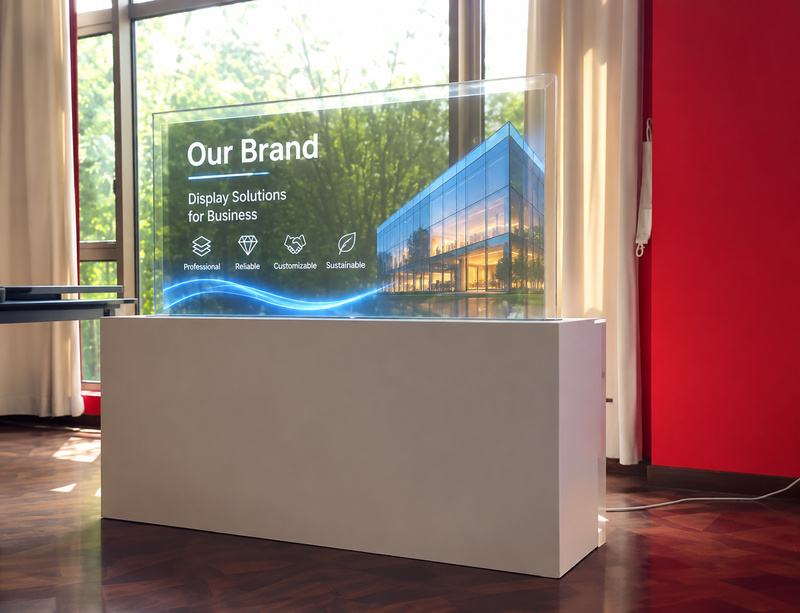

From the gallery entrance, a glowing line appears to follow the folds of a piece of fabric. As visitors come closer, they discover that the line is on a screen and the fabric sits behind it. That shift in perspective can be the starting point for transparent display art installations. The distance between the image and the material, and where visitors first see them, shape whether the work reads as a single image or as a space with distinct layers.
Give Each Layer in Transparent Display Art Installations a Role
In a fabric installation, the material can retain its natural folds and texture while the display plays a line that moves slowly along the edge. Once the line fades, visitors have time to look at the fabric itself. For more depth, leave space for another background layer behind the fabric. From an angle, visitors can then see the distance between the line, the fabric, and the backdrop.
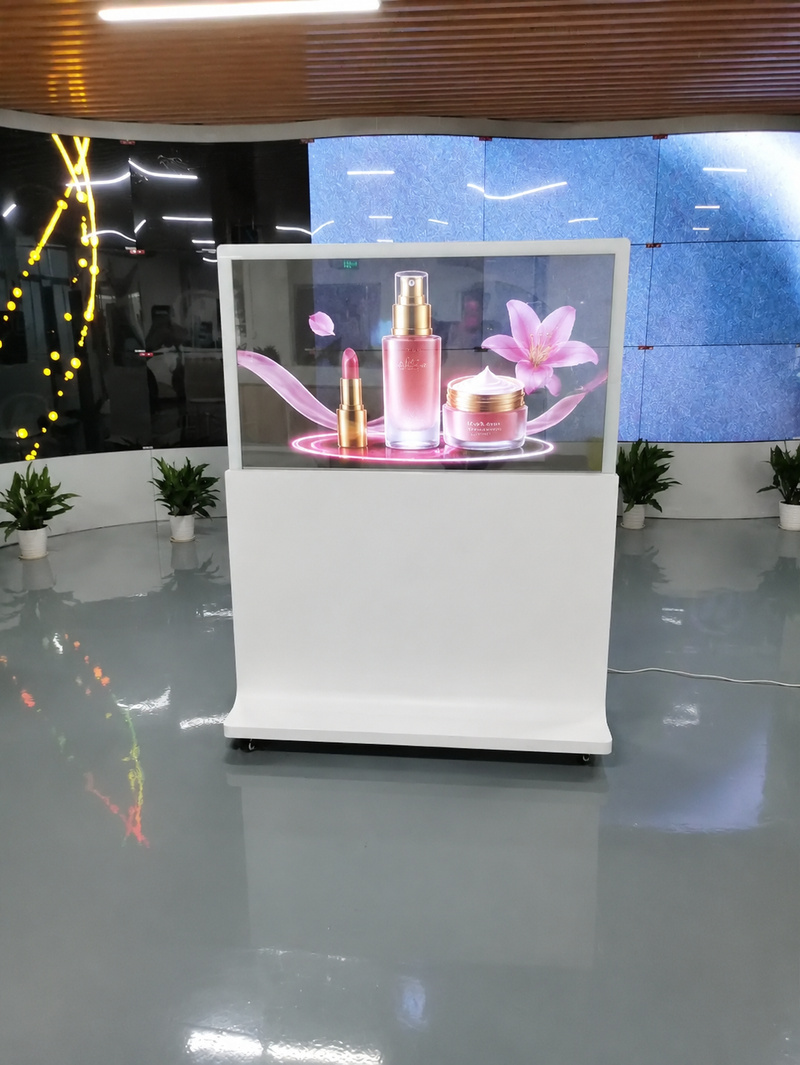
When choosing materials, place fabric, a frosted panel, or a metal swatch behind the sample display and play the same sequence. Use the frosted surface to explore softer light and shadow. View reflective metal from the side to see whether highlights wash out faint lines on the screen. In bright conditions, subtle graphics may be hard to see. A short playback test can show whether the material and imagery work together before you produce the full sequence.
Walk Around the Work to See How the Layers Change
If visitors will move from one side of the installation to the other, review it from two stopping points. From the first, look at the overall silhouette. From the second, check how the graphics relate to the physical material. A line may appear to move away from the fabric edge when viewed from the side. That shift can become part of the work. If one scene requires precise alignment, choose its main viewing point and record the material depth and screen position so the team can reproduce the effect during installation.
Consider a Curved Display When the Contour Is Part of the Work
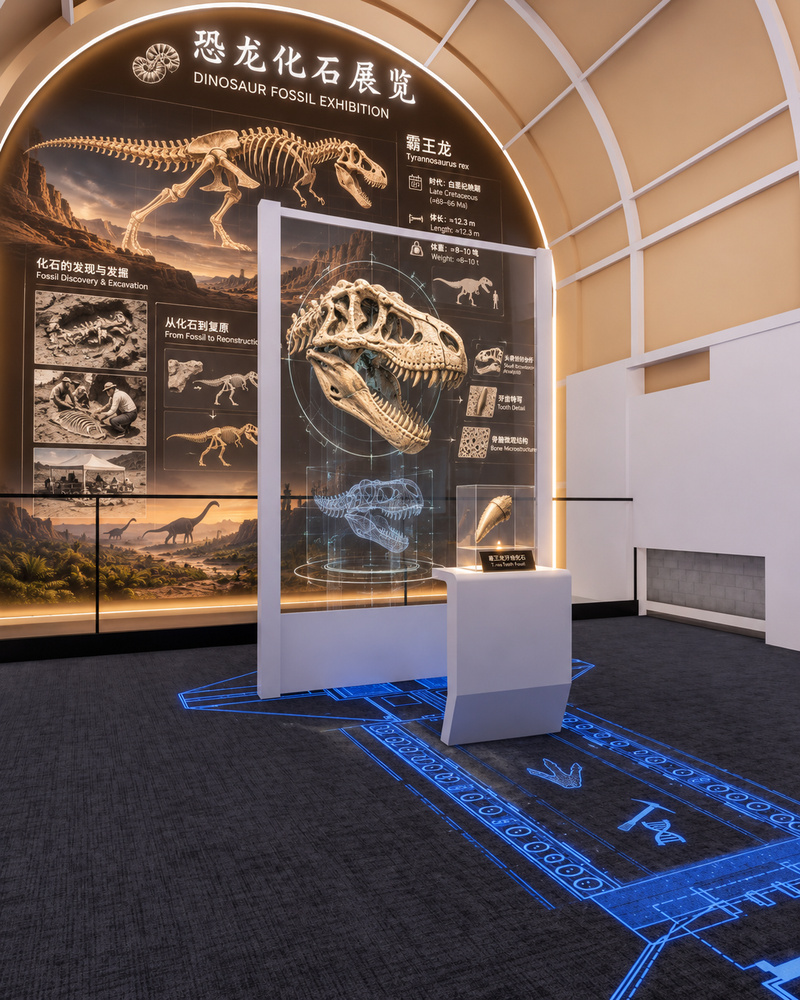
If the image needs to follow a curved physical form, start with a mock-up of that contour. Check whether the proposed curved or flexible display can achieve the required shape and keep the intended view through the screen. Share a plan, a side view, material samples, and a representative clip with the supplier. Mark where the physical object needs to remain visible and where supports can be seen. The team can then assess whether a flat transparent display with materials set at different depths creates the intended effect or whether a custom curved design is worth exploring.
Frequently Asked Questions
Does the imagery have to align precisely with the physical material?
It depends on the work. Design scenes that require precise alignment around a primary viewing point. If visitors are meant to discover the layers as they move, use the apparent shift between the graphics and the material.
Can a small exhibition still create a sense of depth?
Start with one flat transparent display and one piece of physical material. Adjust how far back the material sits, then look from the front and from an angle to see how clearly the layers read.
What should we share when requesting a quote?
Provide a sketch, the intended display area, the visitor route, and details of the physical materials. If you are considering a curved display, include a side view and the intended contour.
ZXT LCD designs and manufactures transparent OLED, flexible curved OLED, and transparent MicroLED displays for high-end retail, museums, and corporate showrooms. We support custom engineering projects. Share your application, target display size, ambient lighting conditions, and quantity, and our engineering team will get back to you as soon as possible. seethruoled.com