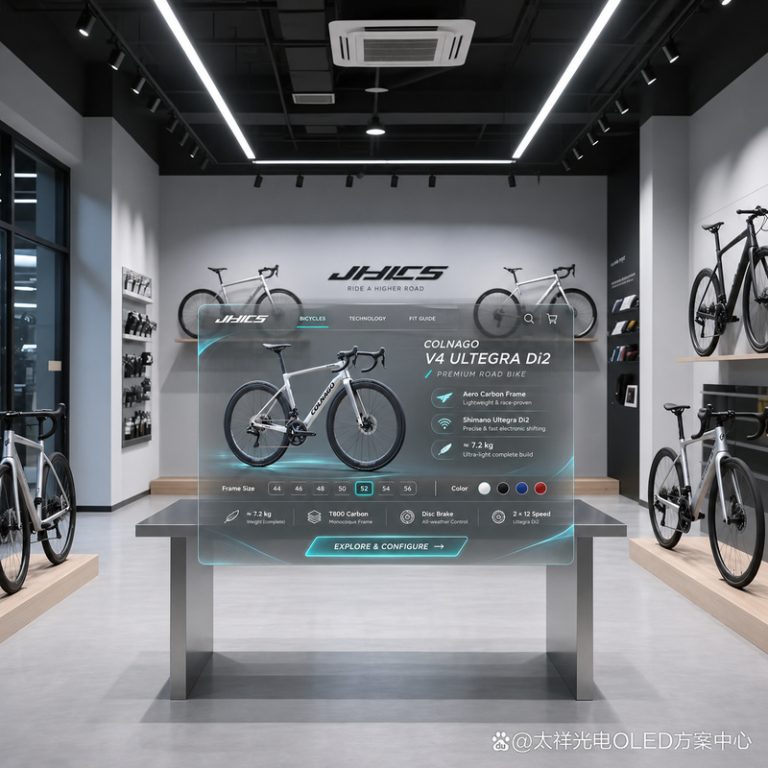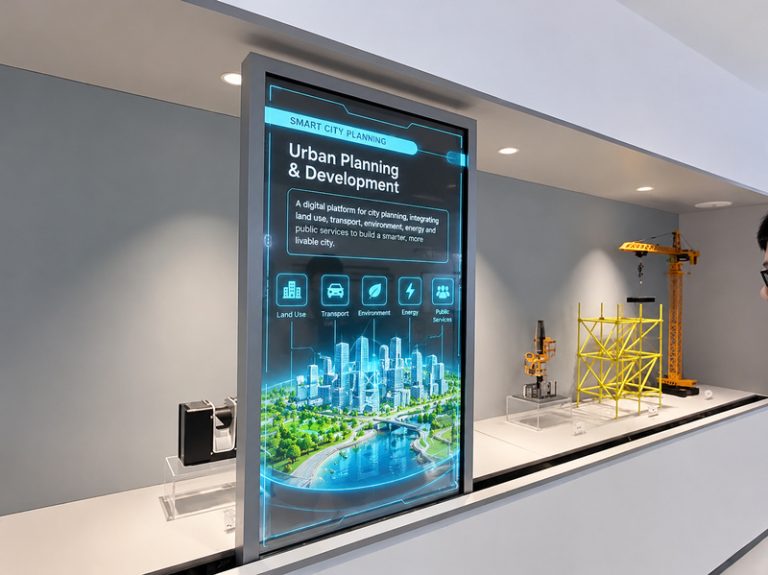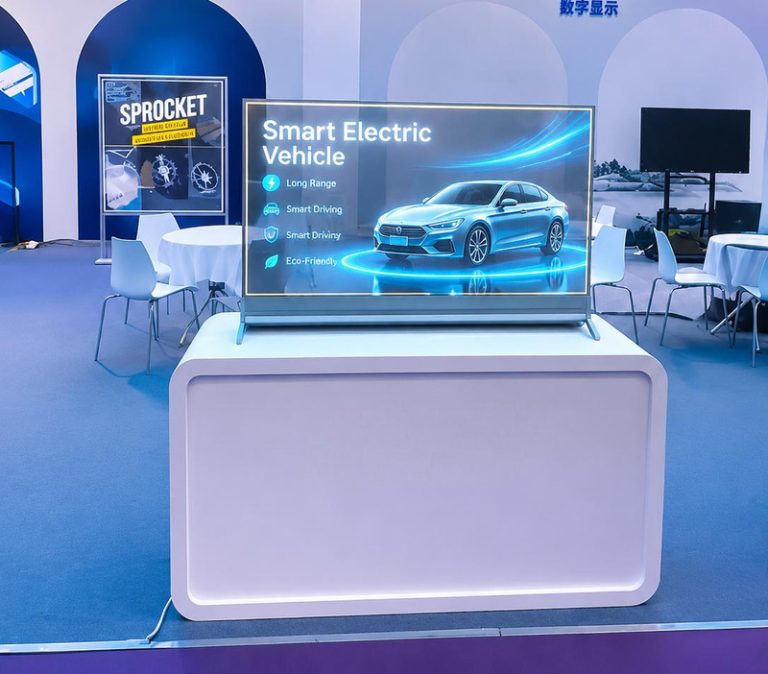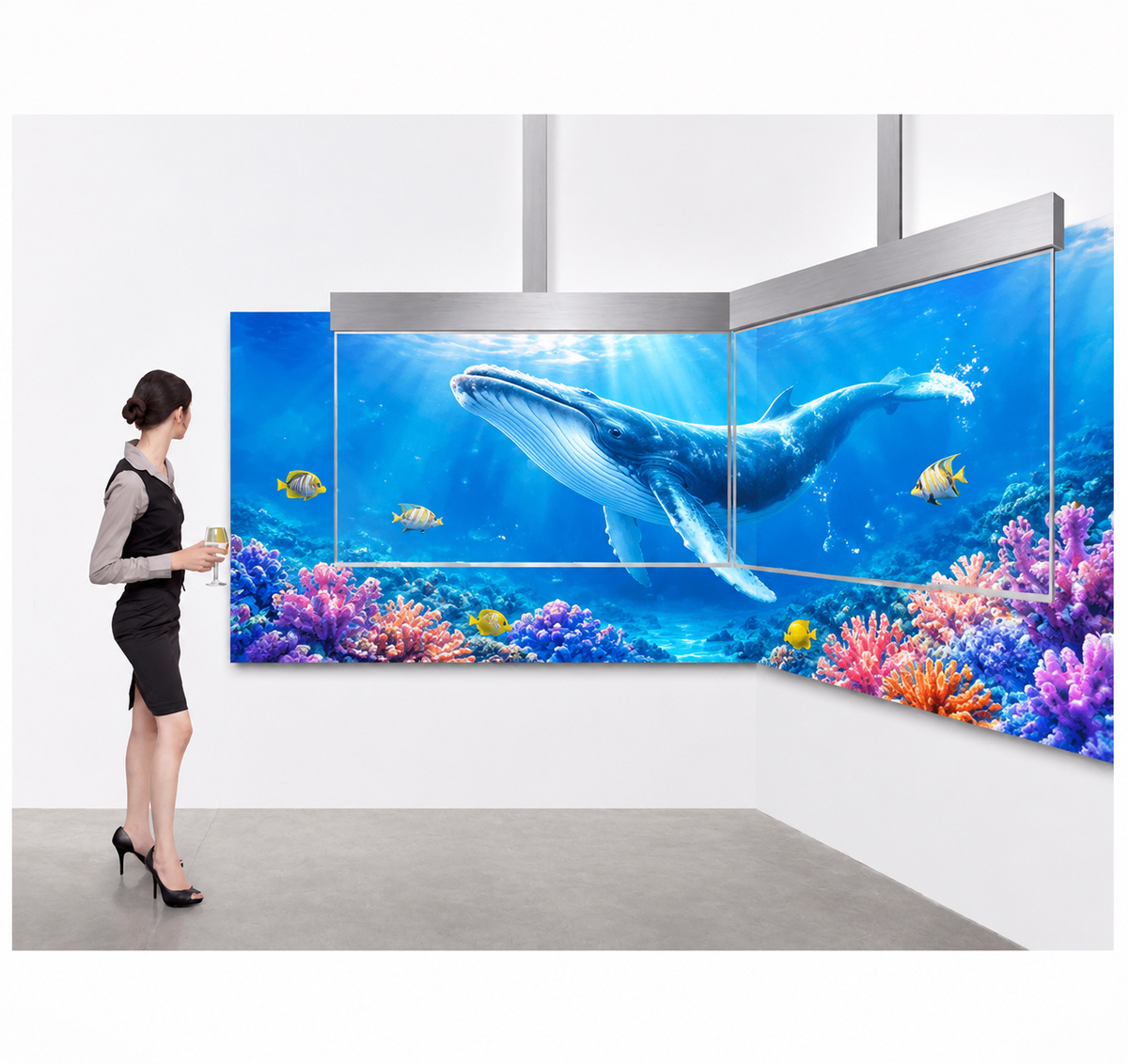

A transparent display is an electronic display device capable of rendering dynamic visual imagery while preserving optical see-through transparency. Unlike conventional opaque monitors, transparent screens broadcast text, photography, and video while allowing viewers to observe physical objects and architectural space located behind the panel, merging digital graphics with physical reality.
Driven by the evolution of commercial retail, digital exhibition galleries, and smart spatial architecture, transparent display technologies have diversified into several distinct hardware architectures: Transparent LED Displays, Transparent LCD Screens, Transparent OLED Displays, and Transparent Projection Systems.
Transparent LED Displays: Ideal for Large-Scale Architectural Facades
Transparent LED displays (often referred to as LED mesh or ice screens) deploy linear LED light strips integrated into a hollowed-out aluminum or polymer lattice, utilizing physical gaps between strips to preserve natural light transmittance. When energized, the screen broadcasts vibrant video, animations, and text; when powered off, the open lattice preserves architectural daylighting and building aesthetics.
Their primary strength is modular scalability and high luminous output, making them ideal for glass curtain walls, shopping mall exterior atriums, outdoor advertising, and large-format commercial facades. However, because pixels consist of discrete LED diodes, close-up viewing reveals noticeable dot-matrix pixel pitch, requiring careful selection of pixel pitch based on viewer distance.
Transparent LCD Screens: Balancing Liquid Crystal Display with See-Through Visibility
Transparent LCD displays utilize a modified liquid crystal panel structure with the opaque backlight unit removed, relying on external ambient illumination or dedicated edge-lit showcase lighting to illuminate pixels. Compared with standard LCDs, transparent LCDs retain active image rendering while allowing ambient light to pass through the panel.
Transparent LCDs are widely deployed across product display showcases, commercial vitrines, museums, and interactive vending kiosks. Optical clarity and contrast depend heavily on internal showcase lighting, background contrast, and ambient lux levels, requiring careful lighting design inside the enclosure behind the screen.
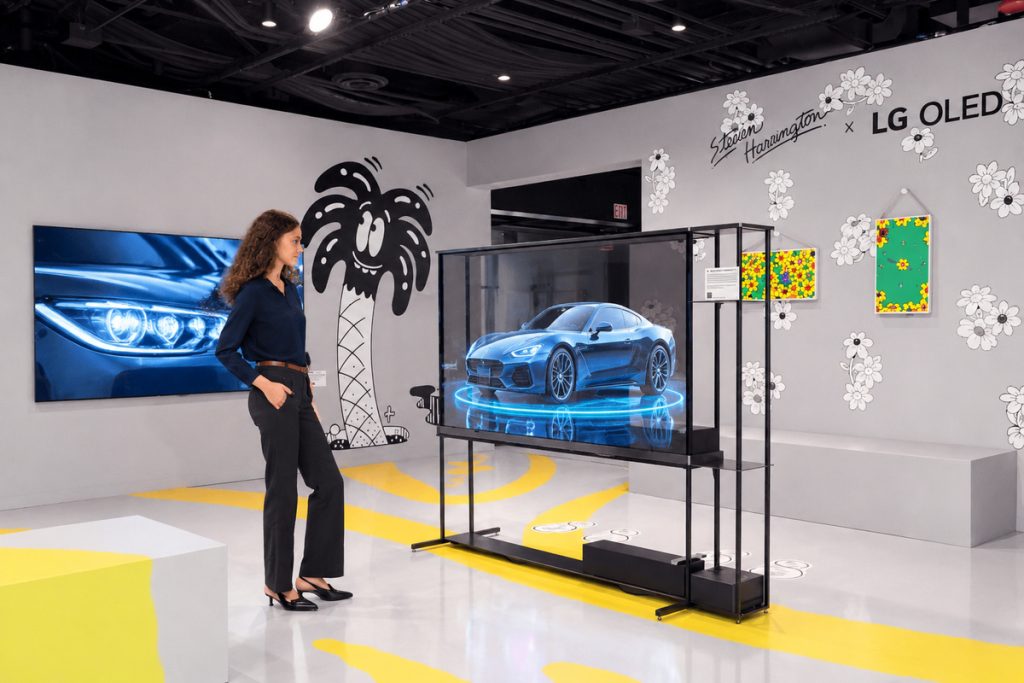
Transparent OLED Displays: Uniting Vivid Visuals with Spatial Openness
Transparent OLED displays deploy self-emissive organic light-emitting diode technology: every subpixel independently generates its own light and color, completely eliminating the bulky backlight modules required by LCDs. Precision micro-aperture engineering allows the panel to render rich, full-color imagery while maintaining generous clear aperture areas.
Transparent OLED screens deliver high dynamic contrast, vibrant color saturation, paper-thin profiles, and deep transparent blacks. They are ideal for luxury merchandise showcases, digital exhibition galleries, branded display vitrines, and creative architectural installations, presenting digital media and physical background objects simultaneously with striking visual depth.
Transparent Projection: Merging Projected Images into Architectural Space
Transparent projection operates on principles distinct from flat-panel LED, LCD, or OLED screens: it does not utilize a solid self-emissive panel, but projects light from an external digital projector onto specialized holographic or micro-optical transparent film media.
This method is favored for theatrical stage productions, brand launch keynotes, museum dioramas, and immersive spatial exhibits. Carefully engineered projector throw distances, dark backgrounds, and directional lighting create holographic illusions of floating imagery. However, projection contrast is acutely sensitive to ambient room light and optical screen gain, requiring site-specific optical engineering.
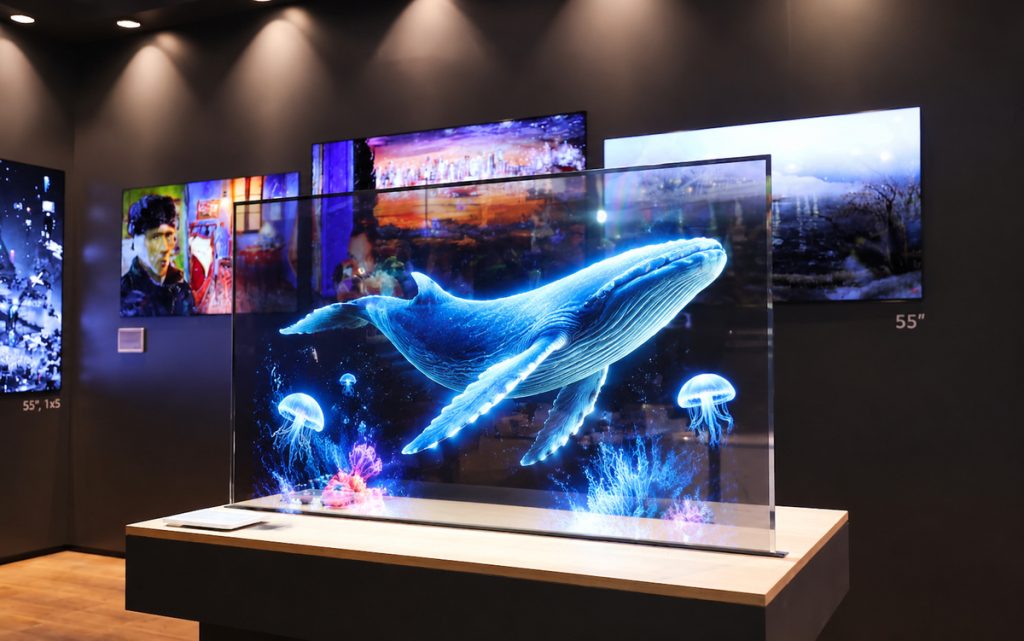
How to Choose the Right Transparent Display Technology
Every transparent display technology possesses unique technical trade-offs; no single solution fits all commercial scenarios. For colossal architectural glass facades or long-range outdoor billboards, prioritize Transparent LED displays; for enclosed retail showcases and product vitrines, evaluate Transparent LCD or Transparent OLED based on internal lighting and budget; for theatrical staging and artistic holographic spatial effects, specify Transparent Projection systems.
When making procurement decisions, balance screen diagonal, native resolution, nit luminance, optical transmittance percentage, primary viewer distance, structural mounting methods, and ongoing maintenance overhead. Evaluating hardware against real-world site conditions ensures transparent display technology delivers maximum commercial impact.