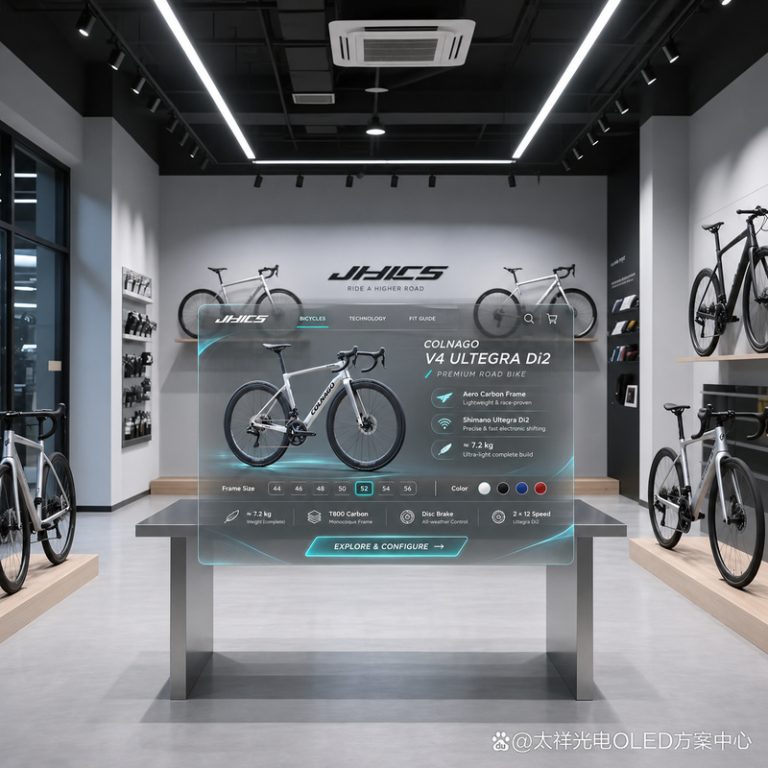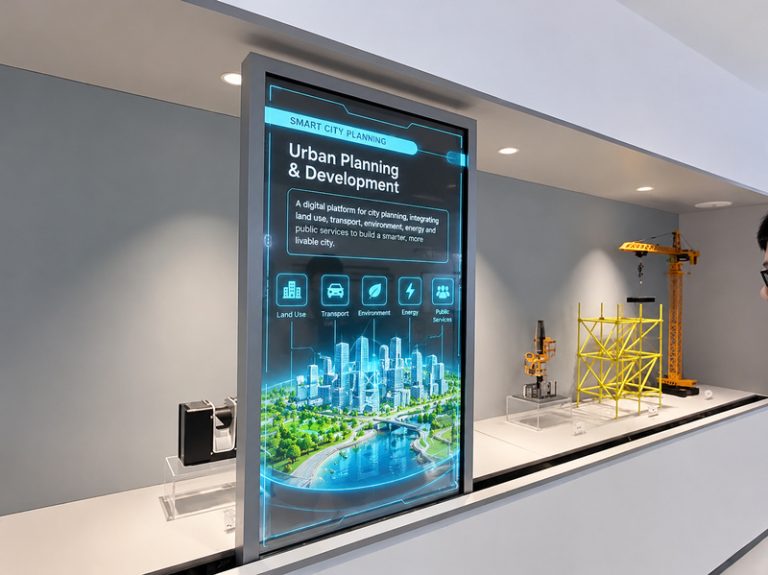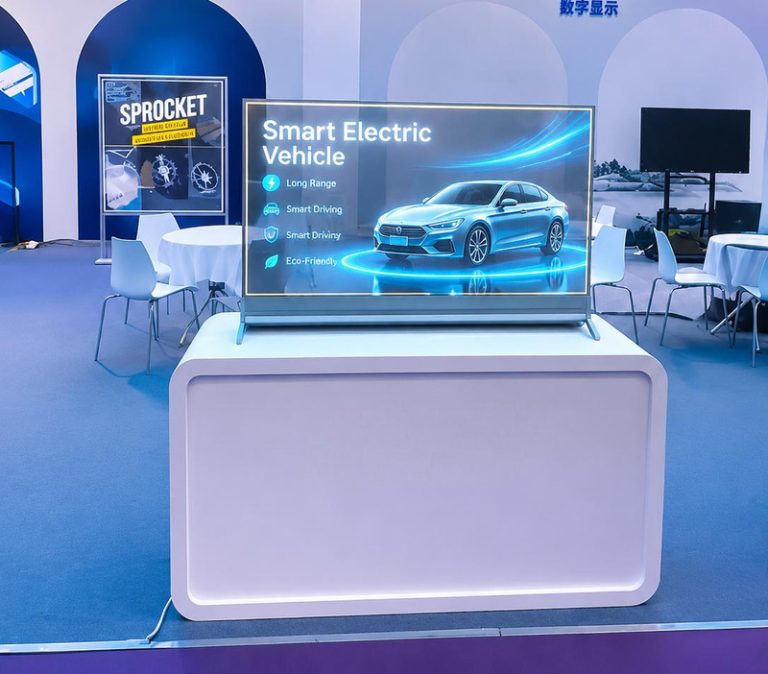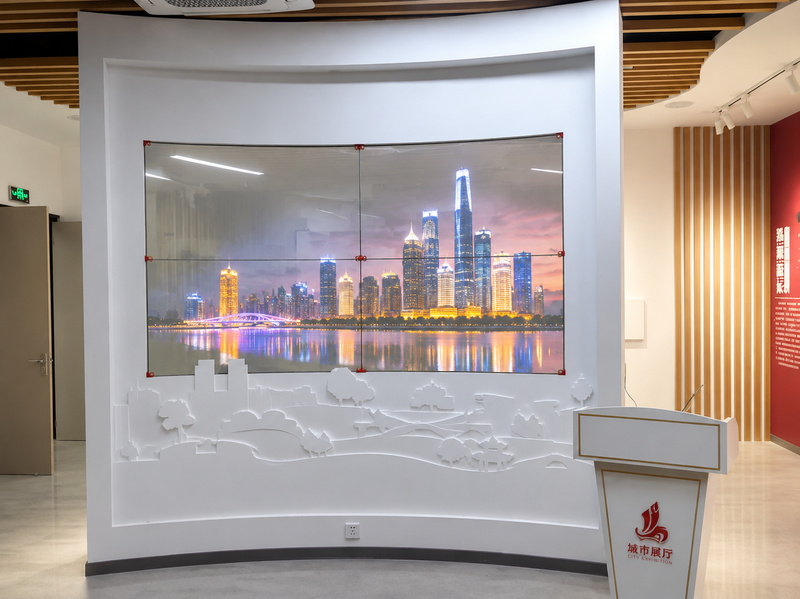

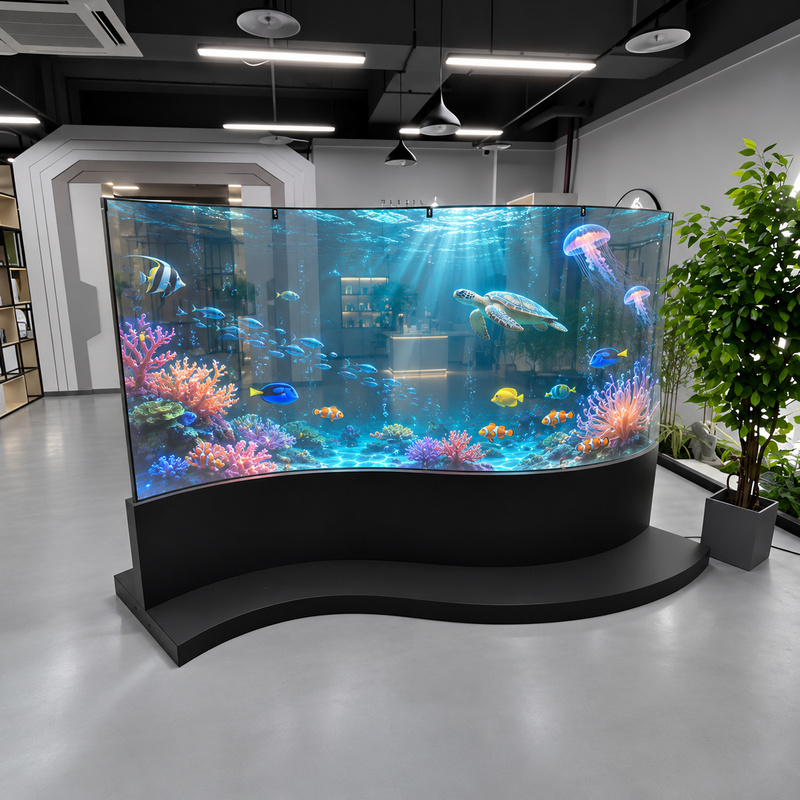
Three related material samples sit along a curved exhibit counter. As visitors walk past, a changing texture on the screen introduces each sample in turn. Here, flexible curved OLED can carry the imagery along the counter, following the visitor route. If visitors mainly stop in front of the exhibit for a guided presentation and the screen plays a single product introduction, a flat display can serve that purpose too.
Decide What Flexible Curved OLED Needs to Do for the Exhibit
For a showroom corner, curved counter, or wraparound installation, use a full-scale mock-up to mark where the display will sit. Start where visitors approach and check where the imagery first comes into view and how much remains visible as they move around the curve. If the goal is to connect two groups of exhibits with a continuous image, test a graphic that moves across the curve. If each group has its own explanation, flat displays at separate points along the counter can present those sections and make content production and updates easier to manage.
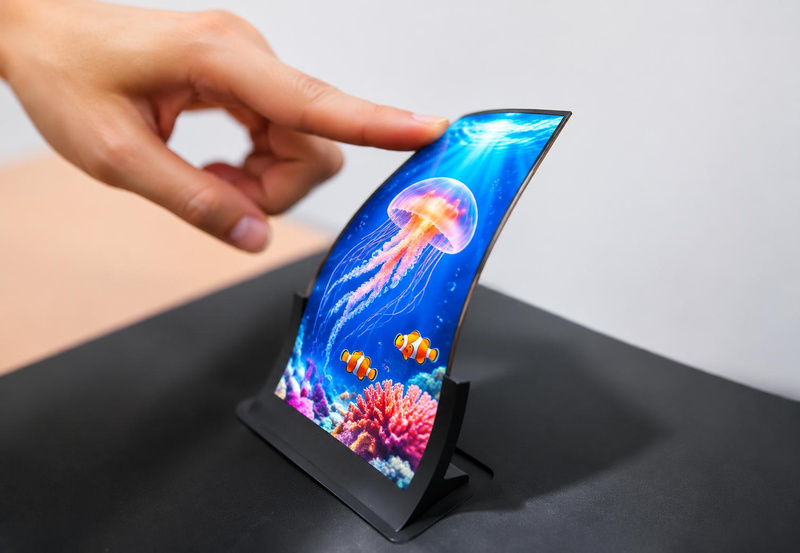
Show the Display Profile and Supports on the Same Side View
Mark the intended curve, the edges of the visible image, and the available space inside the cabinet. Ask the supplier to confirm the proposed model’s supported bending direction, achievable curvature, and mounting method. If the cabinet shape is already set, check how the display edges meet the enclosure and where technicians can gain access for removal. If the design calls for a physical object behind the screen, confirm the proposed display’s transparency and use a mock-up to see which parts of the object will remain visible.
Test a Scene With the Planned Content, Then Compare Project Costs
Play a graphic that moves along the curve, together with a headline and the smaller text you intend to use. Walk from the entrance to the main viewing point. See whether the graphic moves naturally across the curve and whether visitors can finish reading before they turn away. If text falls near the side of the curve, move it to the section visitors face most directly. Let graphics or textures continue across the curve.
When requesting a quote, use the same scope for the display, support structure, content adaptation, and on-site installation. If a flat option delivers the main viewing effect, price both designs on that basis. The clearer the benefit of continuous imagery or a curved profile, the easier it is to judge whether the added investment is worthwhile.
Frequently Asked Questions
Does a curved exhibit counter need a curved screen?
First decide whether the content needs to run continuously along the full curve. If visitors stop at a fixed point or each object is introduced separately, compare a flat display as well.
Can we reuse content made for a flat display?
Use it for an initial playback test. Confirm the export dimensions, then check text, graphics, and transitions from the actual viewing positions to see what needs rearranging.
Can we add a curved display after the cabinet design is finalized?
Share a side view and site photos so the engineering team can review the intended contour, available mounting space, and removal path.
ZXT LCD designs and manufactures transparent OLED, flexible curved OLED, and transparent MicroLED displays for high-end retail, museums, and corporate showrooms. We support custom engineering projects. Share your application, target display size, ambient lighting conditions, and quantity, and our engineering team will get back to you as soon as possible. seethruoled.com