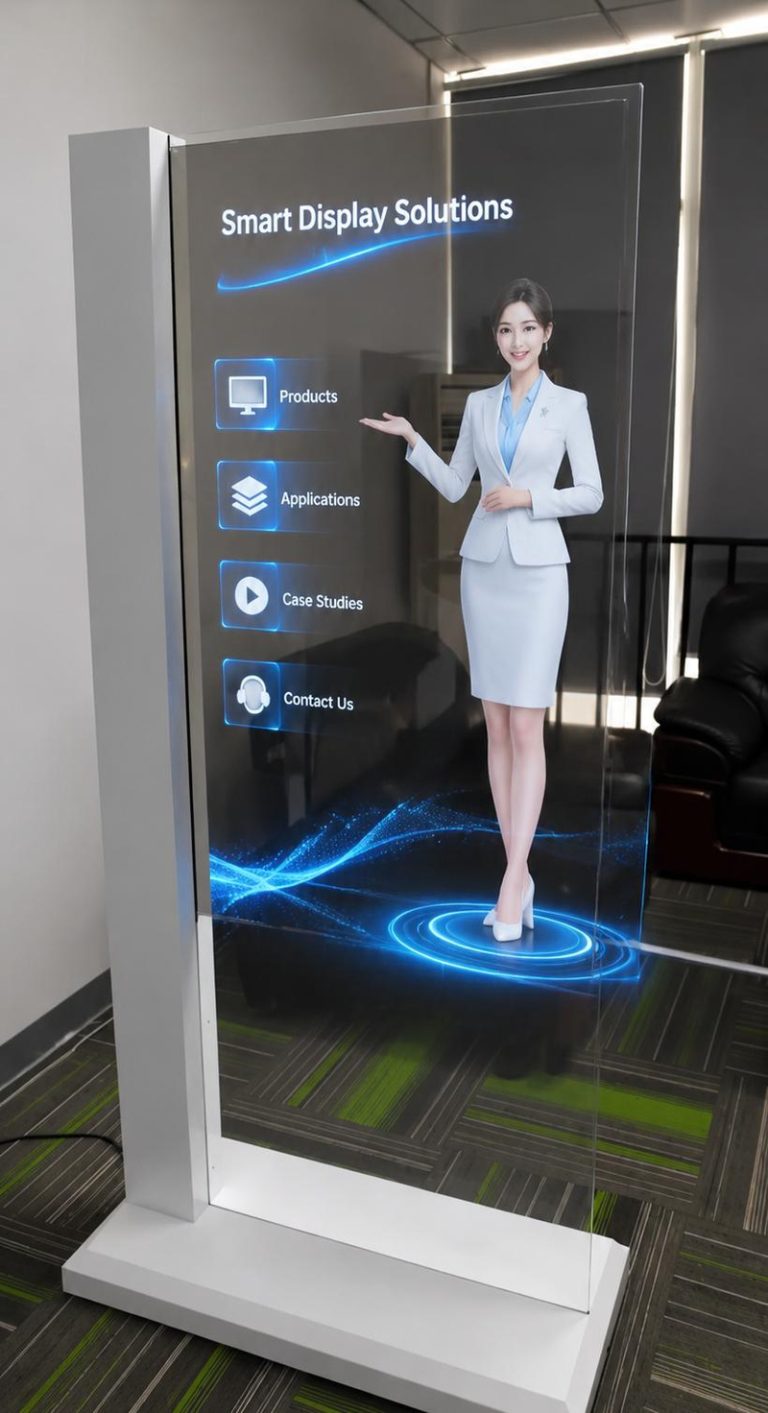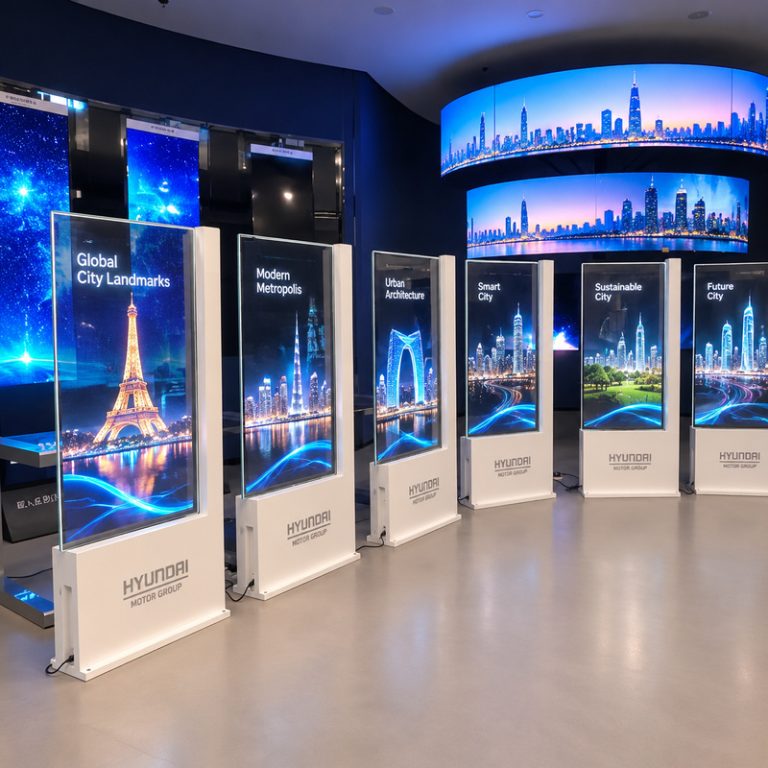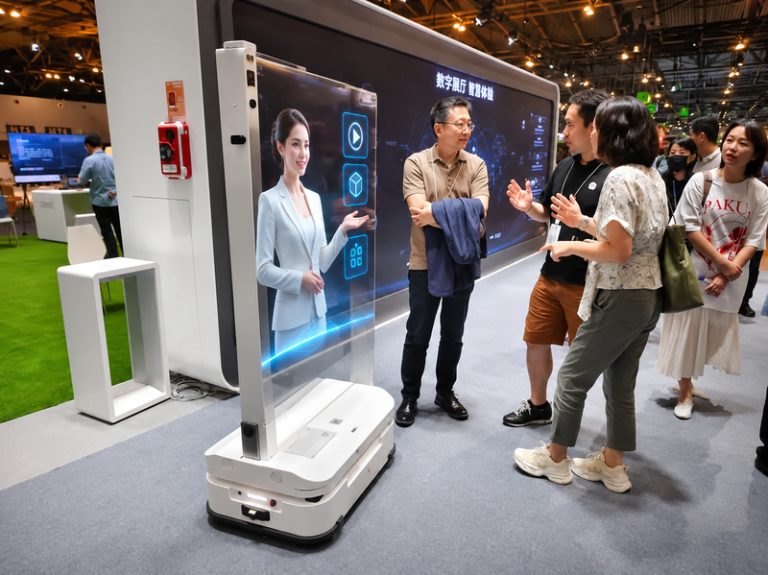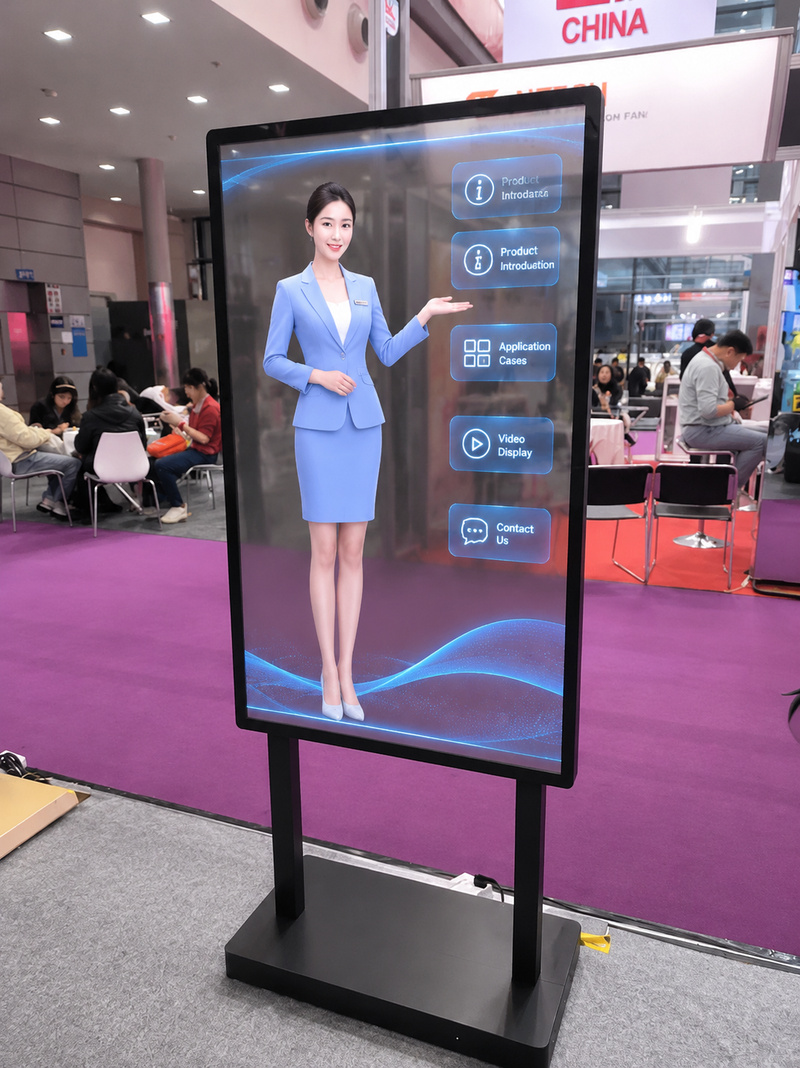

On a showroom plan, the route from reception to the product area looks like a straight line. On site, it goes around a queue, passes through a door that is usually half open, and stops in front of a product sample. A site survey for a mobile digital human display can start at the proposed charging point. Walk the route in tour order, continue to the final stop, then follow the planned return route. Mark any place where movement or stopping could be affected.
Start the Site Survey for a Mobile Digital Human Display at the Narrowest Points
Record the clear width with doors open, the space available at corners, and the locations of carpet edges, thresholds, ramps, and steps. When measuring a passage, account for temporary display stands, queue barriers, and cabinet doors that are frequently opened. If the route changes floors, record the elevator door opening, usable car space, and any level difference at the entrance. Ask the supplier whether the unit can enter and exit as planned and whether staff assistance is needed between floors. Mark an alternate route wherever the planned route has steps or an unverified change in floor level.

Stop at Each Tour Point and See Where Visitors Gather
Ask a few colleagues to gather around the proposed stopping point as visitors would. Some will stand in front, while others may turn to look at the exhibit behind the screen. See whether the group extends into a doorway, blocks an adjacent exhibit, or takes up a passage other visitors need. A spot that works in an empty showroom is worth checking again during a group visit or event. If the stopping point moves to the side of the exhibit, check that visitors can still see both the display and the exhibit from there.
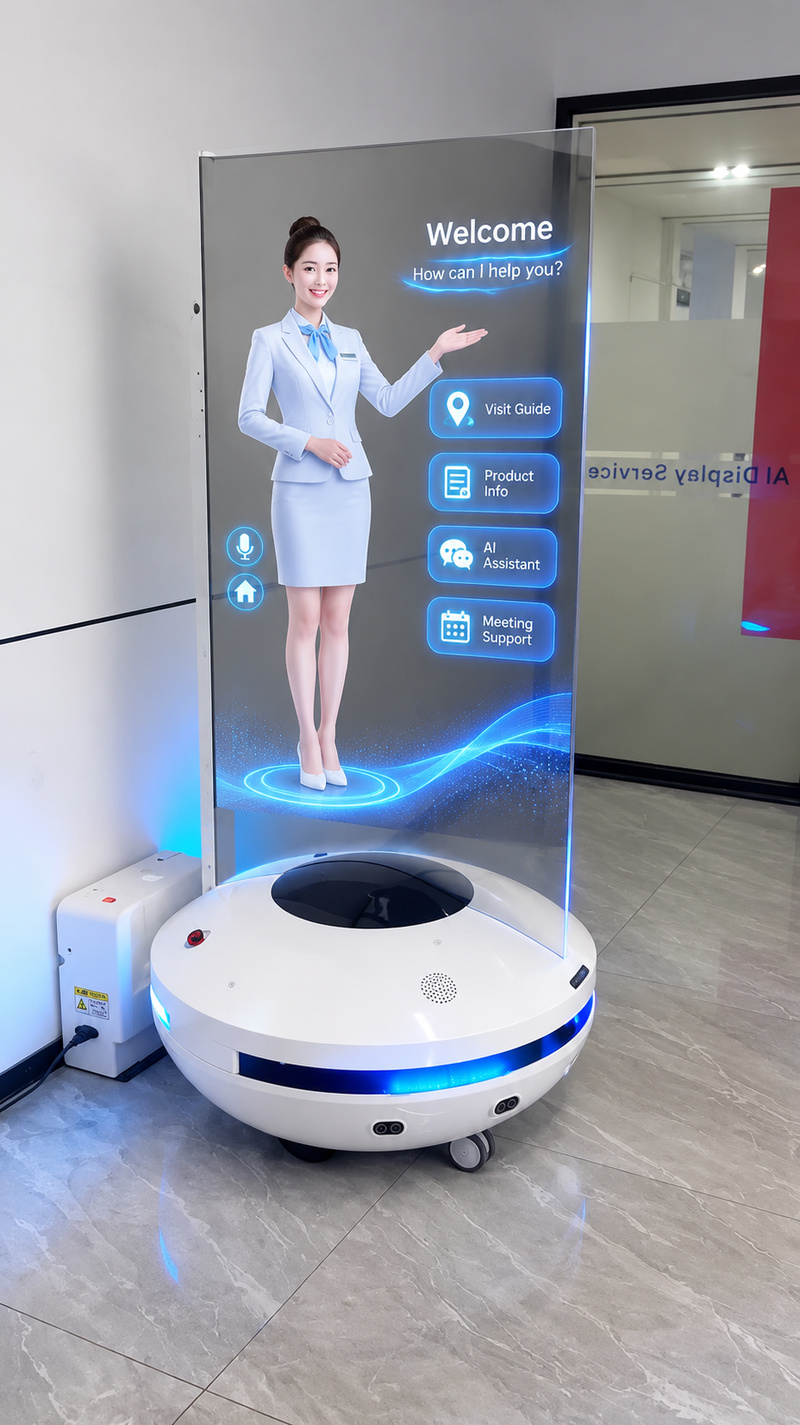
Check Wireless Coverage and Charging on the Same Walk
Record wireless signal conditions at each tour stop, near elevators, and at the charging point. If the tour content relies on a network connection, verify the key locations with the proposed unit and ask the supplier what happens if the connection drops. Before finishing, walk the return route. Check for suitable power access at the charging point and enough room for people to pass while the unit is parked. Put the main route, alternate route, tour stops, and charging point on one plan so the venue and supplier can arrange an on-site trial.
Frequently Asked Questions
Do we need to survey during opening hours if the unit has obstacle avoidance?
Observe the venue during normal visitor traffic. Obstacle avoidance is a device feature. An on-site walkthrough shows where groups gather and where queues form.
Can we review the route with just a floor plan?
Yes. Mark doorways, turns, floor changes, and the proposed charging point. Verify clear widths, floor transitions, and temporary obstacles on site.
Which location should we verify first?
Start with the point that is hardest to bypass, such as a narrow doorway on the only route or a tour stop where visitors often gather. Confirm whether it works before finalizing the whole route.
ZXT LCD designs and manufactures transparent OLED, flexible curved OLED, and transparent MicroLED displays for high-end retail, museums, and corporate showrooms. We support custom engineering projects. Share your application, target display size, ambient lighting conditions, and quantity, and our engineering team will get back to you as soon as possible. seethruoled.com