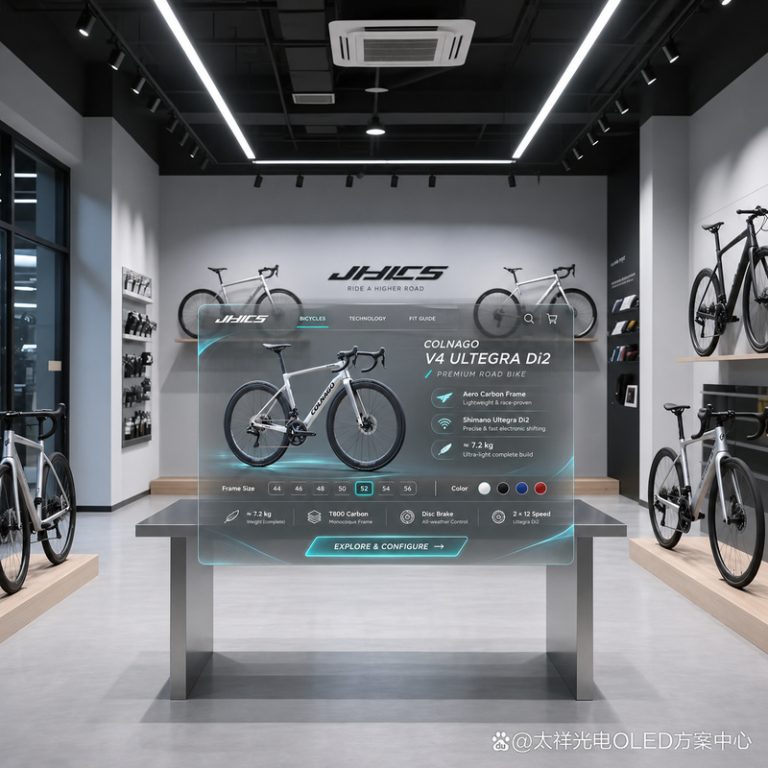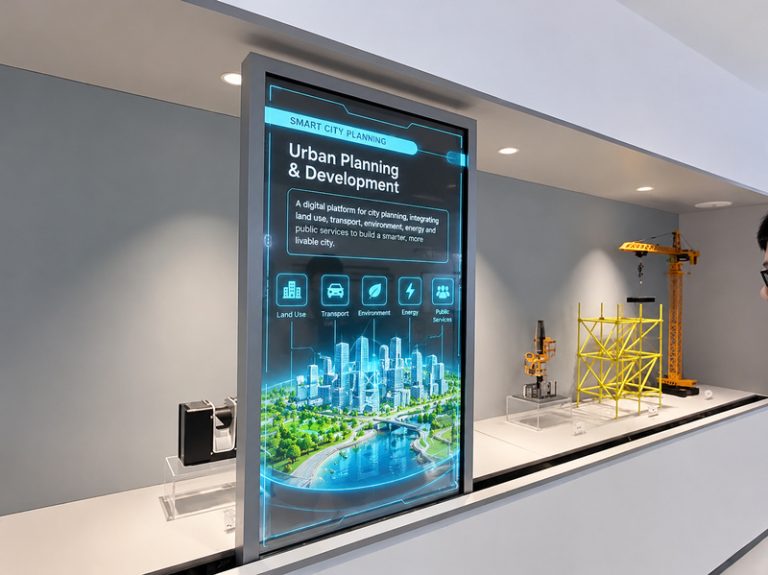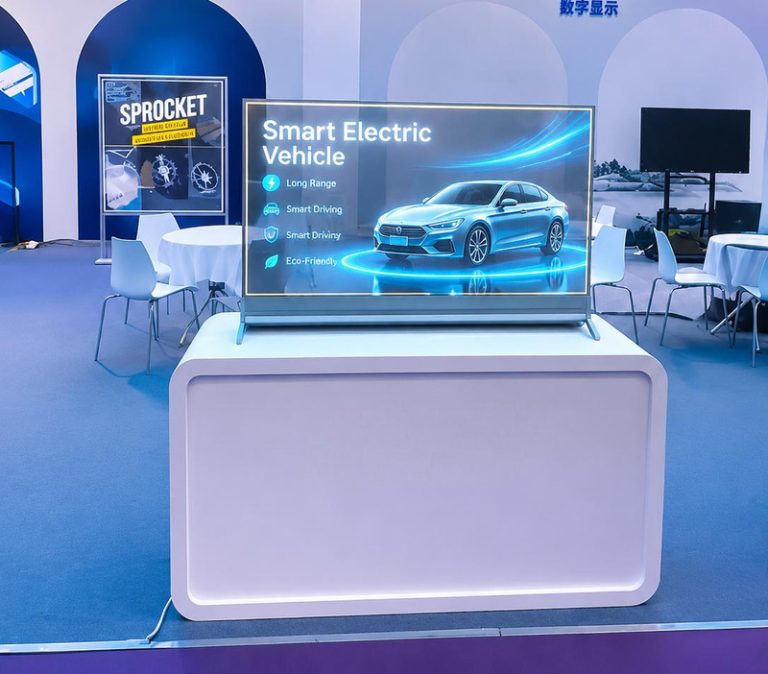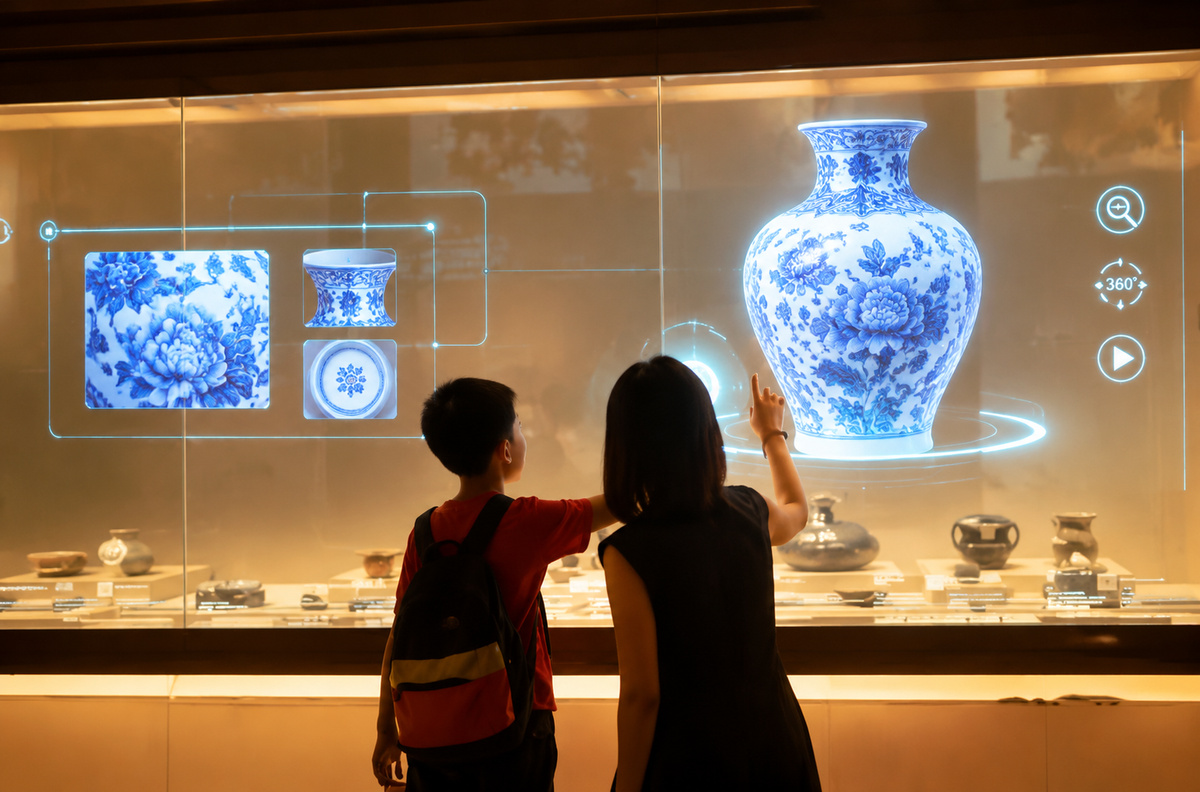

Transparent digital displays effortlessly capture attention: physical merchandise behind the glass remains clearly visible while dynamic digital graphics appear to float in mid-air. Across luxury perfume vitrines, museum showcases, retail display windows, and corporate briefing centers, transparent displays consistently become visual showpieces.
Yet experienced project managers know that transparent display performance is heavily conditional: the exact same display that looks breathtaking inside a dimly lit museum showcase can appear flat and washed out in a sun-drenched storefront window. Below is a clear comparison of underlying display principles, the two dominant commercial technologies, and essential procurement criteria.
How Transparent Displays Achieve See-Through Capability
Standard commercial monitors incorporate solid, opaque backlight panels and dense circuit layers that completely block line of sight. Transparent displays achieve see-through capability by re-engineering internal layers: integrating microscopic clear aperture gaps between subpixels, and utilizing transparent or semi-transparent conductive materials.
Two dominant commercial technologies exist: Transparent OLED (T-OLED), where self-emissive organic subpixels eliminate the need for an external backlight plate entirely; and Transparent LCD, where the opaque backlight is removed from a liquid crystal panel, relying on ambient lighting or dedicated edge-lit showcase illumination to render imagery.
Two Distinct Display Technologies, Unique Strengths
Transparent OLED (T-OLED): Every subpixel is self-emissive without an external backlight; black content turns pixels off completely, rendering pure see-through transparency, while colored graphics appear as vibrant holographic visuals floating on glass. Delivers rich color saturation, excellent dynamic contrast, and paper-thin form factors. Operational considerations: displaying frozen static content risks image retention; peak luminance is limited by organic chemistry, degrading contrast under intense daylight; and unit costs carry a premium.
Transparent LCD: Liquid crystal cells modulate light transmission, illuminated by internal showcase edge lighting or ambient light. Technology is mature, manufacturing costs are lower, and large physical diagonals are easily produced. Operational considerations: optical transmittance and contrast depend entirely on ambient lighting behind the panel; displays require carefully engineered internal showcase lighting to achieve acceptable visibility, and transparency percentages are lower (typically 10%–15% vs. 40%–50% for T-OLED).
Neither technology is universally superior; selection depends on diagonal size, budget, ambient room lux levels, and creative media formatting.
Deconstructing Commonly Exaggerated Marketing Claims
‘Infinite Contrast Ratio’: A frequent marketing claim for OLED. When displaying black, pixels turn off completely, achieving zero luminance in a dark laboratory. However, on a transparent screen in a real room, black appears as the physical background behind the screen. As ambient room light brightens, background objects reflect light, artificially raising black levels and lowering perceived contrast. Contrast depends heavily on site lighting and background staging rather than datasheet numbers.
‘Over 60% Transparency’: Measurement protocols vary widely, and transparency exists in a direct engineering trade-off with luminance: the higher the transparency, the less surface area remains for emissive subpixels, causing graphics to appear faint or washed out. Verify measurement conditions and examine physical sample units in person.
‘Sub-1mm Thickness / One-Third of LCD’: This describes raw panel glass. Complete turnkey kiosks incorporate metal framing, tempered protective safety glass, internal controller motherboards, and power supplies, making finished structural depth significantly greater than bare glass specs.
‘Wide Viewing Angles Without Distortion’: Viewing transparent displays from side angles alters how digital graphics visually overlay three-dimensional objects behind the glass, requiring on-site validation from real-world viewer sightlines.
High-Impact Commercial Application Scenarios
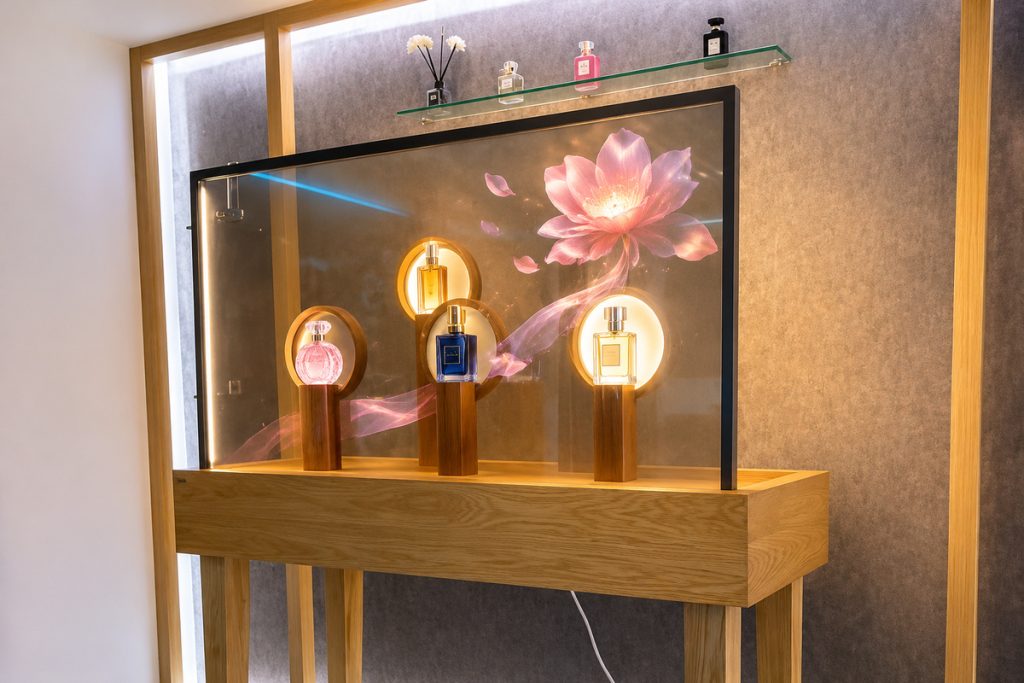
Showcase Vitrines & Display Plinths: Museums, luxury jewelry counters, and flagship perfume boutiques place physical merchandise inside the case while streaming digital storytelling across the front glass. Internal showcase lighting is paramount: illumination must balance both the physical object and digital graphics.
Storefront Retail Windows: Retail display windows naturally present see-through surfaces; transparent displays broadcast digital campaigns without blocking in-store visibility. However, exterior-facing windows exposed to direct sunlight require rigorous evaluation of ambient glare and high luminance.
Exhibition Centers & Interactive Exhibits: Creative installations pairing transparent screens with interactive touch overlays and animated infographics captivate visitor foot traffic.
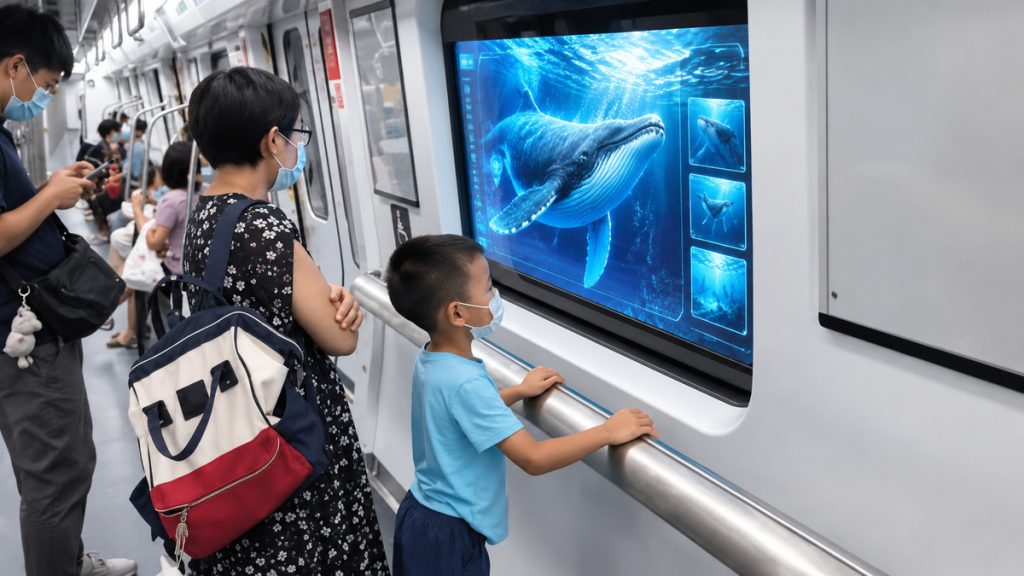
Public Transit & Architectural Partitions: Passenger windows, glass partition walls, and architectural balustrades are seeing experimental pilot deployments, evaluated against structural safety, environmental lighting, and cost.
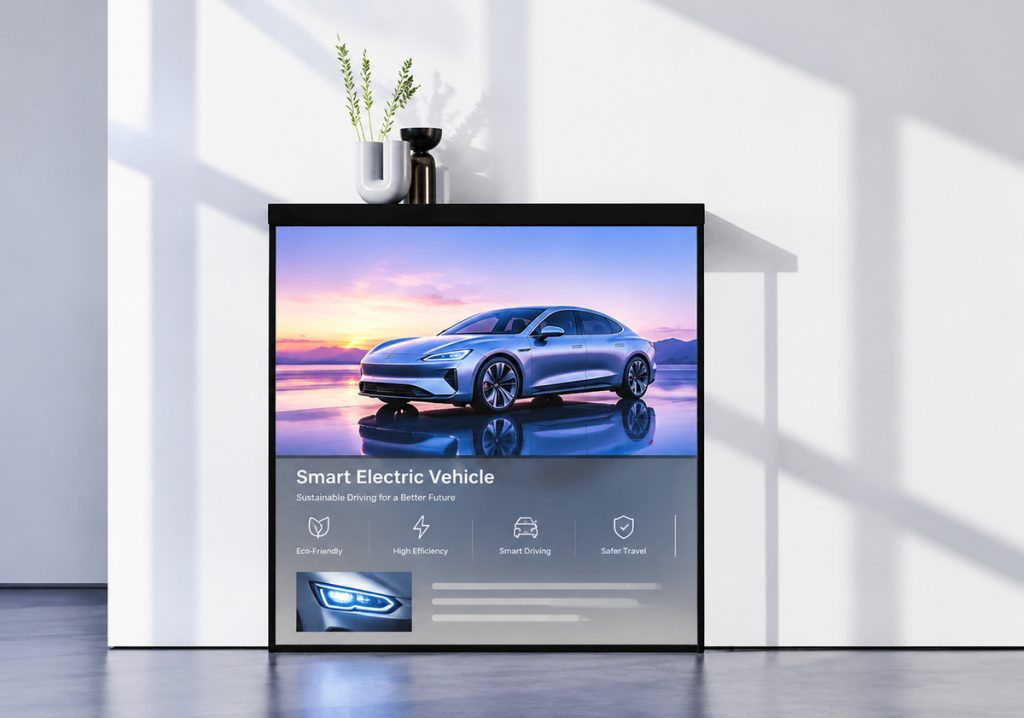
Smart Interiors & Executive Furniture: Glass conference tables, smart partitions, and digital credenza doors broadcasting clocks, weather, and ambient branding.
Creative Content Design Dictates Visual Success
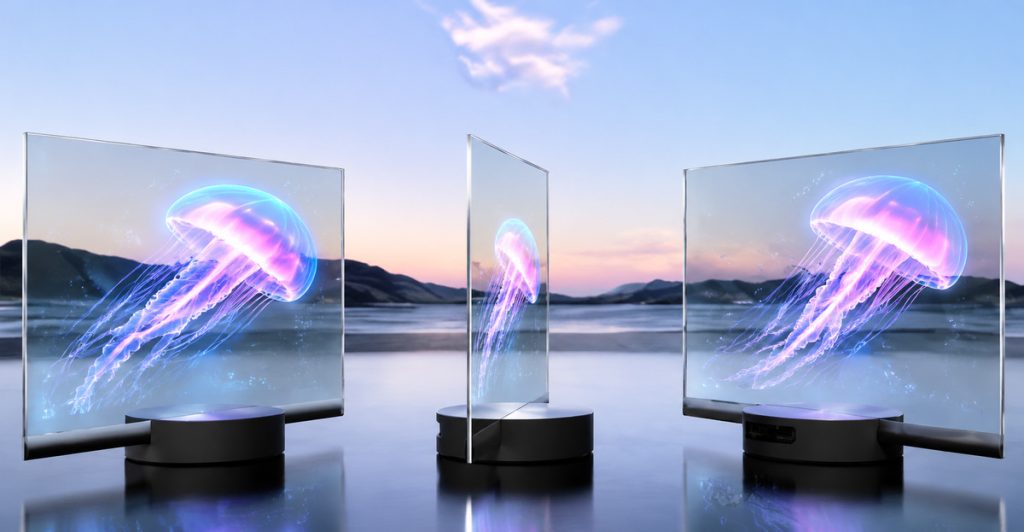
Designing content for transparent displays differs fundamentally from standard monitors. Black levels turn pixels off and ‘disappear’ into transparency, meaning dark backgrounds reveal physical background scenery while light, vibrant graphics stand out boldly. Large fields of solid white overpower the background and destroy see-through transparency.
Creative Best Practices: Use dark or black backgrounds with vibrant, saturated focal elements; keep typography clean and boldly sized; avoid full-screen solid white fields; and synchronize digital animations with physical merchandise positioned behind the glass. Test creative media assets inside real showcase lighting before finalizing production.
Pre-Procurement Checklist
Evaluate site ambient lighting (dim showcase vs. sunlit storefront window); determine physical screen size and mounting format (recessed vitrine vs. surface wall mount); confirm authentic transmittance and nit brightness under real-world conditions; verify image retention countermeasures for continuous operation; establish content update workflows (USB vs. cloud CMS); confirm custom dimensional engineering; and formalize warranty coverage for panel glass and power components.
The most dependable strategy is testing an evaluation sample unit on-site across different dayparts before committing to volume rollouts.
Frequently Asked Questions (FAQ)
Can transparent displays operate under bright daytime sunlight?Visual performance will degrade. Intense sunlight washes out imagery, requiring elevated luminance and anti-reflective optical treatments; evaluate site conditions carefully.
Do transparent OLED displays suffer from image retention (burn-in)?Yes, displaying frozen static graphics continuously risks retention. Mitigate burn-in via rotating dynamic media playlists and automated overnight sleep timers.
Do transparent displays support interactive touchscreen overlays?Yes, touch-enabled configurations are available; evaluate physical touch responsiveness and optical transparency on sample units.
Why do transparent displays carry premium pricing?Precision secondary laser cutting, vacuum organic deposition, low panel yields, and custom structural framing contribute to higher unit costs.
Conclusion
The visual appeal of transparent displays is profound, but operational boundaries are equally real. Defining installation placement, ambient lighting conditions, and creative content strategies before selecting display technologies and dimensions ensures your transparent display delivers authentic, lasting commercial impact.