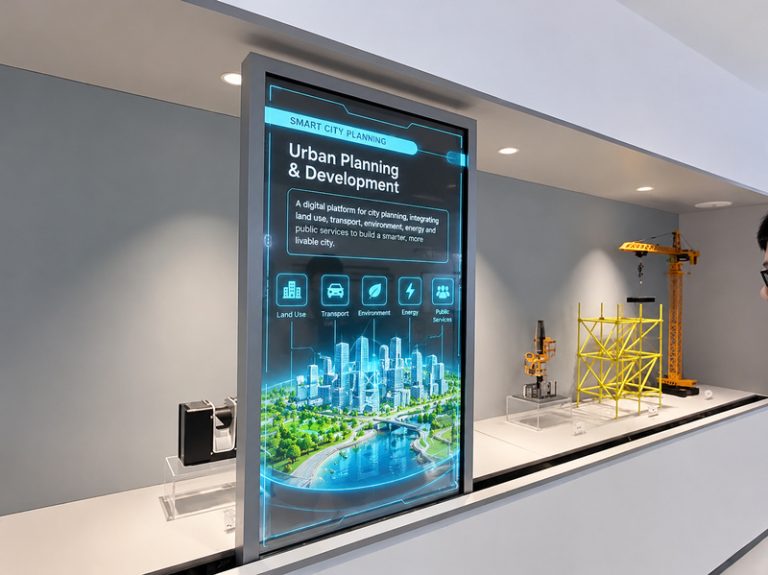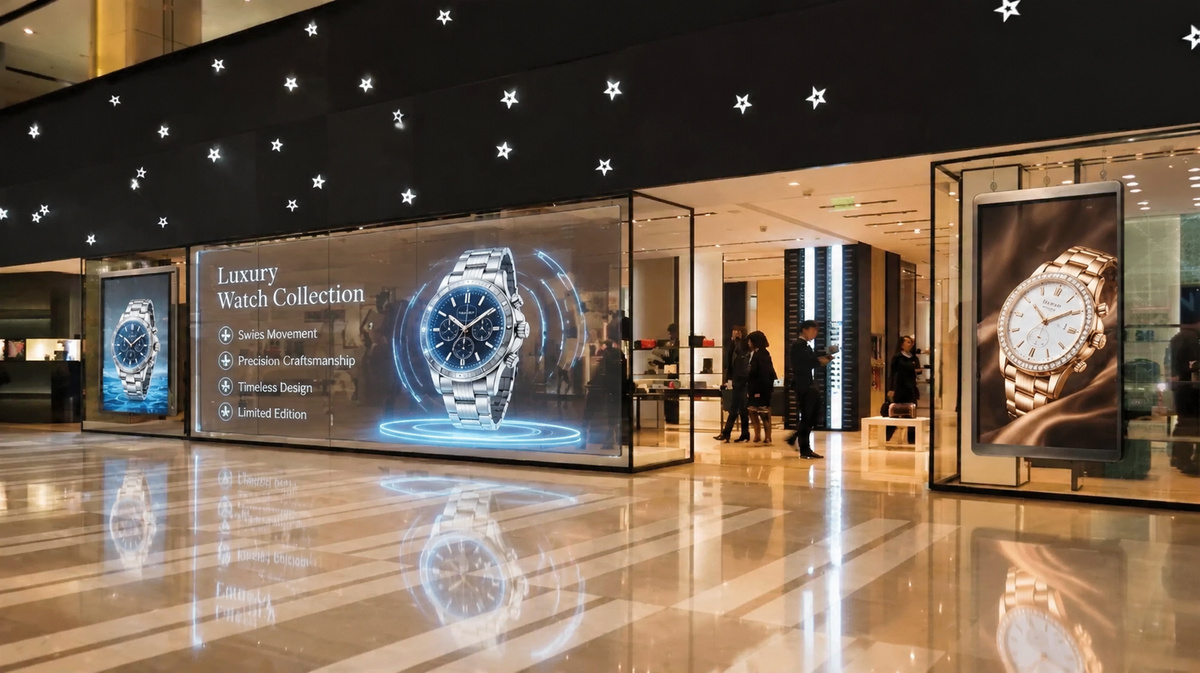

Transforming a digital display into something as clear and permeable as architectural glass while rendering crisp, high-definition dynamic video seems almost paradoxical. Yet transparent OLED (T-OLED) display technology has turned this visionary concept into a commercial reality. Transparent OLED displays not only stream video, graphics, and text with vivid clarity, but also allow audiences to see physical merchandise and spaces behind the screen, commanding widespread attention across commercial merchandising, digital exhibition galleries, and smart architectural spaces.
How exactly does a transparent OLED display achieve the coexistence of active digital display and see-through transparency?
How Do Transparent OLED Displays Achieve See-Through Display?
Understanding the working principles of transparent OLED requires first examining how OLED fundamentally differs from traditional Liquid Crystal Displays (LCDs).
Conventional LCD screens require an opaque rear backlight unit to generate light, utilizing an intermediate liquid crystal layer to gate light transmission. In contrast, OLED operates on self-emissive physics: every individual subpixel independently generates its own light and color, eliminating the need for an external backlight unit. This architecture eliminates bulky, light-blocking layers, providing the foundational physical prerequisite for paper-thin, transparent display engineering.
However, simply removing the backlight does not make a screen transparent. The decisive breakthrough lies in the micro-patterned architecture of subpixels and electrodes within the panel substrate. Transparent OLED panels optimize the geometric layout of emissive subpixels and transparent aperture zones: one section of each pixel houses organic light-emitting materials to render images, while an adjacent section consists of clear optical aperture windows that allow ambient light to pass through. When millions of microscopic emissive and transparent zones are distributed uniformly across the active area, the human eye perceives both vivid digital graphics and the background scenery behind the panel simultaneously.
This principle can be visualized like venetian window blinds: the solid horizontal slats block or modulate light to create an image, while the clear gaps between slats allow line of sight to see outside. In a transparent OLED, the emissive subpixel clusters act like slats rendering graphics, while transparent aperture gaps act like the openings revealing background objects. Because these microscopic structures are patterned with micron-scale precision, human vision blends them into a continuous, coherent visual image while experiencing striking spatial transparency.
Therefore, transparent OLED does not mean that every single atom on the panel displays and transmits light simultaneously; rather, precision subpixel layout engineering achieves an optimal balance between active visual luminance and see-through transparency.

Balancing Optical Transparency with Visual Performance
A fundamental trade-off exists between optical transparency and visual display intensity. Expanding the transparent aperture window allows more ambient light through—enhancing background visibility—but shrinks the physical area available for emissive subpixels and driver circuits. Conversely, enlarging the emissive subpixel area delivers higher peak luminance and color saturation, but reduces overall see-through transparency.
Furthermore, perceived real-world performance is heavily governed by ambient lighting, display luminance, creative media design, and background contrast. In brightly lit retail display windows, the panel requires elevated luminance to prevent ambient glare from washing out graphics; if the background behind the display is visually chaotic, text legibility can suffer. Consequently, specifying transparent OLED requires evaluating resolution, nit brightness, panel diagonal, and site lighting alongside transparency percentages.

Commercial and Architectural Value of Transparent OLED Displays
The defining strength of transparent OLED lies in presenting digital media and physical reality concurrently on a single plane. In commercial merchandising, transparent displays integrate into luxury showcase vitrines, branded display windows, and interactive brand lounges. Shoppers inspect dynamic 3D product animations and promotional specs on the glass while observing physical luxury goods inside the vitrine, fusing digital storytelling with tactile products.
In museums, science centers, and cultural heritage galleries, transparent displays function as interactive exhibit overlays, presenting historical context, archaeological reconstructions, and multimedia narratives directly over physical artifacts without obstructing them. Across smart transit hubs and public spaces, transparent displays hold potential for wayfinding and spatial interaction, provided environmental lighting, mounting safety, and operational durability are evaluated.
Driven by advancing organic materials, semiconductor backplanes, and structural manufacturing, transparent OLED displays are expanding the physical horizons of visual communication. They do far more than make screens see-through: they allow digital information to integrate naturally into physical architecture, unlocking innovative possibilities for commercial retail and digitized spaces.
ZXTLCD specializes in commercial-grade smart commercial display terminals and specialized visual hardware, delivering display products and custom hardware engineering tailored to commercial retail, digital showrooms, and smart spatial applications.