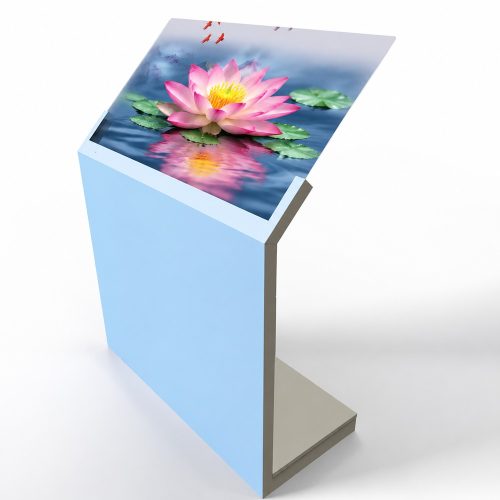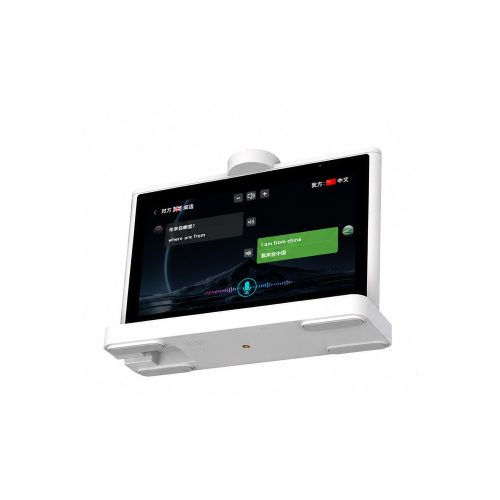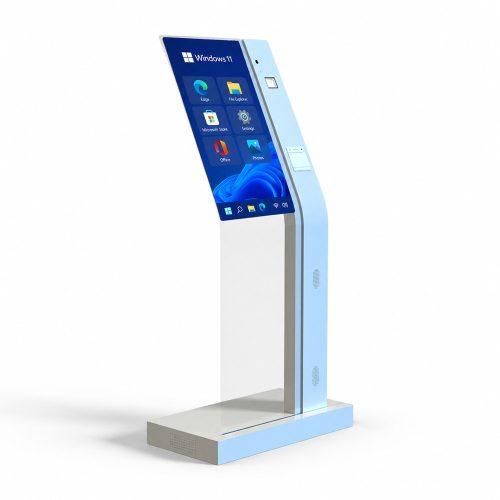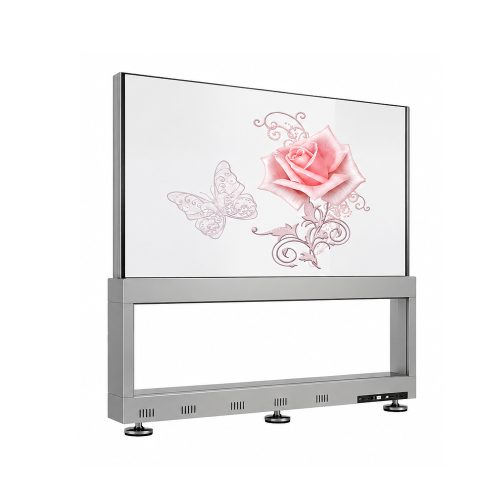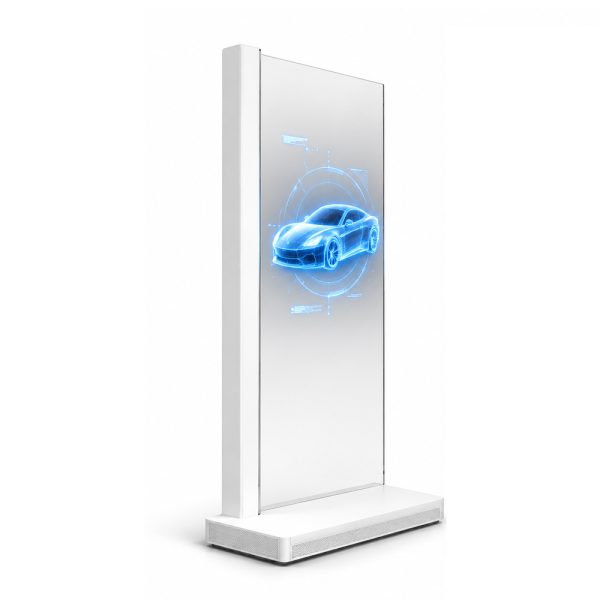
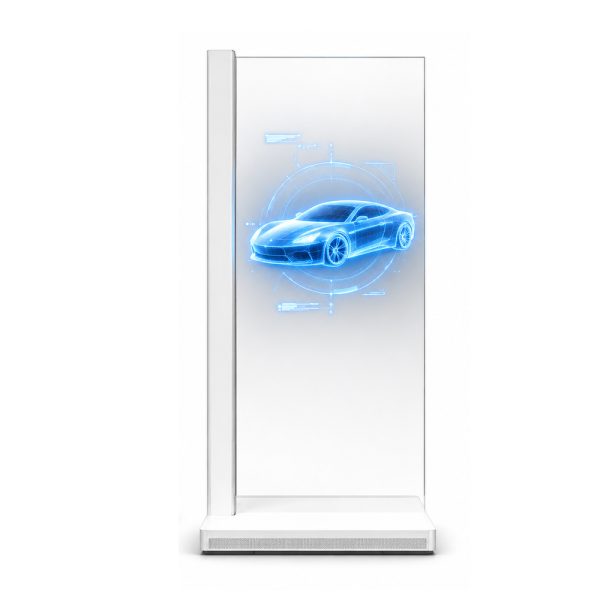
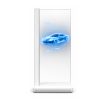
Give your next campaign a place within the room. This 55-inch OLED Display Stand presents moving graphics on a transparent, upright surface, creating a distinct visual feature in retail interiors, showrooms, and reception areas. Visitors can see digital content while retaining a view of the space beyond the panel.
Its portrait format provides room for vertically arranged storytelling: a brand statement above, an animated product at the center, and a short supporting message below. Each element can contribute to a presentation that visitors understand as they approach.
A Vertical Feature with a Clear Architectural Outline
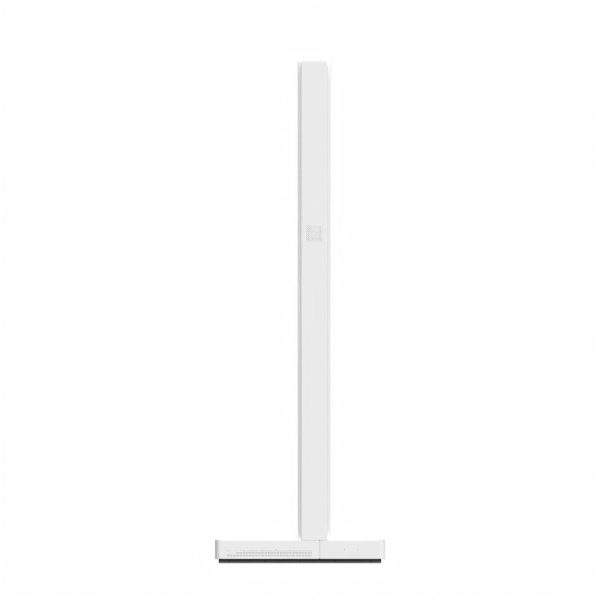
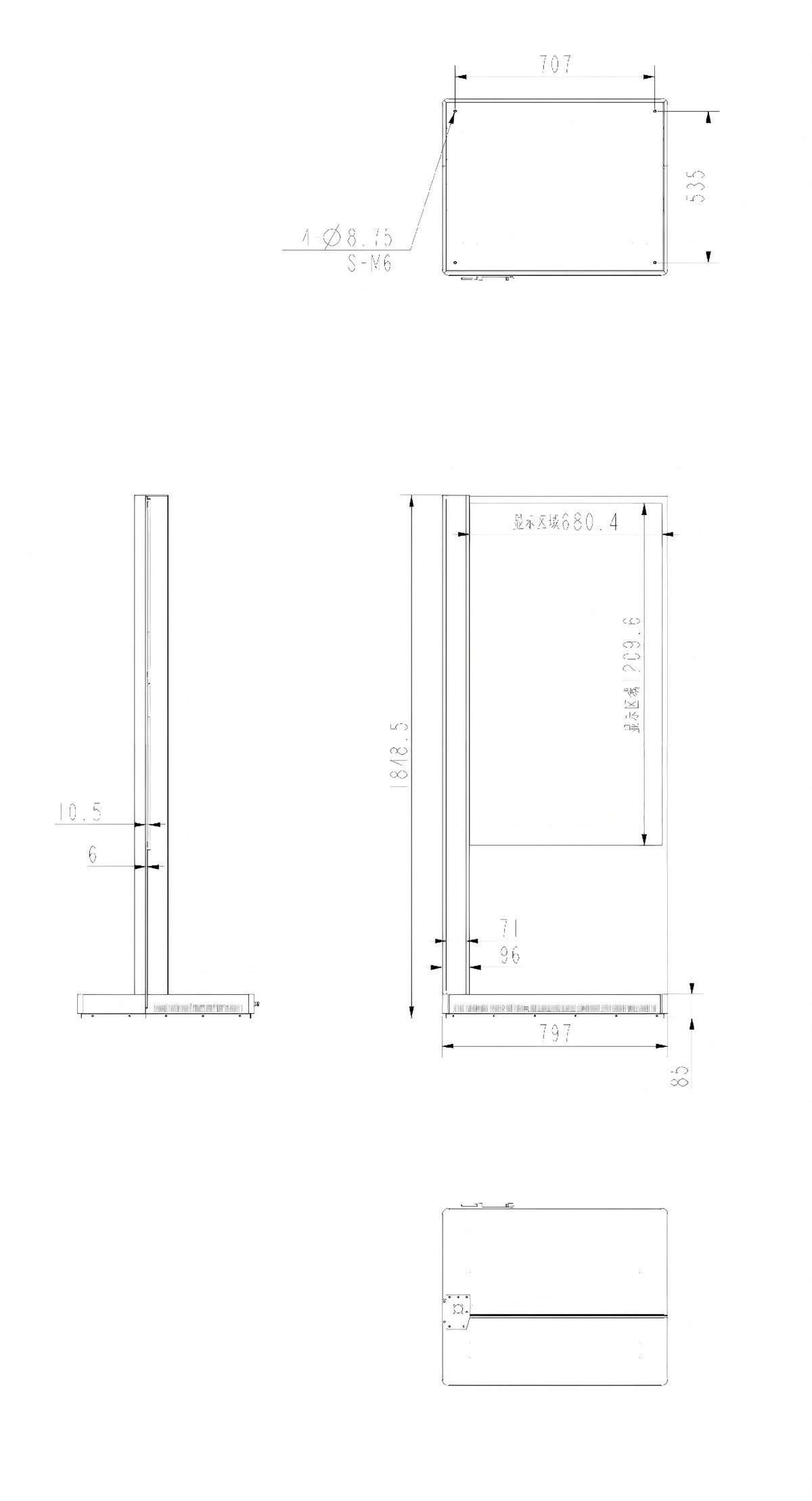
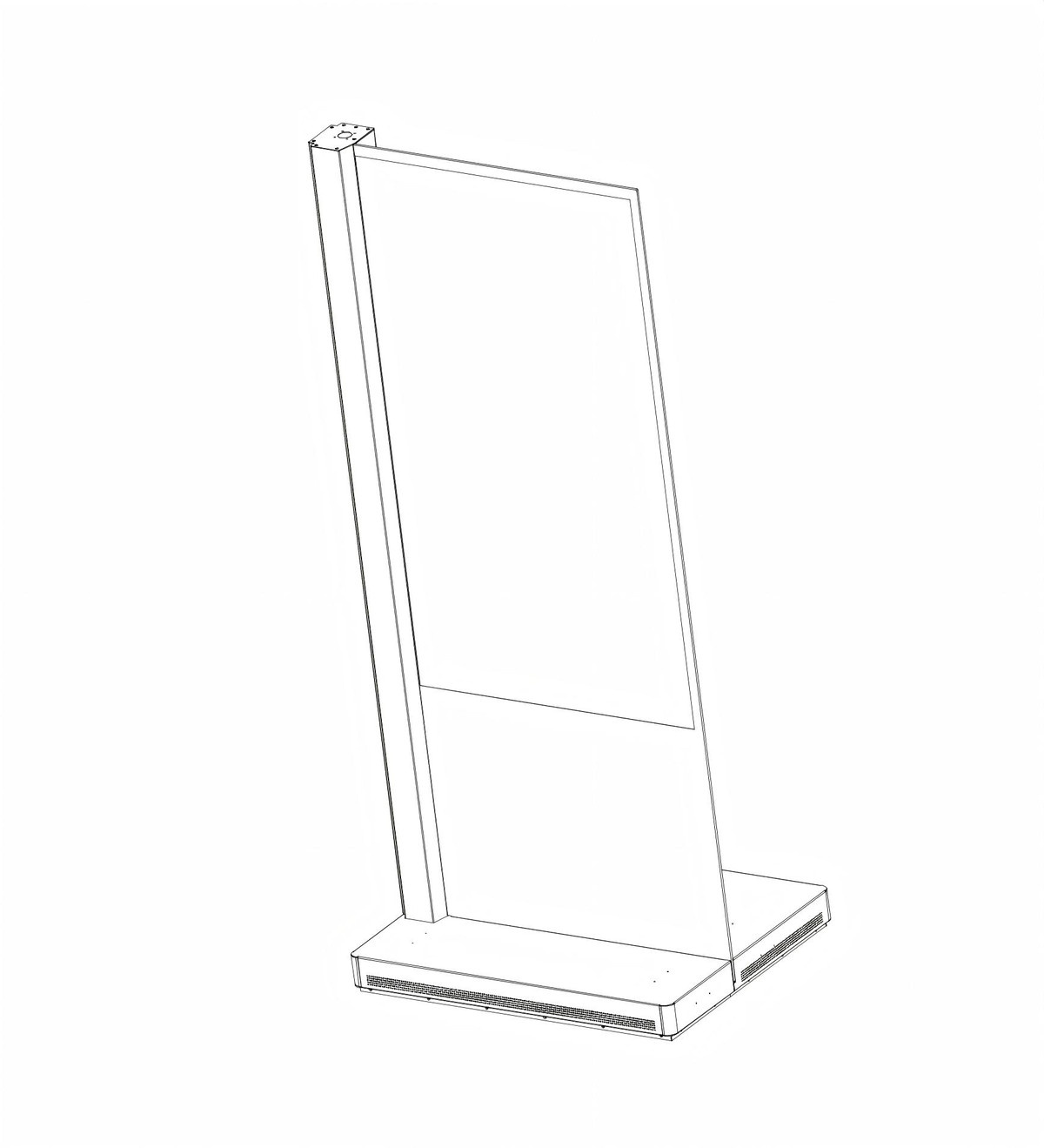
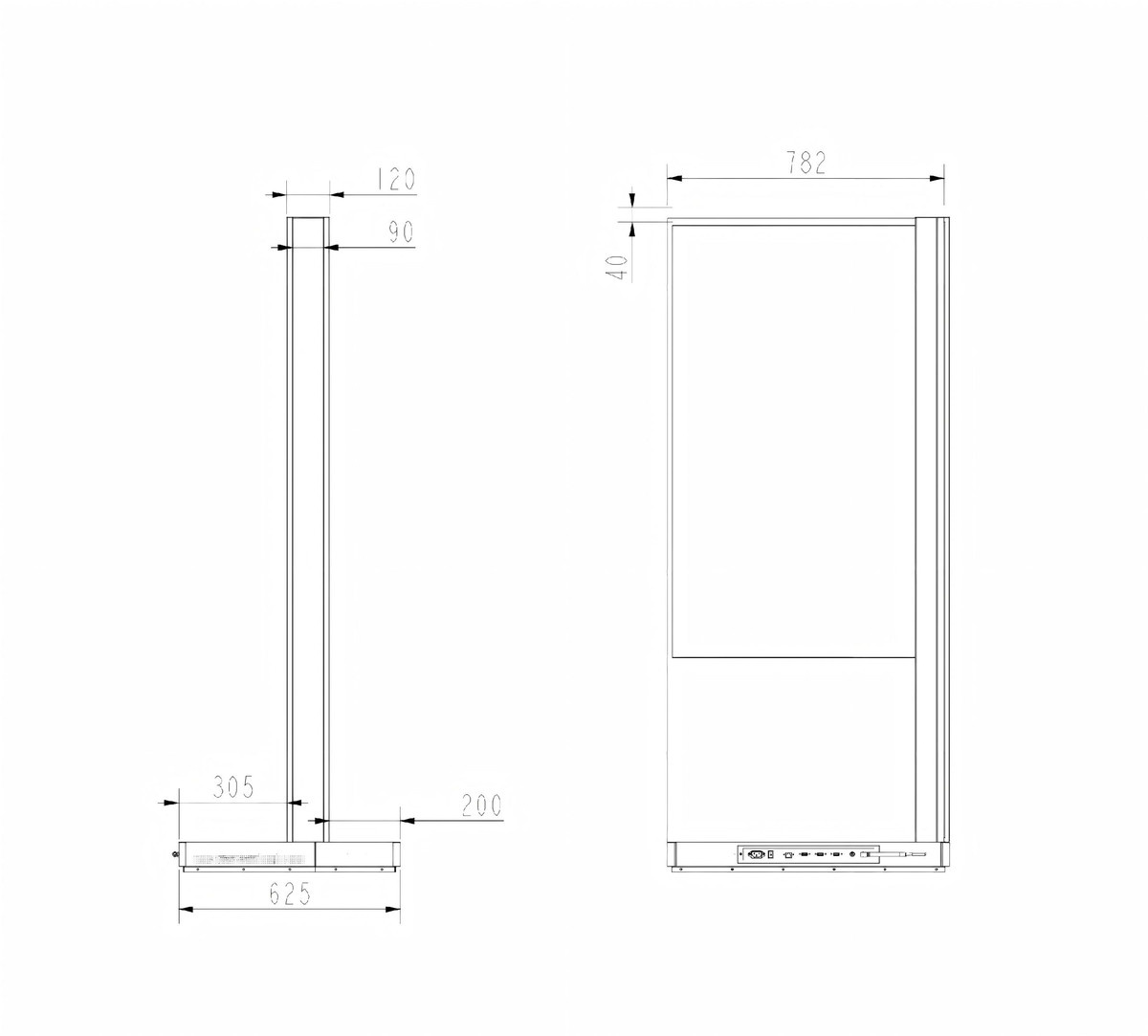
A white support column runs along one side of the panel, meeting a low rectangular floor base. The transparent surface extends beside the column, giving the unit an asymmetric profile. From an angled view, the relationship between the panel, support, and base becomes a visible part of the design.
This freestanding structure gives interior designers a defined display element to position within a layout. It can mark the entrance to a product zone, introduce a collection beside a merchandise area, or provide a branded focal point near reception. Placement should preserve clear circulation around the base and leave enough room for people to pause.
The background deserves equal attention. A carefully chosen wall, an uncluttered display area, or an open sightline can support the digital presentation. Bright, busy surroundings may compete with fine graphics, so the intended location should be assessed before content is finalized.
Design for the Visitor’s Approach
People encounter a floor display at different distances. Across the room, a recognizable silhouette or a short headline can introduce the subject. Closer to the screen, visitors can explore supporting details.
That progression suits a floor standing transparent OLED retail kiosk used to introduce a collection or explain a featured product. A fashion presentation might lead with a moving accessory silhouette, followed by material details and collection information. In an automotive showroom, a vehicle animation could transition into selected design features. These are examples of content that can be produced for the display, rather than functions supplied automatically with the hardware.
Portrait composition also encourages selective messaging. Giving one idea space to develop can make the presentation easier to follow during a brief visit.
From Campaign Display to Interactive Browsing
For campaigns that require visitor input, the specification lists 10-point capacitive touch, with a non-touch version also available. Paired with suitable software, a touch configuration can let visitors select a collection, open product information, or move between presentation topics.
The interface should account for how people stand and reach. Frequently used controls belong within comfortable reach, and the first screen should make the next action clear. Content near the top can establish the theme, while interaction controls can sit lower in the layout.
PC and Android configurations are optional. The required application, playback method, and computing configuration should be agreed together. Touch hardware alone does not include a product catalog, AI assistant, or custom interface.
Make the Launch Moment Part of the Room
As a product launch event transparent screen, the unit can introduce a campaign beside the featured product or welcome visitors into a presentation area. A short sequence might reveal a product outline, introduce its name, and then highlight one defining feature.
The 55-inch OLED panel has a native resolution of 1920 × 1080, with content arranged for its portrait installation. OLED pixels emit their own light, while the transparent panel allows the background to remain visible. The resulting appearance depends on the graphics, lighting, and surroundings working together.
For an event that later moves into a showroom campaign, plan both settings at the outset. Viewing distance, background brightness, power access, and the content schedule may differ between locations.
Share your proposed floor plan, campaign visuals, and whether visitors will watch or interact. We can help define a configuration and presentation approach suited to the space, from a focused retail introduction to a coordinated product launch.