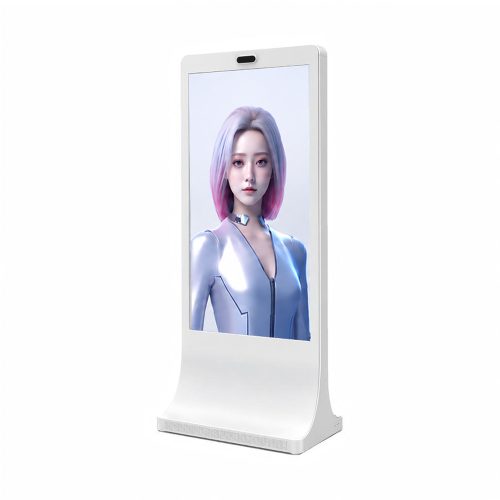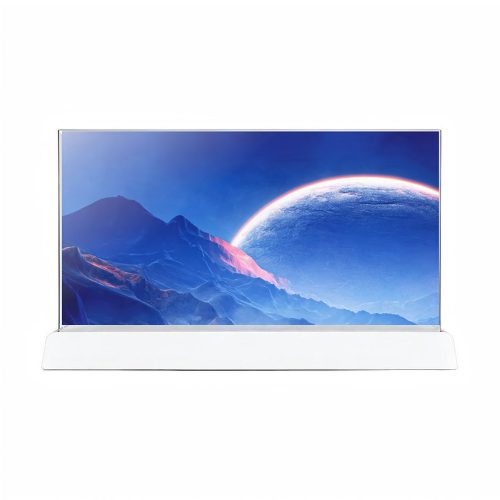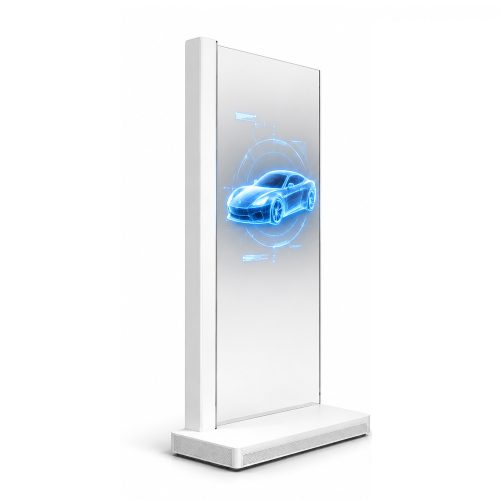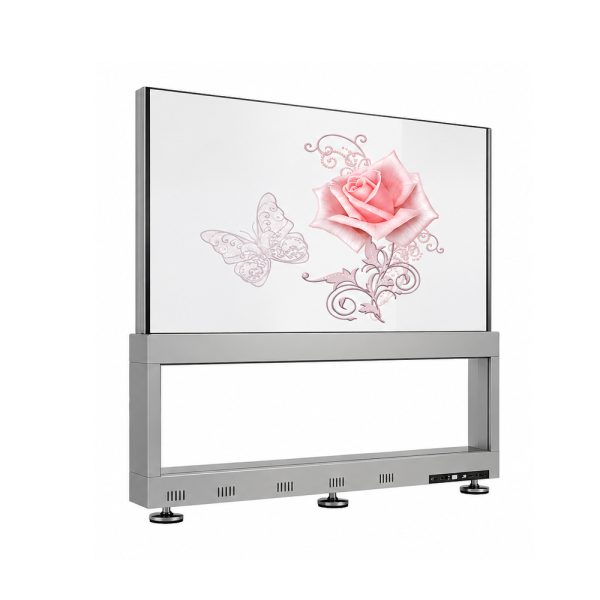
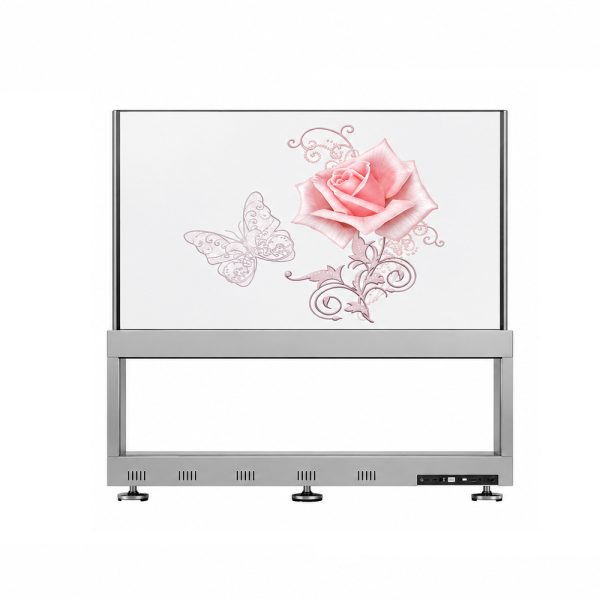

A digital artwork can evolve through color, movement, and rhythm while allowing the space behind it to become part of the composition. This 77-inch landscape floor-standing transparent OLED display provides a large canvas for digital art, brand films, and exhibition narratives, giving creative teams control over both the image and its relationship with the setting.
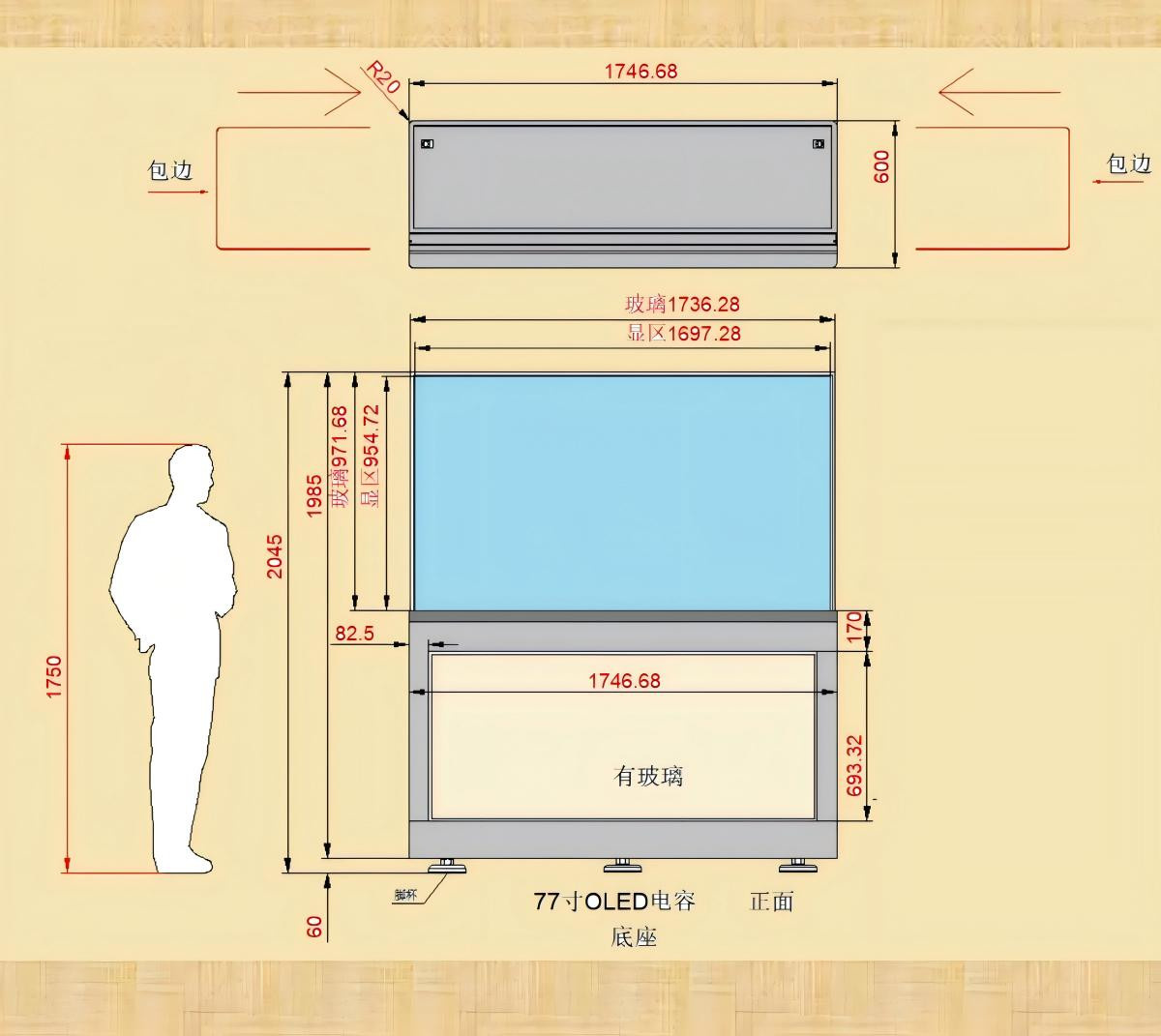
This 4K transparent OLED display features a resolution of 3840 × 2160 and an active display area of approximately 1697.28 × 954.72 mm. With an image width approaching 1.7 meters, it offers room for extended lines, horizontal movement, and compositions with several visual elements.
Let the Space Behind the Image Participate
Transparency creates a layered viewing experience. Digital imagery occupies the foreground, while architecture, exhibits, or physical installations remain visible behind it.
An art exhibition might pair slowly changing abstract forms with a sculpture beyond the panel. A brand gallery could use material textures, product outlines, or design sketches to establish a connection with physical objects. These are creative approaches requiring content developed for the installation.
Consider an art gallery digital transparent canvas as one layer of the artwork. How much background remains visible, where imagery appears, and the direction from which visitors approach can all contribute to the creative concept.
An Open Frame Defines Its Place in the Room
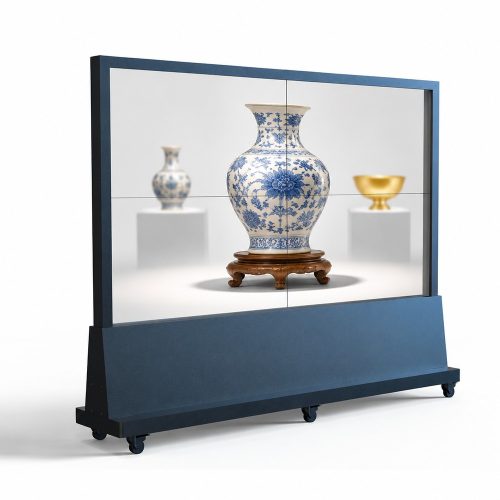
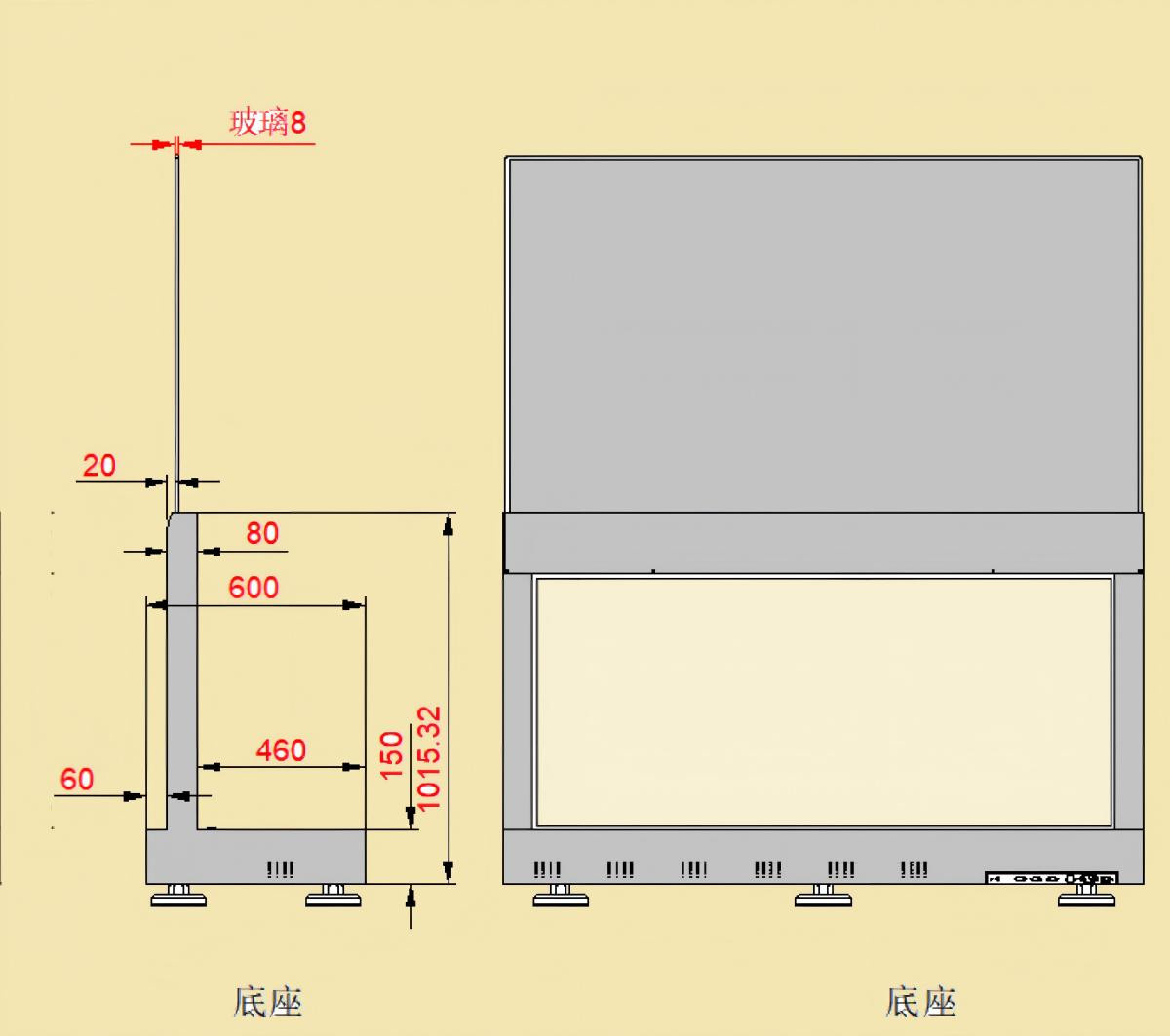
A horizontal metal beam supports the landscape panel, with side supports extending to the lower structure. The area beneath the screen remains open, giving the equipment a defined floor-standing outline without filling that space with a solid cabinet face.
Ventilation openings, a connection area, and round feet are visible along the bottom assembly. Power access, cable routing, and maintenance clearance can be planned around these features to support both the presentation and its daily operation.
The unit can face a primary viewing area or form a layered arrangement with an exhibition wall or physical artwork. Final positioning should account for circulation, viewing distance, and complete equipment dimensions.
Compose a Viewing Sequence Across the Canvas
The landscape format allows an image to develop from side to side. A sequence can begin with a small detail, expand into a complete form, and introduce the next section through movement or a change in color. The 4K resolution provides a foundation for detailed material, while the finished result also depends on source quality, playback hardware, and the environment.
Different viewing distances can reveal different aspects of the work. A strong shape establishes its presence from across the room; closer viewing reveals texture and detail; a longer pause allows the theme to unfold. Text can appear in stages and should be checked against the actual background for readability.
Transparent areas deserve deliberate composition. Reserved space allows the surroundings to participate, while dense, full-frame imagery changes the see-through appearance. That foreground-background relationship should be established during production.
Build the Playback Plan Around the Work
Content is a useful starting point for specifying the system. Prerendered 4K video, generative artwork, and touch applications have different requirements for playback hardware, computing performance, and software.
The supplied landscape-model material includes a capacitive-touch version. Interactive software and its scope should be confirmed for the project. If visitors will change graphics, select chapters, or explore an artwork through touch, interaction logic and reachable control areas need to be designed together.
Before final production, test representative material in the intended setting. Assess background lighting, image contrast, text size, and the main viewing positions. Exhibition photographs, sample artwork, and an outline of how the installation will operate can help turn the 77-inch transparent canvas into a coordinated part of the space.