
A retail counter needs customers to see a perfume bottle through the display. A corporate showroom wants to overlay product information in front of a piece of equipment. Transparent OLED can work in both settings, but the choice depends on what supports the screen, where viewers stand, and what they can see behind it. Once you know where the screen will sit in relation to the exhibit, it becomes easier to choose a size and mounting arrangement.
How Location Shapes the Choice of Transparent Display Form Factors
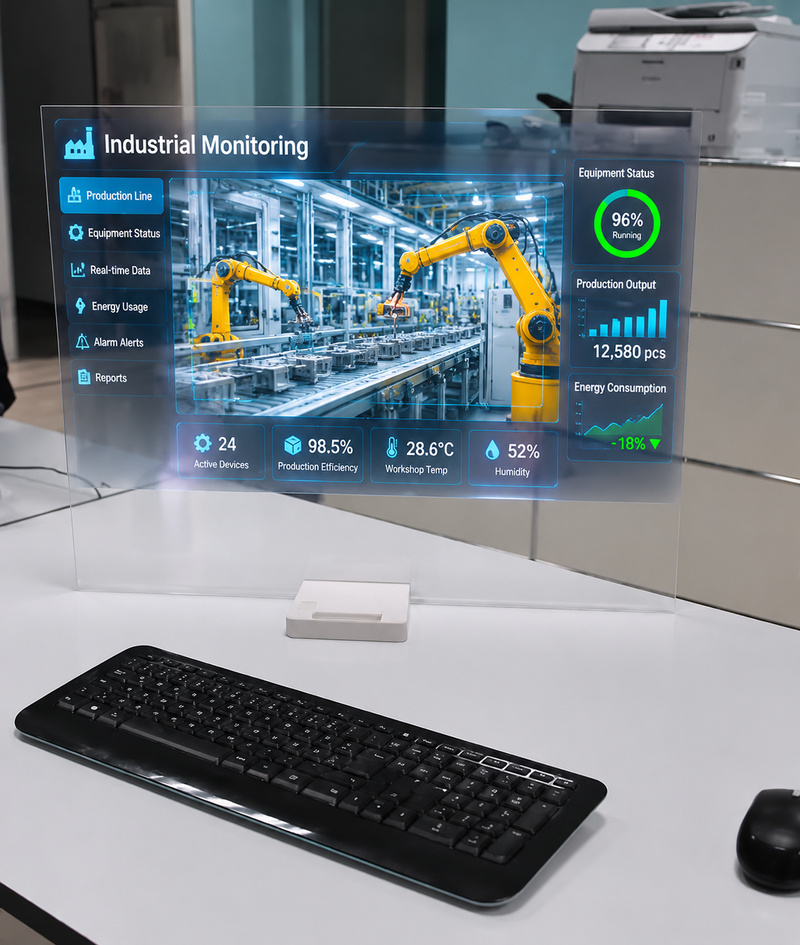
Tabletop displays fit existing counters and display tables
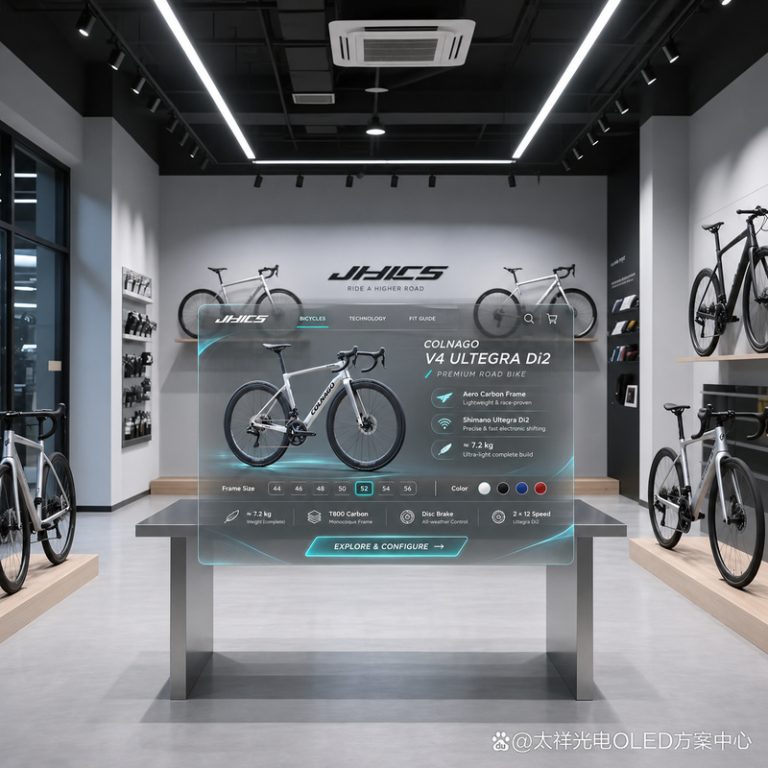
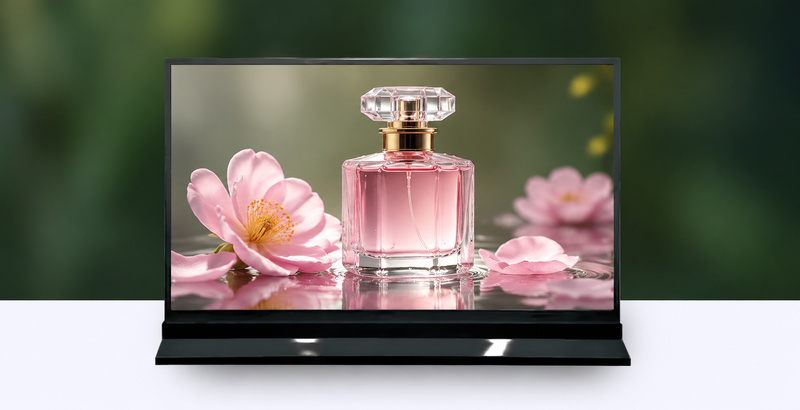
If the counter already has a suitable surface, a tabletop transparent OLED can sit in front of the merchandise and form part of the display. ZXT LCD offers a 55-inch tabletop transparent OLED. Mark the screen and product positions on the counter drawing. Check how much space the base takes up and which parts of the product customers can see from where they usually stand. If the same counter is used for customer service or product demonstrations, leave room for staff to handle merchandise and clean the glass.
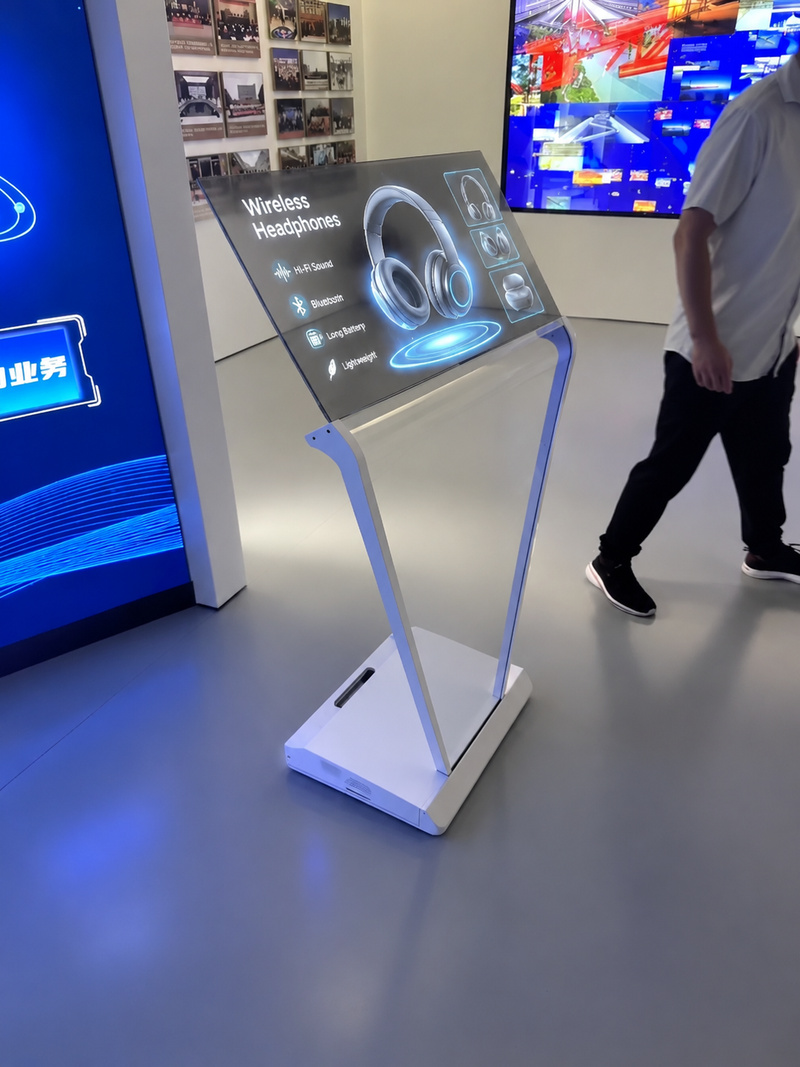
Freestanding displays create an independent viewing point
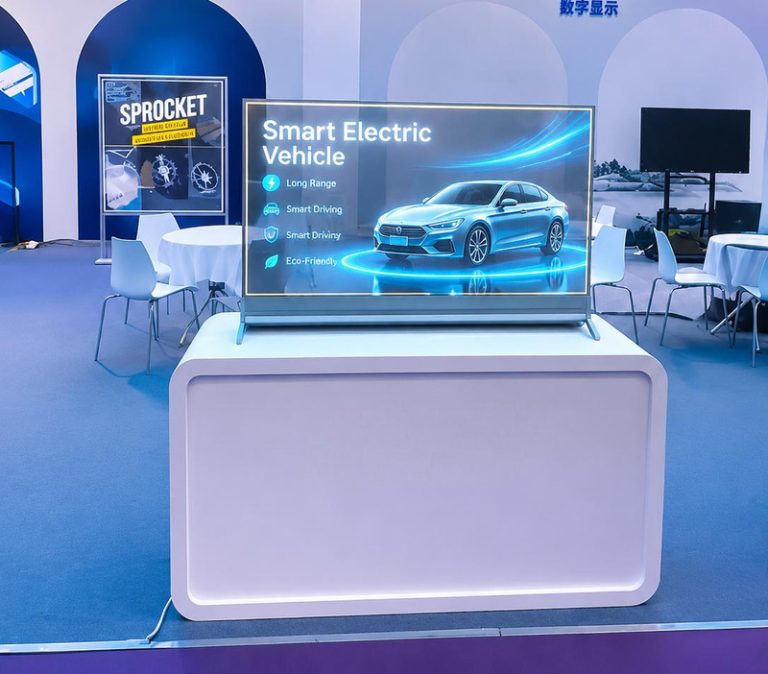
A 55-inch freestanding transparent OLED is an option for showroom entrances, sample areas, or exhibits without an existing counter or table. Consider what will be visible behind the screen once it is in place. If it faces a busy walkway, people passing through may appear behind the on-screen text. Check the view from the entrance and from where visitors are likely to stop. Then confirm that the base leaves room for people to pass and that the power cable can follow the planned route.
Built-in displays are planned with the case
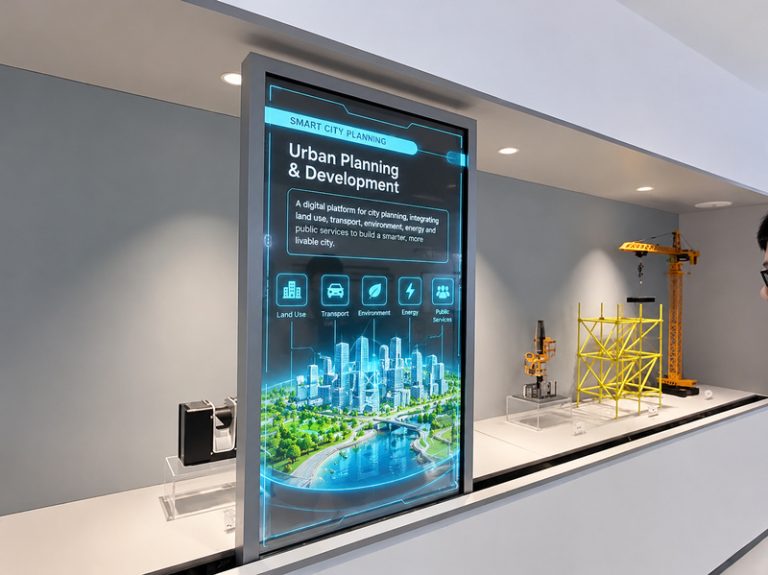
If the transparent screen will form part of the front of a display case, a custom project can bring the screen position, cabinet opening, and service access together on one drawing. Before the case goes into fabrication, confirm the opening dimensions, how the screen will be secured, where cables will run, and which side the screen can be removed from for service. For an existing case, share the drawings and site photos so the engineering team can assess whether there is enough room for installation and servicing.
Frequently Asked Questions
Do 55-inch tabletop and freestanding displays take up the same amount of space?
Check the overall dimensions and base footprint for each model. Mark the screen height above the floor and the required clearance on the layout drawing.
Can the space behind a transparent display be left open?
Test the planned content from the actual viewing position. Passing visitors, lighting, and bright backgrounds can affect how easily people read the text.
Can we add a transparent screen after the display case has been designed?
The drawings can be reviewed to see what is possible. Check the opening, the space behind the screen, the cable route, and how the screen would be removed for service. These details show where the case may need changes.
ZXT LCD designs and manufactures transparent OLED, flexible curved OLED, and transparent MicroLED displays for high-end retail, museums, and corporate showrooms. We support custom engineering projects. Share your application, target display size, ambient lighting conditions, and quantity, and our engineering team will get back to you as soon as possible. seethruoled.com