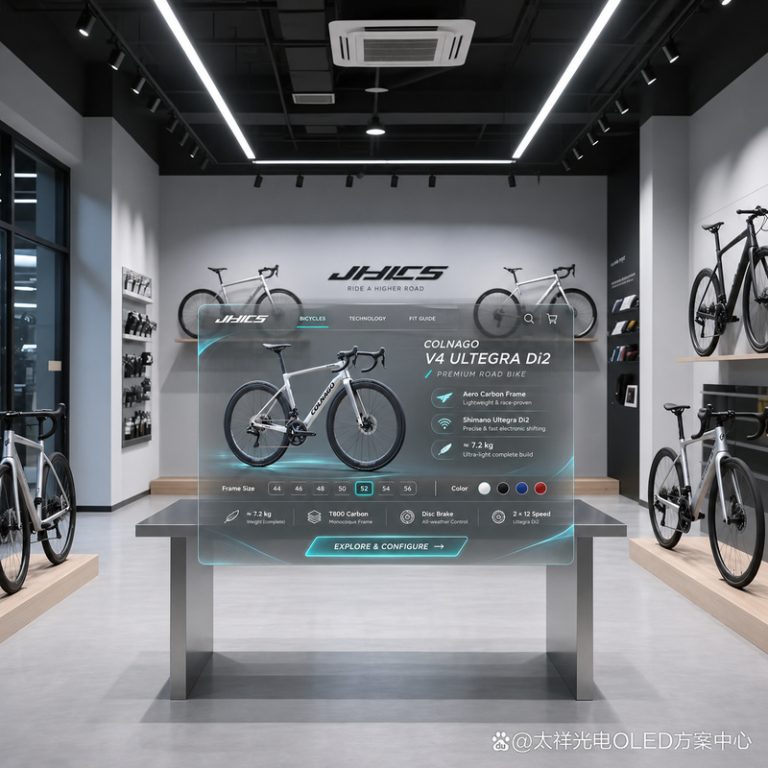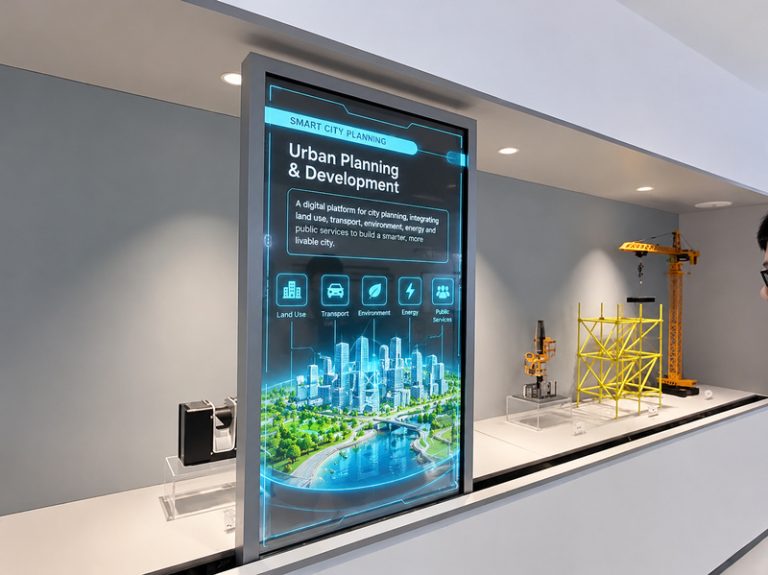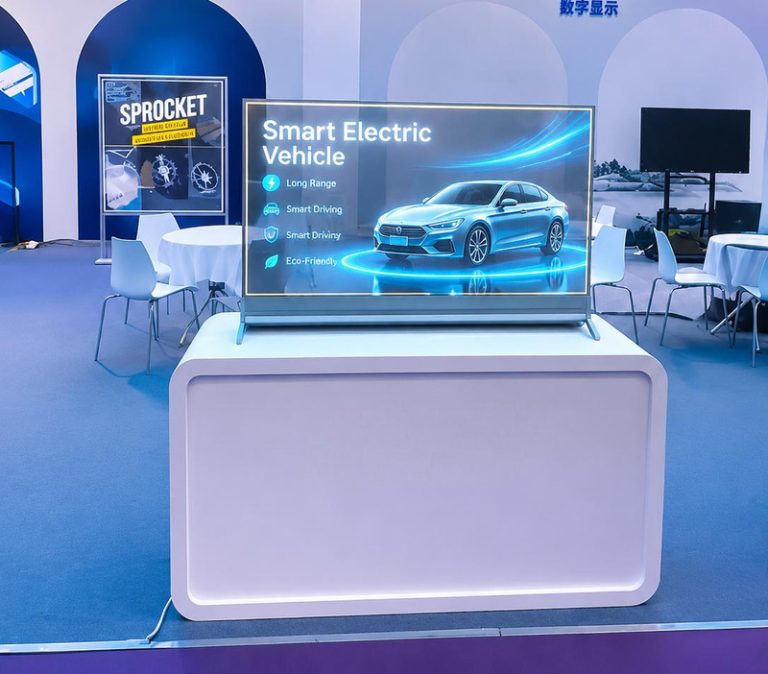

Conventional display screens rely on opaque backlight units and dense structural layers to render imagery, whereas transparent OLED (T-OLED) displays merge active digital display with see-through transparency. While broadcasting vivid multimedia content, the screen allows viewers to clearly observe physical objects located behind the panel, preserving spatial openness while unlocking innovative visual merchandising and digital interaction possibilities.
Display Principles and Core Characteristics
OLED stands for Organic Light-Emitting Diode and operates on self-emissive display physics. Unlike traditional LCDs requiring an external backlight to illuminate liquid crystal cells, every subpixel in an OLED matrix independently generates its own light and color. Transparent OLED panels optimize this architecture: utilizing transparent conductive electrodes, clear glass substrates, and micro-patterned transparent aperture windows within every pixel, the screen renders imagery while maintaining high see-through transparency.
This architecture delivers distinctive visual advantages: first, viewers observe digital screen content and physical background merchandise simultaneously, ideal for product showcases. Second, independent subpixel emission delivers high contrast, rich color saturation, and deep transparent blacks. Third, eliminating bulky LCD backlight units enables paper-thin profiles and lightweight enclosures, expanding architectural and furniture integration possibilities.
Note that higher transparency is not universally superior. Optical transparency, panel luminance, resolution, and ambient room lighting all interact to govern perceived picture quality. Model selection must balance mounting placement, viewer distance, and media content.
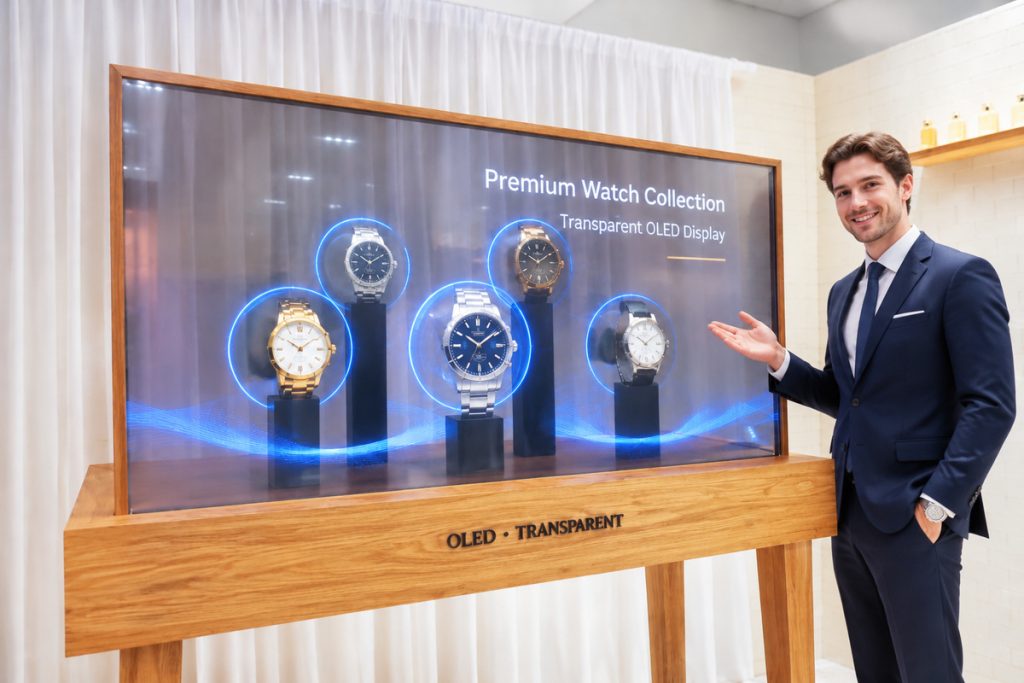
Primary Commercial Application Scenarios
Commercial Retail Merchandising: Installed across luxury showcase vitrines, cosmetics counters, and retail display windows. Shoppers inspect dynamic video presentations, animated product breakdowns, and promotional pricing on the glass while observing physical luxury goods inside the showcase, creating an integrated physical-digital shopping experience.
Museums, Science Centers & Digital Exhibition Halls: Transparent displays serve as interactive exhibit overlays, presenting historical background, 3D anatomical animations, and curatorial annotations directly over physical artifacts. This maintains intimate visual context between information and exhibits, enriching visitor engagement.
Smart Public Transit & Rail Mobility: Transparent displays hold emerging potential across subway passenger windows and train station partitions, streaming route progress, station arrivals, and public advisories. Deployments must evaluate ambient sunlight levels, structural vibration resilience, mounting safety, and legibility.
Smart Interiors & Architectural Furniture: Transparent OLEDs integrate into smart homes, corporate briefing rooms, and executive offices—such as transparent display tables, interactive digital room dividers, and glass showcase partitions—transforming screens from standalone appliances into harmonious architectural elements.

Technological Evolution and Future Trajectory
The transformative value of transparent OLED technology extends beyond giving glass display functionality: it fundamentally redefines how digital screens interact with physical environments, allowing digital information to overlay retail windows, museum vitrines, transit cabins, and interior architecture without walling off physical space.
Currently, transparent OLED engineering continues to advance across panel manufacturing costs, peak daytime luminance, transparency ratios, operating lifespans, and environmental resilience. Because distinct application scenarios impose unique optical demands, commercial deployments should evaluate structural framing, site ambient lighting, and presentation goals to specify the ideal transparent display solution.
As organic emissive materials, driver semiconductors, and structural integration techniques mature, transparent displays will unlock increasingly diverse commercial and civic applications.
ZXTLCD specializes in commercial-grade smart commercial display terminals and specialized visual hardware, delivering display products and custom hardware engineering for commercial retail, digital showrooms, and smart spatial applications.