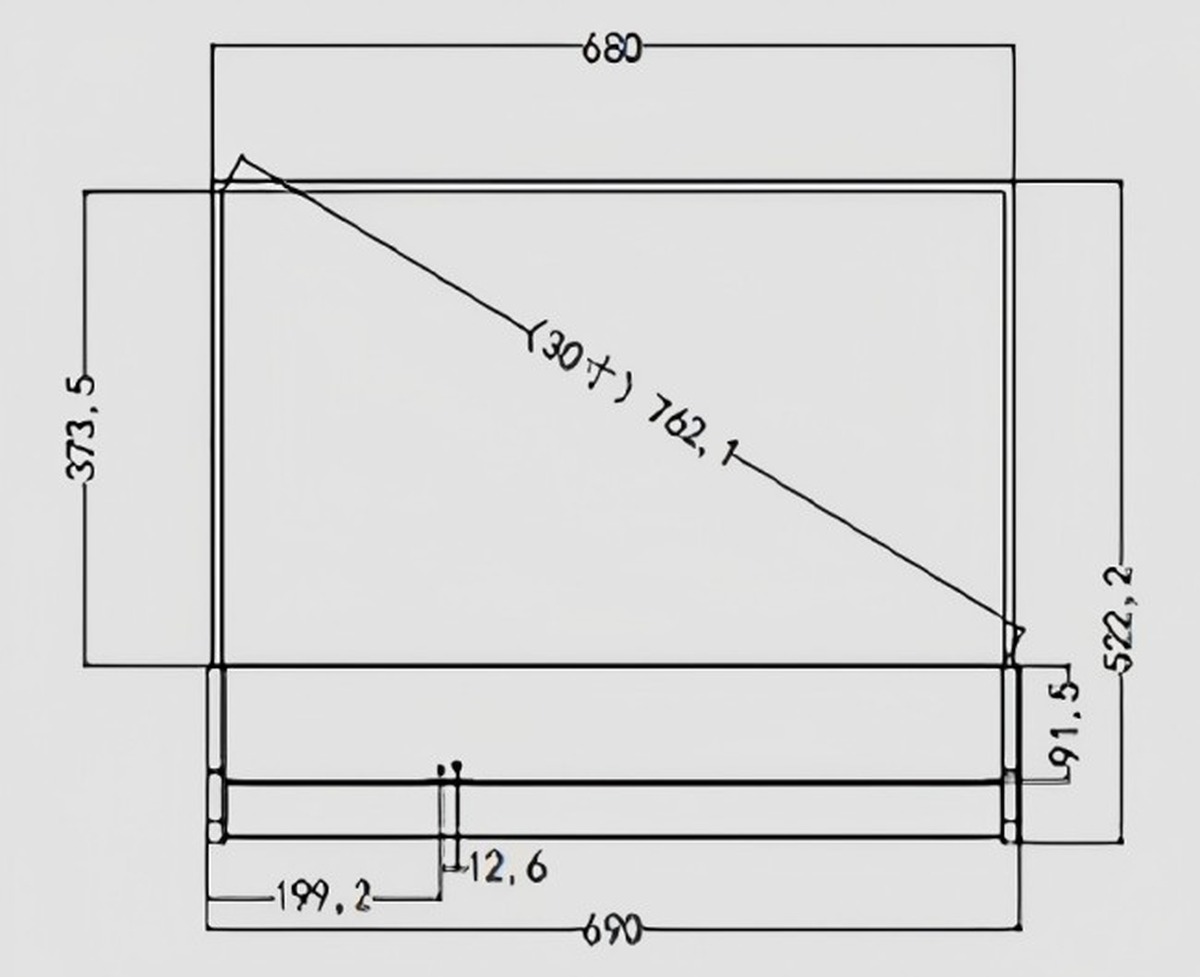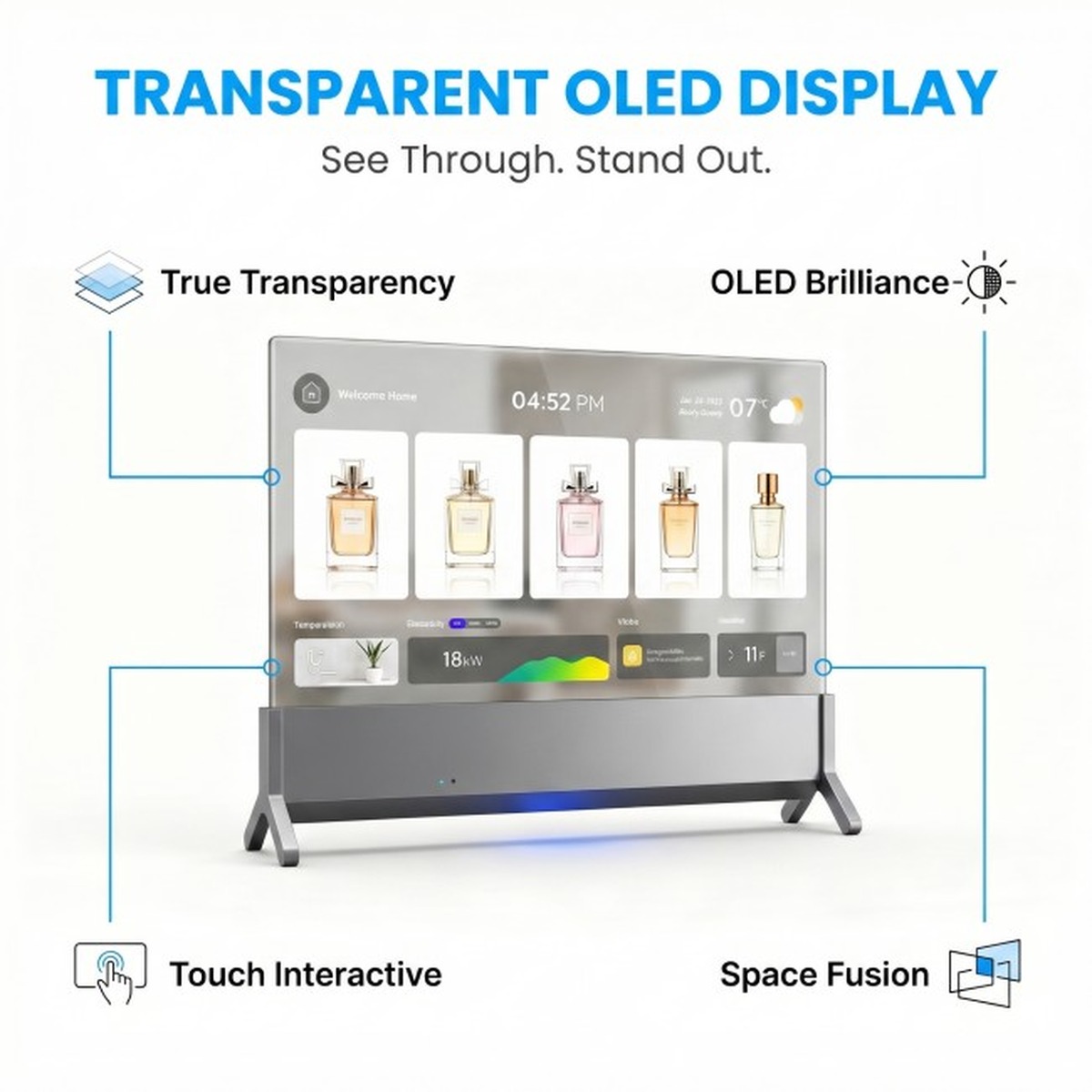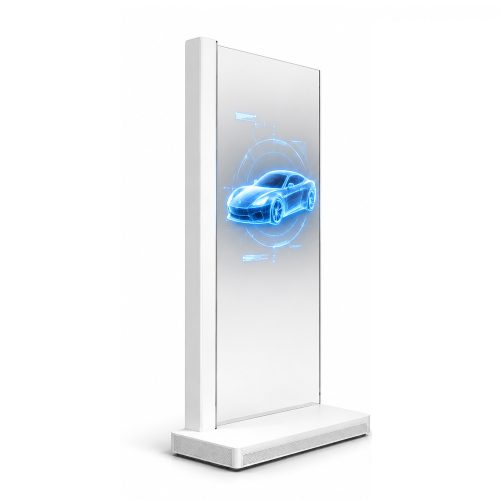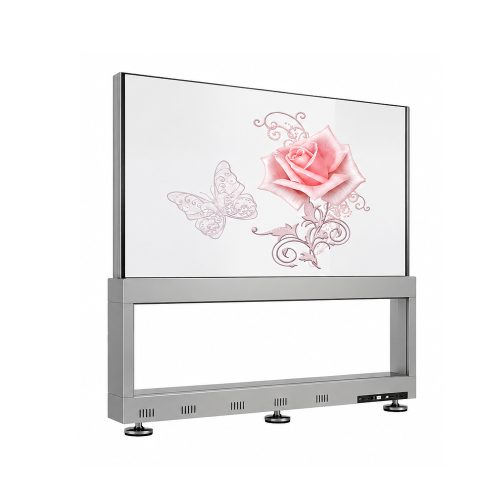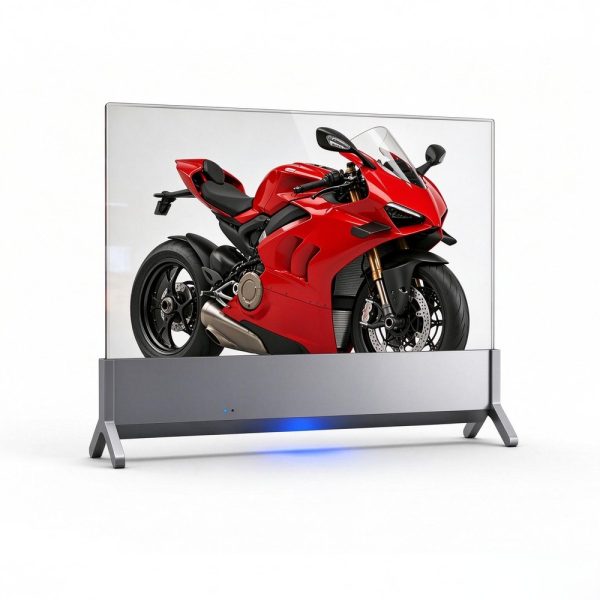
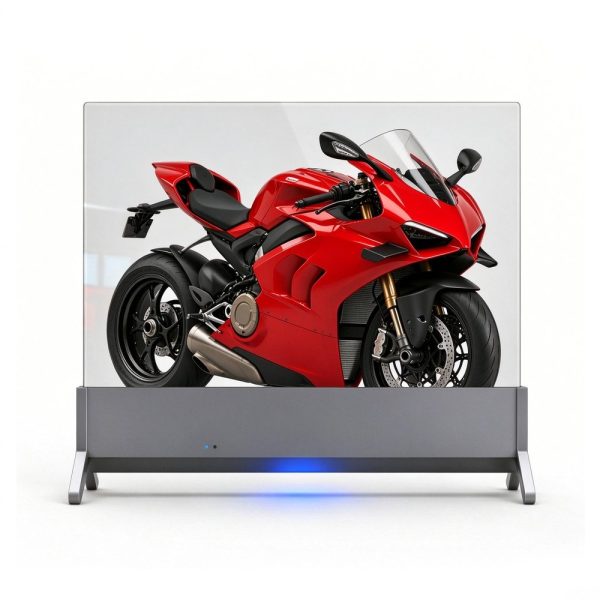
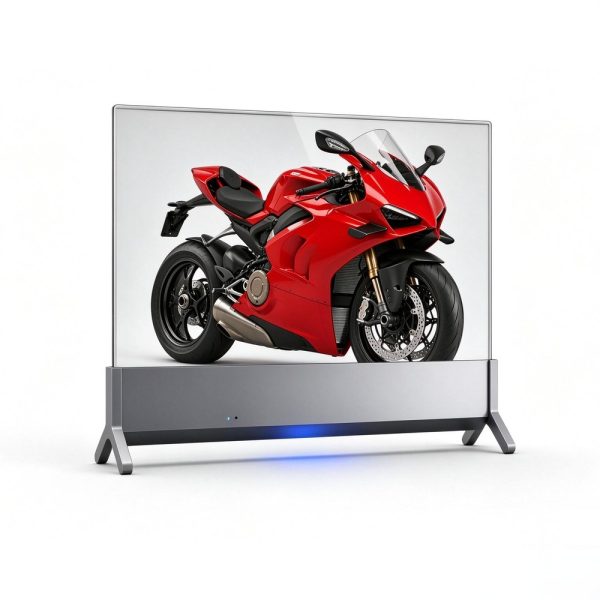
A motorcycle’s stance, an accessory’s curves, or a new product’s silhouette deserves room to develop. This 30-inch See-through OLED monitor combines a landscape transparent panel with a silver-gray desktop enclosure, bringing product imagery into design presentations, consultation tables, and branded counters.
Splayed feet at each end give the low housing a distinctive outline. Transparent areas preserve a view of the background, allowing media and physical surroundings to contribute to the presentation.
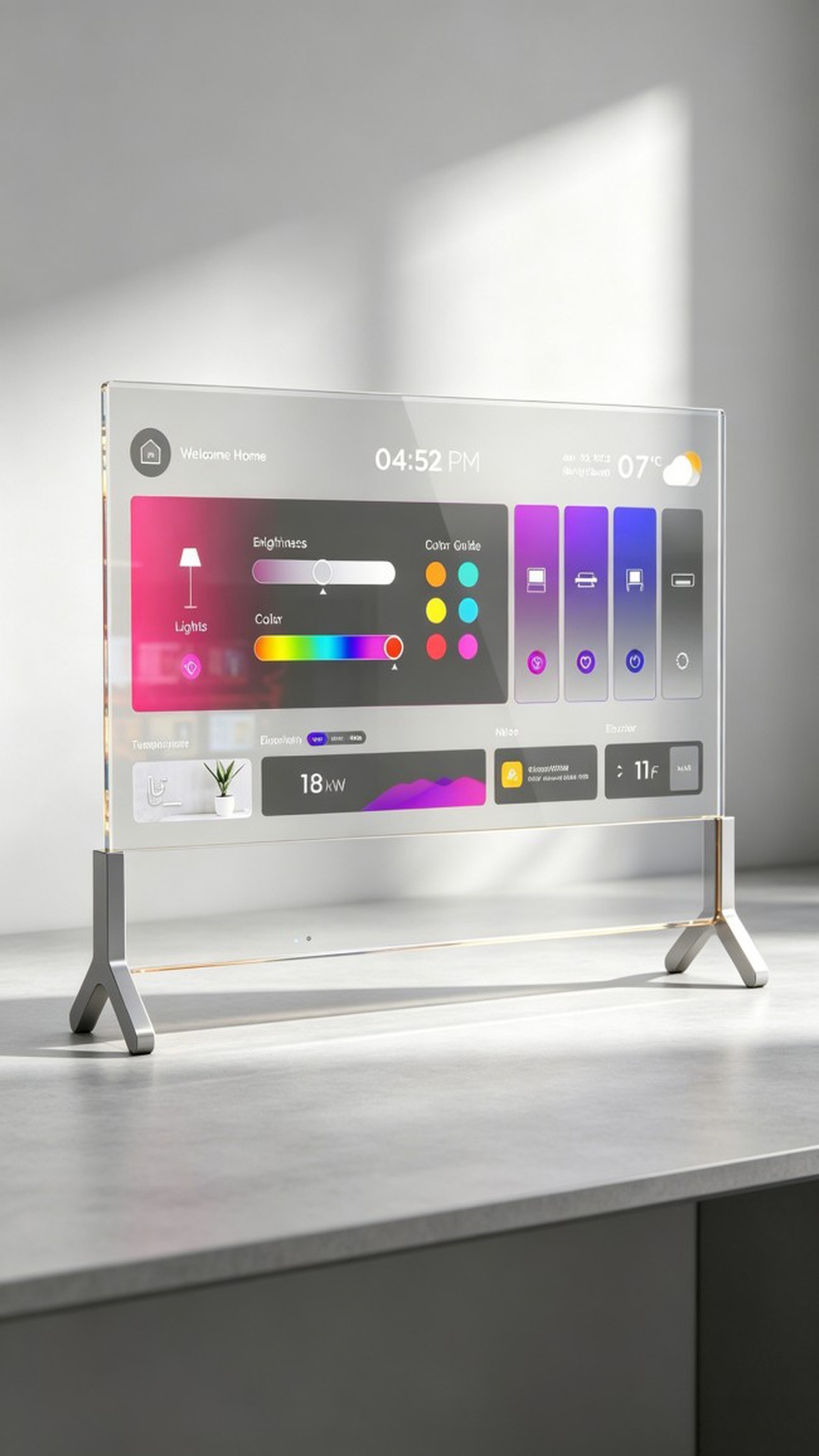
Move from the Complete Form into the Details
A sequence can begin with a full silhouette before exploring materials, construction, and selected features. A motorcycle presentation might introduce overall proportions, then move into the fairing, lighting, or mechanical components.
The See-through OLED monitor can carry rotation footage, close-ups, and concise graphics. Each section explains one feature, with clear transitions between the whole product and its details.
This format can support a launch or a design discussion. Presenters explain choices while customers examine the relevant imagery.
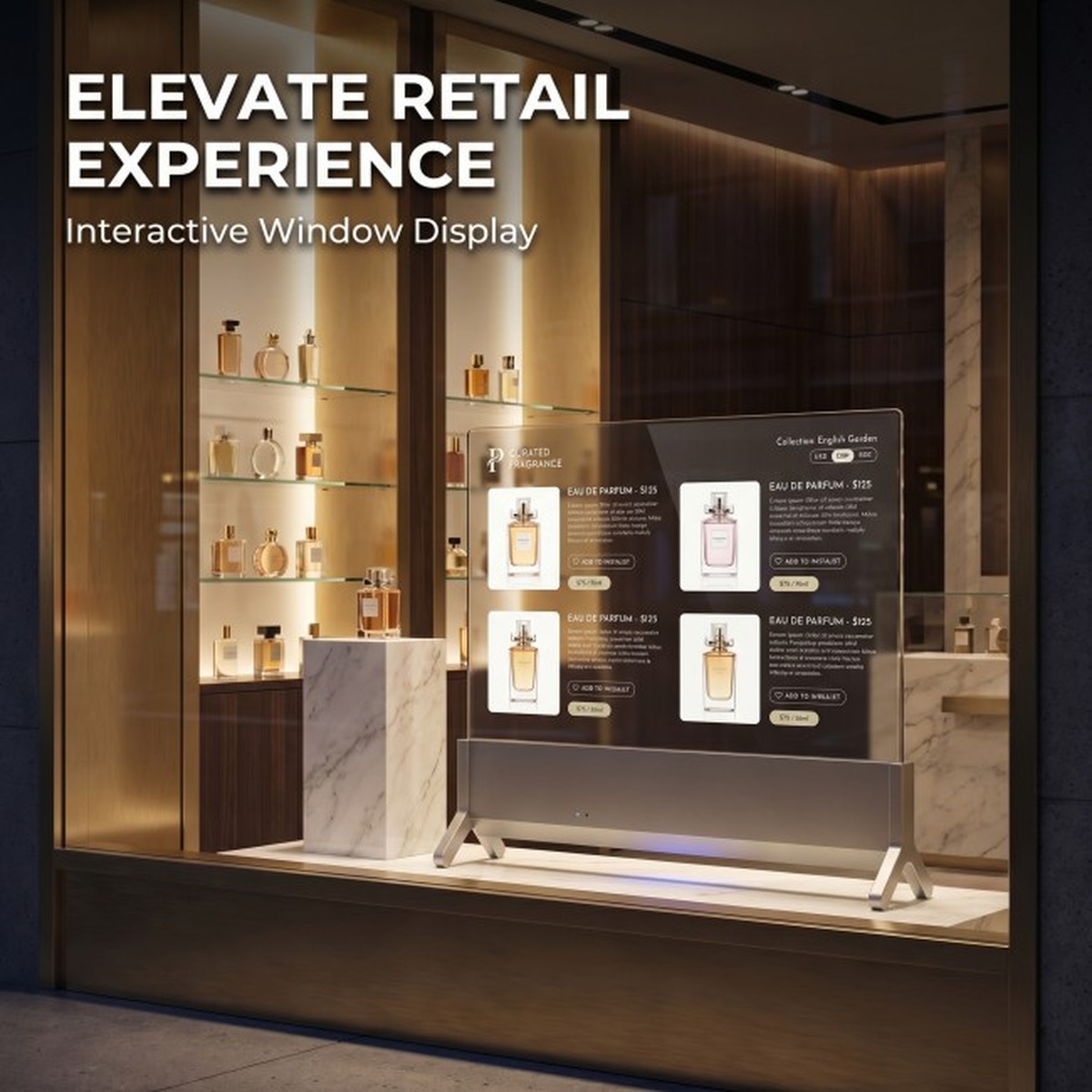
Give the Desktop Equipment Its Own Design Identity
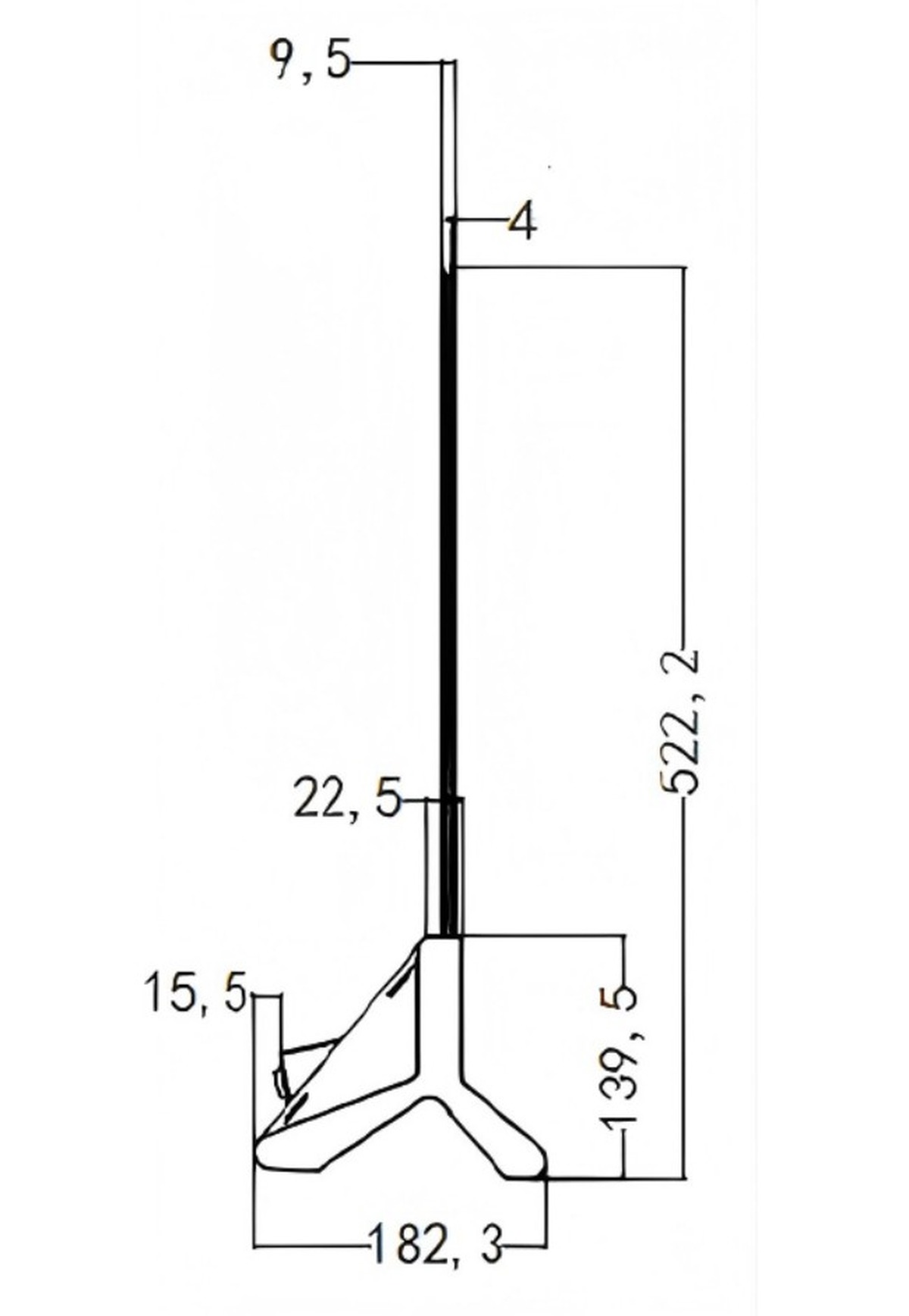
The silver-gray enclosure extends beneath the image, with feet opening forward and backward at each end. Its structural appearance can coordinate with metallic finishes, simple furniture, and technology-themed displays.
The low body of the See-through OLED monitor leaves the main visual area to the product above. Strong silhouettes, distinctive colors, and selected components can lead the composition.
The front provides a defined image boundary, while angled views reveal the relationship between the feet and the horizontal housing.
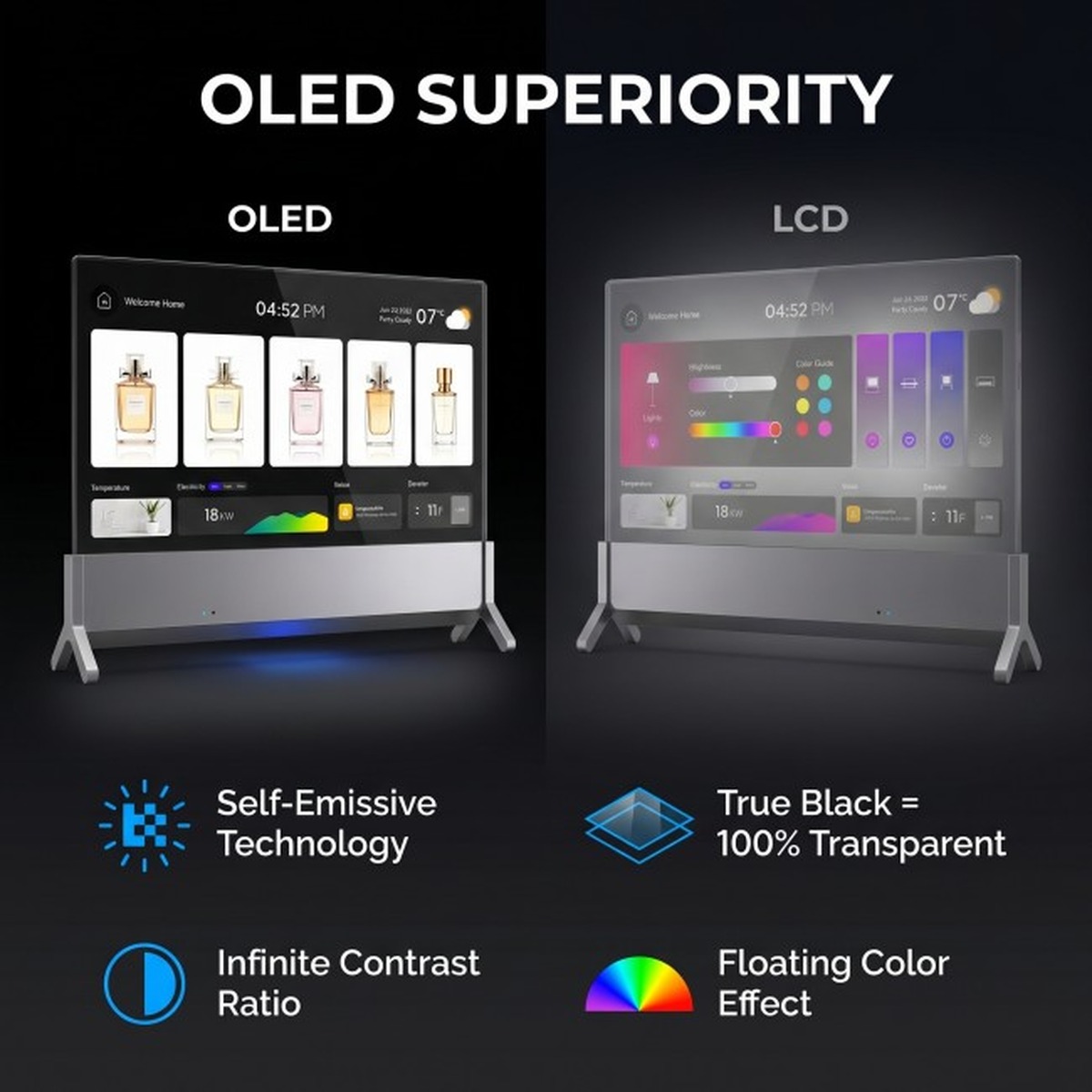
Connect Digital Explanations with Physical Samples
Samples communicate actual texture and touch. Media can explain hidden structures or changing processes. Together, they give a product conversation more depth.
Material swatches might accompany footage of the finished design. A physical component can sit beside an animation explaining how it relates to the complete assembly.
A See-through OLED monitor can therefore become a shared viewing point for design reviews, consultations, and demonstrations, keeping the discussion focused on a specific detail.
Maintain the Identity as the Subject Changes
Hero imagery can introduce a featured product, separate chapters can explain a collection, and sketches or process animation can tell a design story.
Shared typography, colors, and transitions connect the assets. New product content can then refresh the presentation without changing its visual language.

Frequently Asked Questions
Which products suit this format?Vehicles, industrial designs, accessories, consumer electronics, and other products with distinctive forms can use imagery and detail sequences.
Can it support design discussions?Yes. Complete views, close-ups, and prepared comparisons can accompany a presenter’s explanation.
Can physical samples be placed nearby?A coordinated arrangement can give objects and media complementary roles.
Is rotation or 3D software included?Rotation footage can be produced in advance. Live 3D applications are specified separately.
Can it show characters or brand animations?Suitable landscape media can be prepared, with playback following the selected system.