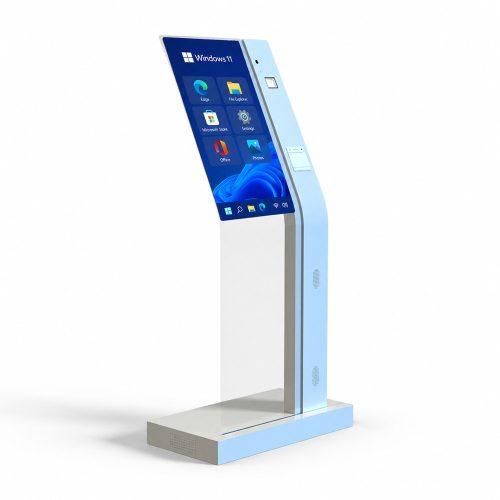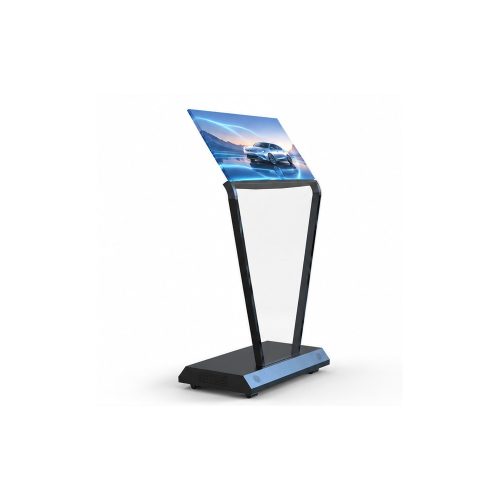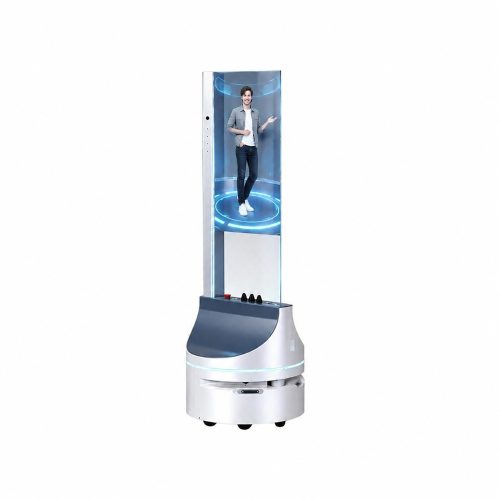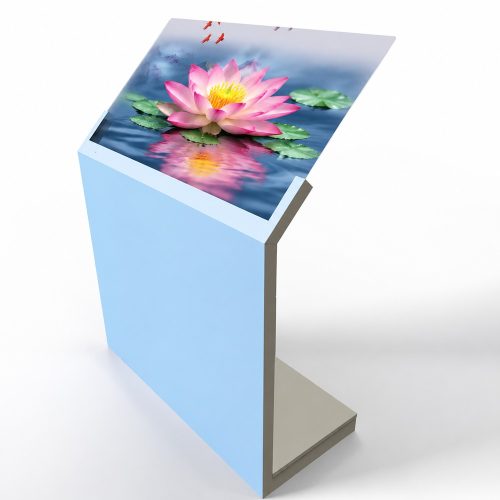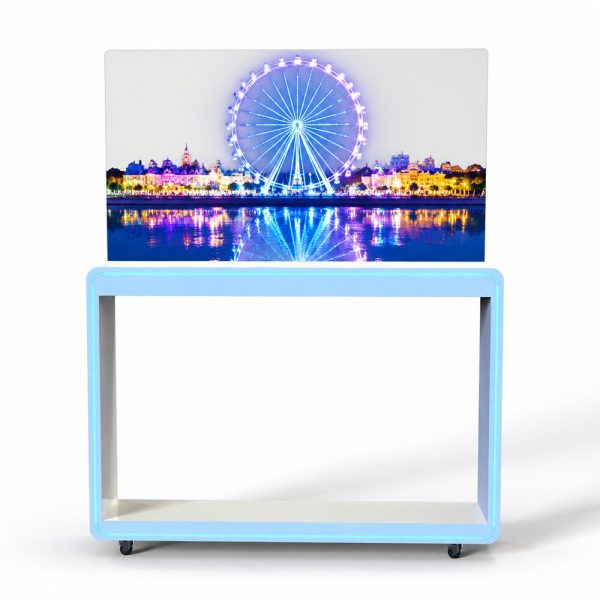
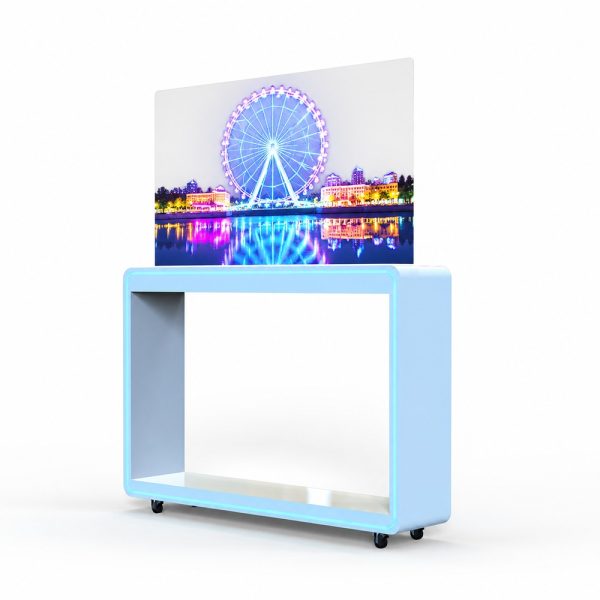
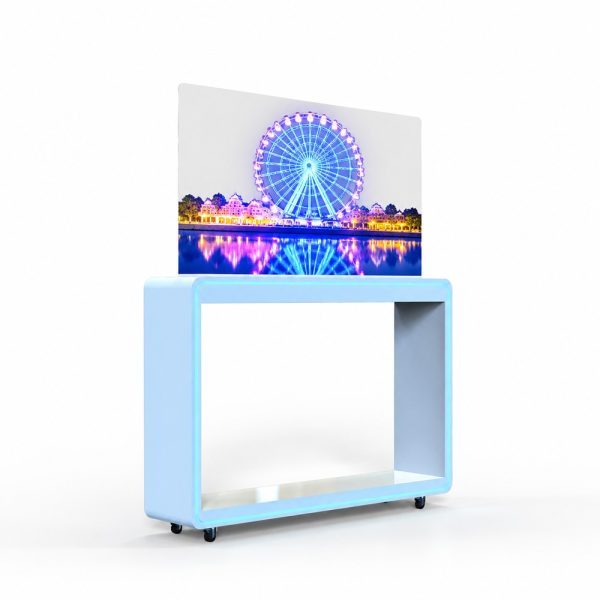
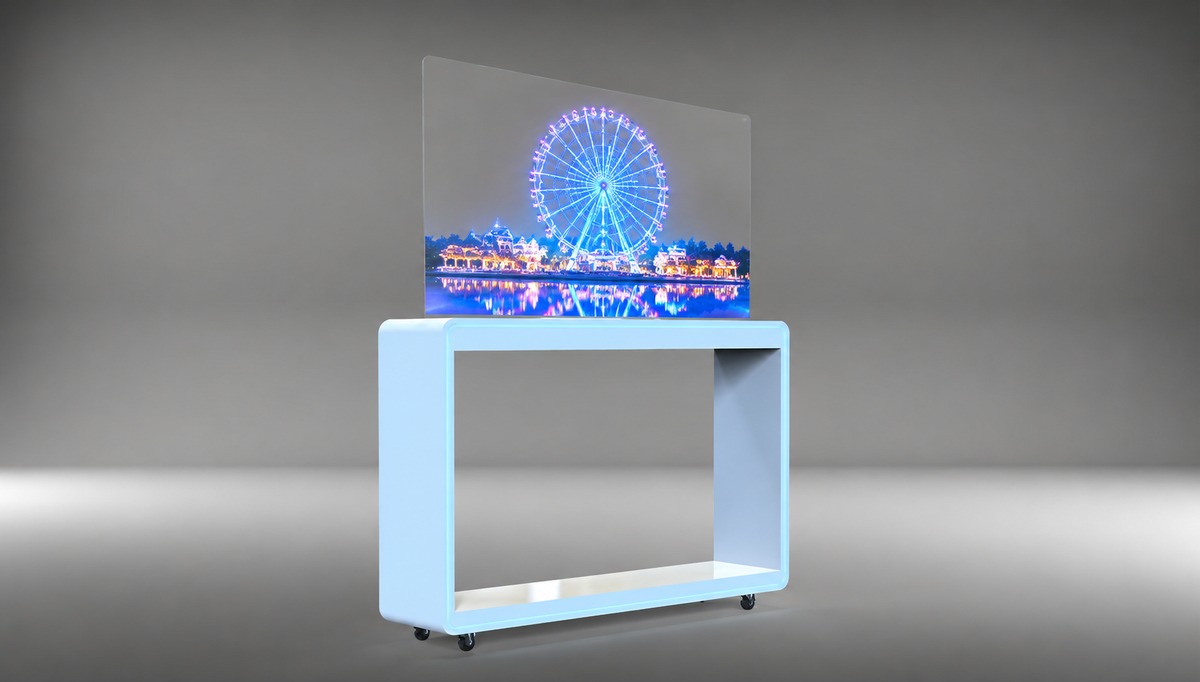
A themed event needs recognizable places where guests can pause, discover the current presentation, and understand what to do next. This 55-inch floor-standing transparent OLED display combines landscape imagery with an illuminated frame, creating a distinct presentation point for welcome areas, themed exhibits, and event conversation spaces.
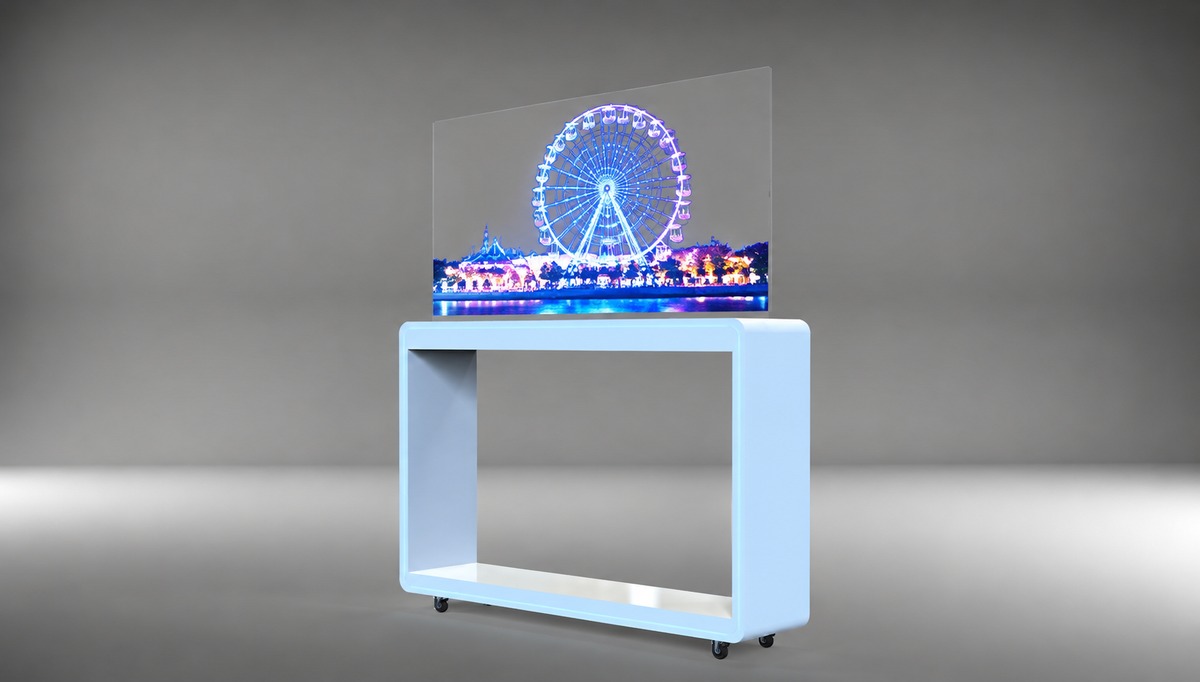
The Transparent Display Unit has a coordinated upper and lower composition: imagery appears above an open frame outlined by accent lighting. As content changes, the enclosure continues to mark the presentation’s place within the event.
Introduce the Theme and Define the Location
Content can begin with a clear campaign image, followed by the theme name, schedule information, or a short participation prompt. The landscape format accommodates scenes, product groupings, and concise headings.
A tourism event might introduce destinations and experiences. A brand pop-up could present a collection, while a corporate open day could show its program. The illuminated wheel pictured in the rendering is an example of scenic content rather than a restriction on the application.
The presentation can follow the event’s stages: establish the theme during arrival, explain the subject during demonstrations, and use calmer imagery during conversation periods.
An Open Rectangular Frame Carries the Lighting
The light-blue support forms a broad rectangular outline with a large open center. An illuminated line follows the frame, while the panel rises above the upper beam.
This geometry can relate to event backdrops, display furniture, and floor colors. The open lower area preserves a view of the setting instead of creating a solid cabinet surface.
Lighting color, brightness, and control require confirmation against the supplied configuration. Synchronization with event lighting, music, or video needs separately verified interfaces and software.
Plan Repositioning Around the Actual Caster Specification
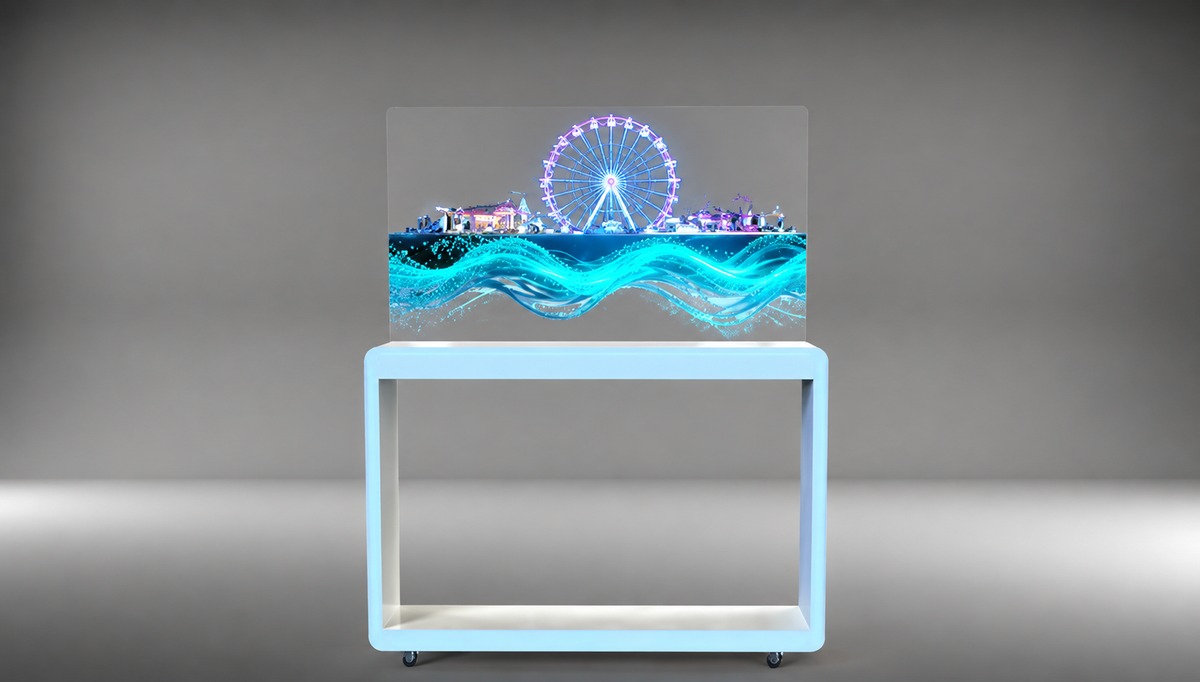
Casters are visible beneath the frame. Their load rating, locking method, suitable floor conditions, and handling requirements must follow the final documentation.
After repositioning, check stability, cable routing, and clearance around the viewing area. Move the equipment separately from presentations that require close reading.
Casters do not establish autonomous navigation, outdoor suitability, or operation on uneven surfaces.
Define the Package for Event Hire
For event management transparent screen hire projects, the delivery schedule should distinguish display equipment, playback hardware, transport packaging, installation, and content services.
Confirm operating hours, venue power, access routes, and setup time. Repeated deployments also benefit from an agreed packing method, maintenance routine, and condition checks.
Brightness, connections, overall weight, and operating conditions were not supplied with this image set. These must be confirmed rather than transferred from another 55-inch design.
Extend the Event Identity into the Media
Existing typography, colors, and graphic elements can connect the screen with backdrops and printed material. A strong theme works from a distance, while selected details serve visitors who approach.
Transparent imagery also needs testing against the proposed background and lighting. Review representative media from the main viewing direction, then adjust pale text, reflections, and equipment position where necessary.
Share the event floor plan, campaign artwork, and playback requirements to define a clear role for this illuminated landscape display.