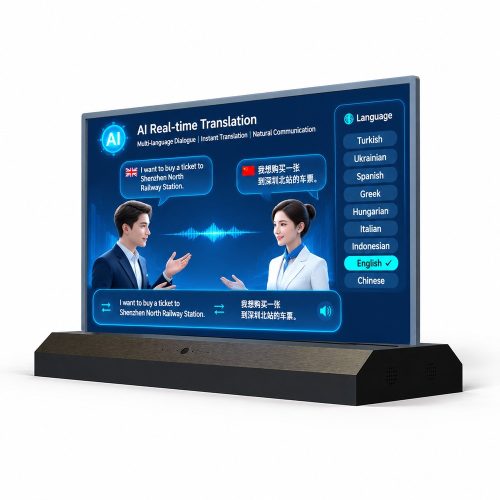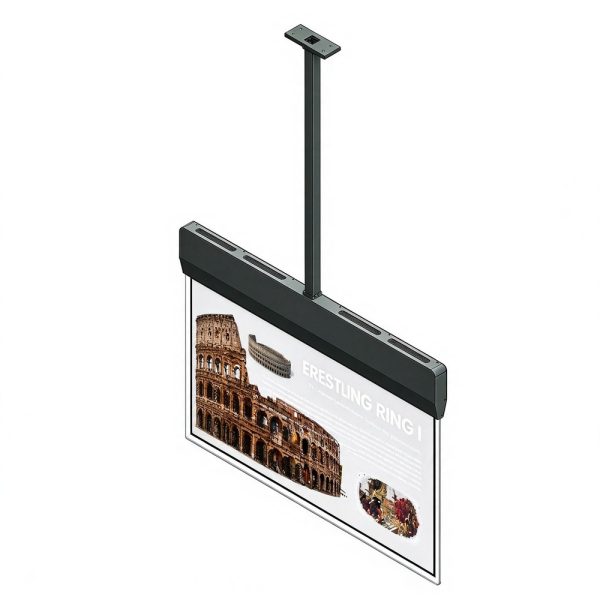
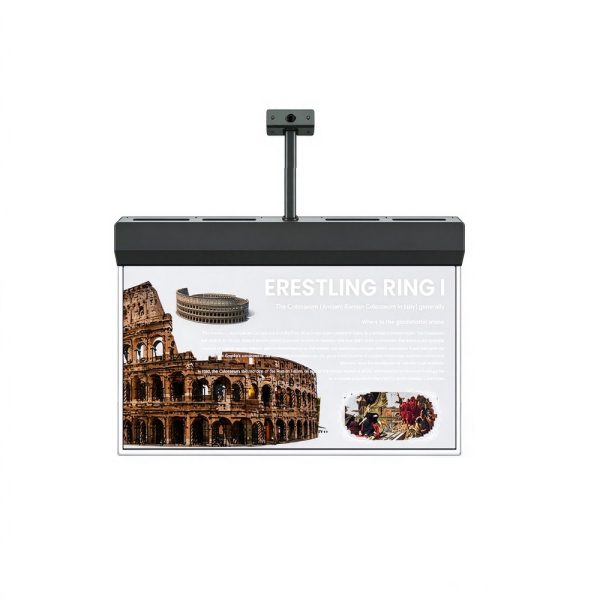
Architecture, urban change, and brand history can unfold through a clear visual narrative. This 55-inch Large scale T-OLED screen suspends digital imagery within the exhibition, connecting moving content with models, photographs, and physical objects.
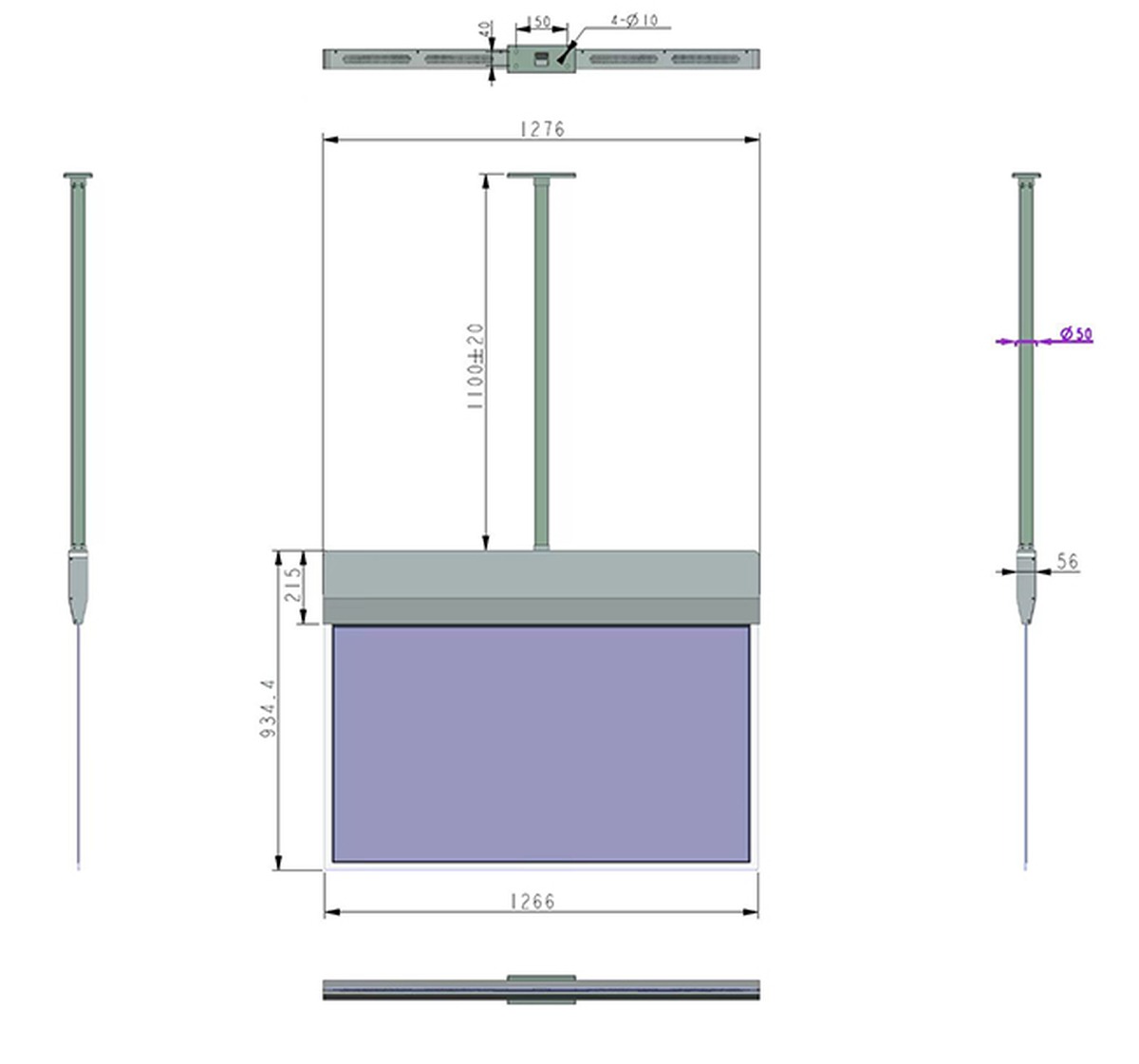
A central suspension pole meets a dark horizontal enclosure above the transparent panel. With no accompanying floor base, the format leaves space below for exhibit furniture and layered compositions.
Give Each Exhibition Area an Opening Chapter
Visitors entering a themed area can encounter a concise introduction: a building outline appears, a date establishes the period, and historical imagery develops the story.
A Large scale T-OLED screen can provide that opening chapter. Together with nearby exhibits, it establishes the subject before visitors explore the details.
An architectural presentation might move from exterior form into structure. An urban-history sequence could connect maps across time. A corporate exhibition can introduce its development through changing products. Digital media explains movement and change, while physical exhibits preserve scale and texture.
Show Relationships Across a Landscape Canvas
Historical and contemporary images can be compared. A complete building and selected structural details can alternate within the same sequence.
A Large scale T-OLED screen gives these relationships room to develop. Begin with a clear subject, then introduce headings, details, and short explanations as the story progresses.
Keep the central message concise and let subsequent chapters or nearby interpretation panels carry further detail. Each presentation medium then has a defined role.
A Dark Upper Line Frames the Suspended Image
The dark enclosure extends above the panel, connected by a central pole. Its solid outline contrasts with the transparent image area and establishes a clear upper boundary.
This appearance can coordinate with dark exhibition fixtures, industrial interiors, or restrained display palettes. Models, furniture, and open sightlines can remain beneath the panel to create depth within the setting.
A Large scale T-OLED screen can also mark an exhibition entrance or thematic transition. Media and spatial composition introduce the subject together.
Accommodate Different Viewing Times
A visitor making a brief stop can understand the theme through the main image and heading. Longer viewing reveals animations, comparisons, and captions.
Consistent typography, colors, and transitions can connect several chapters. Updated media can then introduce a new subject while retaining a recognizable exhibition identity.
Frequently Asked Questions
Which subjects suit this format?Architecture, urban history, brand development, product evolution, and cultural themes are suitable directions for visual storytelling.
Can it accompany a physical model?Yes. Content can explain structure, change, or context while the model presents physical details.
Does it need a floor-standing cabinet?This design uses overhead suspension without a matching floor base, leaving room below for exhibition arrangements.
Can it present subtitled films?Films can be prepared for the selected playback system, with captions composed for the intended viewing distance.
Can the subject be updated?Different media collections can be prepared. Import and update methods depend on the playback package.